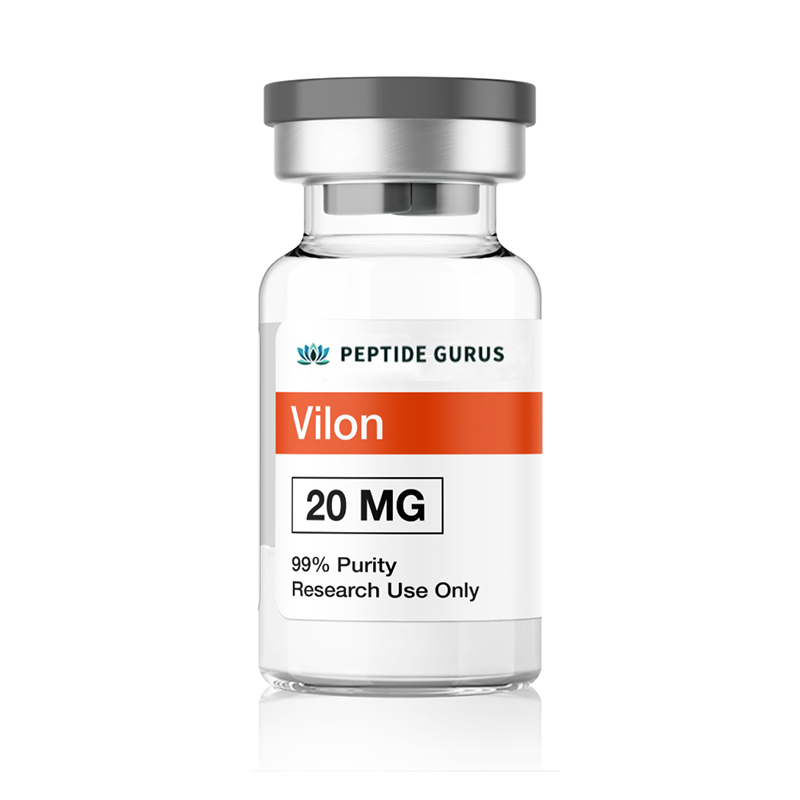
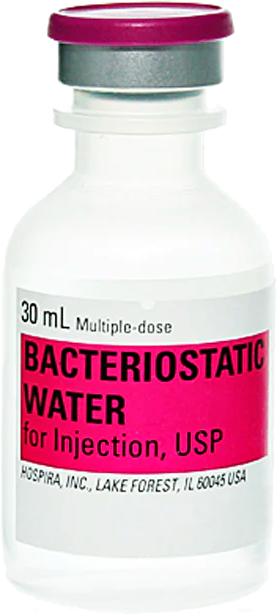
Schreiben Sie uns jetzt eine E-Mail, um Ihre Bestellung mit dem 1-zu-1-Support aufzugeben. Begrenzter Bestand! Wir akzeptieren Zelle, CashApp, Venmo, Banküberweisungen und Krypto.
Freies (1) 30 ml bakteriostatisches Wasser mit qualifizierten Bestellungen über$ 500 USD.
(Ausgeschlossene Kapselprodukte, kosmetische Peptide, Promo -Codes und Versand)
Vilon ist ein potenter Immunmodulator und ein Anti-Aging-Bioregulatorpeptid mit reichlich Forschung, um seine Vorteile zu unterstützen. Es gibt auch ein hohes Maß an Hinweisen darauf, dass Vilon dazu beitragen kann, das Risiko für die Entwicklung und das Fortschreiten von Krebs zu verhindern/zu verringern. Interessanterweise hat die Forschung gezeigt, dass Vilon bei frühzeitiger Leben und konsistenten, niedrigen Dosen bessere Anti-Aging-Effekte liefert. Diese Ergebnisse können dazu beitragen, die Tür für eine bessere Anti-Aging-Forschung zu öffnen und Wissenschaftlern zu helfen, besser zu verstehen, wie die epigenetische Regulierung eine wichtige Rolle bei der Langlebigkeit spielt.
Produktnutzung:Dieses Produkt ist nur als Forschungschemikalie gedacht.Diese Bezeichnung ermöglicht die Verwendung von Forschungschemikalien ausschließlich für In -vitro -Tests und Laborversuche. Alle auf dieser Website verfügbaren Produktinformationen dienen nur zu Bildungszwecken. Die körperliche Einführung jeglicher Art in Menschen oder Tiere ist gesetzlich streng verboten. Dieses Produkt sollte nur von lizenzierten, qualifizierten Fachleuten behandelt werden. Dieses Produkt ist keine Droge, Nahrung oder Kosmetik und darf als Medikament, Nahrung oder Kosmetik nicht missbraucht, missbraucht oder missbräuchlich werden.
Ein abscheuliches
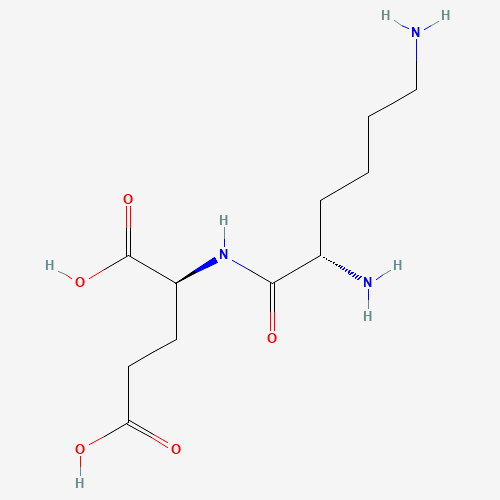
Bei nur zwei Länge von Aminosäuren ist Vilon das kürzeste Peptid, von dem bekannt ist, dass er eine biologische Aktivität hat. Untersuchungen zeigen, dass Vilon starke Anti-Aging-Effekte hat und dass es sich um einen starken Regulator der Immunfunktion handelt. Es gibt auch gute Hinweise darauf, dass Vilon dazu beiträgt, das Gefäßsystem zu regulieren und die Hämostase zu fördern. Es wurde gezeigt, dass Vilon die Inzidenz und das Wachstum spontaner Tumoren verringert, obwohl seine Rolle als Adjuvans bei der Krebsbehandlung (im Gegensatz zur Prävention) in Frage gestellt wurde. Insgesamt hat Vilon mehrere überzeugte Befürworter, wie Dr. Vladimir Anisimov, der der Meinung ist, dass das Peptid ein nützliches Geroprotektionsmittel ist.
Vilon und das Immunsystem
Research out of Russia indicates that Vilon is a potent regulator of chromatin structure. One study found that Vilon:
• induces unrolling of chromatin,
• activates synthetic processes via reactivation of ribosomal genes in the unrolled chromatin,
• releases repressed genes, and
• does not cause decondensation of pericentromeric structural chromatin[1].nduces unrolling of chromatin,
The net result of the changes that Vilon causes to DNA is reactivation of genes that are otherwise silenced. In general, chromatin is found in either the wound (heterochromatin) or unwound (euchromatin) states. Heterochromatin cannot be accessed by the apparatus that turns genes into proteins and thus functional components of the cell. Genes in these regions of DNA are simply unavailable for protein production.
In general, chromatin helps to regulate which genes are available for transcription and is thus one way that different-cells can have different functions or that the same cells can have different functions over time. Unfortunately, chromatin condensation is also something that occurs as a result of aging and senescence and is at least one reason why our cells and tissues lose function as we get older.
Similar to its activity in lymphocytes, Vilon has been shown to activate interluekin-2 signaling in cells of the spleen[3]. Interleukin-2 is important in coordinating the immune response to microbial infection and helps to prevent autoimmune reactions. By activating lymphocytes and splenocytes while boosting natural protection against autoimmune reactions, Vilon restores the immune system to a more active state and may even be useful in developing treatments for autoimmune diseases.
Adding to its ability to prevent autoimmune reactions is the role of Vilon in the thymus. Research in thymus cultures shows that Vilon increases the proliferation of CD5 T-cells. CD5 is a marker of mature T-helper cells as well as cytotoxic CD8 T-cells. The former helps to regulate the immune system and prevent autoimmune reactions, while the latter is one of the most potent anti-microbial cells in the body[4].
Interestingly, Vilon appears to only reactivate immune functions via genes that have been silenced by changes in chromatin. It does not appear to activate genes that would naturally be silent in the cells it affects. In other words, Vilon does not turn lymphocytes into neurons by activating genes that would normally not be active in healthy lymphocytes. Instead, the peptide appears to boost activity in the immune system while simultaneously helping to prevent autoimmune reactions.
Vilon und Krebs
As pointed out above, Vilon helps to reduce the incidence of cancer in mouse models, which is at least one way in which it prolongs average lifespan. Additional research shows that Vilon not only prevents tumors from forming, but inhibits their growth after they are present[5]. This suggests that Vilon may be both an effective chemotherapeutic in its own right, as well as a potential additive to existing cancer treatments. In the future, Vilon may be a standard addition to everything from chemotherapy to radiation treatment and surgery.
At least one study, out of Russia, contradicts the claim that Vilon may be a useful adjuvant to chemotherapy. The works shows that the combination of Vilon and platinum-based chemotherapeutic agents is problematic rather than synergistic[6]. Unfortunately, this study used only one specific type of chemotherapy and was limited in scope, so the results cannot be generalized. It remains to be seen if Vilon is only effective against cancer on its own or if the peptide can be added to other treatment regimens to boost results.
Vilon und Altern
Research in mice shows that subcutaneous administration of Vilon increases physical activity and endurance while helping to reduce the risk of cancer. These two effects resulted in longer lifespan in the treated mice, suggesting that Vilon may be a legitimate anti-aging peptide[7]. This is especially encouraging given that it produced no adverse effects in the mice following long-term administration.
Interestingly, the research shows that the earlier Vilon is administered, the greater its effects seem to be. In other words, giving Vilon to young mice enhances lifespan more than if Vilon is not administered until the mice are much older. This same effect was seen in early studies looking at crude thymic and pineal extracts given to mice to slow down aging[8]. The speculation is that Vilon and similar peptides, when administered late in life, can reverse senescence in existing cells but can obviously do nothing for cells that have already been eliminated through apoptosis. By administering Vilon 20mg early in life, cells get the greatest amount of protection and so turnover is slowed down. The result is that more cells stay healthy for longer periods of time, slowing the need to replace them and preserving limited stem cell lines.
Vilon’s anti-aging effects seem to extend to GI function as well, where the peptide has been shown to improve the activity of certain enzymes in the Gi tracts of older mice. The peptide also appears to improve barrier function, thus reducing the incidence of leaky gut, enhancing disease resistance, and improving the overall health of the GI tract in older mice[9]. Research shows that Vilon thereby helps to improve glucose and glycine absorption in the small intestine of older rats[10]. These features of Vilon may help to maintain nutrient extraction with age, thereby improving overall well-being and perhaps enhancing longevity.
Dr. Vladimir N. Anisimov, who has been researching aging and cancer development since the 1970s, points out that the thymus is one of two glands (the other being the pineal gland) that plays an important role in regulating aging. The healthier the thymus is, the healthier we are as individuals. Of course, Vilon is a thymic peptide and affects cells, like lymphocytes, that are produced in and mature in the thymus. Dr. Anisimov is a staunch advocate for using peptide bioregulators in the prevention of cancer[11]. He is a close colleague of Dr. Vladimir Khavinson.
Vilon im Herzen und Nieren
The effect of Vilon on the vasculature has been less well studied, but there is some work to suggest that it may have a beneficial effect. Research in mice shows that Vilon changes the expression of more than 36 different genes within the heart. When combined with Epithalon, this number jumps to 144 genes[12]. These findings suggest that, at the very least, Vilon has the ability to alter gene expression patterns in the cardiovascular system, a fact that may improve hemodynamic function.
In fact, research in kidneys, highly vascular organs, shows that Vilon decreases concentrations of transforming growth factor-beta(1) and thus the permeability of microvessels. The net result is improved hemostasis during kidney failure, suggesting that Vilon does, in fact, have a beneficial effect on the vascular system[13].
Furthermore, research in elderly patients with diabetes shows that Vilon can help to optimize coagulation by increasing levels of the natural anticoagulants antithrombin III and protein C while also stimulating fibrinolysis[14]. The result is fewer blood clots in a population prone to clotting and the serious consequences that follow. This further supports the idea that Vilon plays an important role in regulating the vascular system.
Vilon Zusammenfassung
Vilon is a potent immunomodulator and anti-aging peptide with ample research to back its benefit. There are also high levels of evidence that Vilon reduces the risk of cancer development and progression. Interestingly, Vilon appears to provide better anti-aging and anti-cancer effects when administered early in life and at chronic, low doses. These features may help open the door to better anti-aging research and help scientists to better understand how epigenetic regulation plays an important role in longevity.
Vilon exhibits minimal side effects, low oral and excellent subcutaneous bioavailability in mice. Per kg dosage in mice does not scale to humans. Vilon for sale at
Peptid-Gurusist nur auf Bildungs- und wissenschaftliche Forschung beschränkt, nicht auf den menschlichen Konsum. Kaufen Sie nur Vilon, wenn Sie ein lizenzierter Forscher sind.
Wladimir Chawinsonist Professor, Präsident der europäischen Region der theInternationalen Vereinigung für Gerontologie und Geriatrie; Mitglied derRussische und ukrainische Akademien der medizinischen Wissenschaften; Hauptgerontologin des Gesundheitsausschusses der Regierung von Petersburg, Russland; Direktor des Saint Petersburg Institute of Bioregulation and Gerontology; Vizepräsident der Gerontologischen Gesellschaft derRussische Akademie der Wissenschaften; Leiter des Vorsitzenden für Gerontologie und Geriatrie der damaligen staatlichen Medizinischen Universität in St.-Petersburg; Oberst des medizinischen Dienstes (UdSSR, Russland), im Ruhestand.PeptidBioregulatoren sowie für die Entwicklung einer bioregulierenden Peptidtherapie. Er untersucht die Rolle von Peptiden bei der Regulierung der Mechanismen des Alterns. Sein Hauptbereich der Handlungen sind Design, präklinische und klinische Studien von neuem PeptidGeroprotektoren. A 40-year-long investigation resulted in a multitude of methods of application of peptide bioregulators to slow down the process of ageing and increase human life span. Six peptide-based pharmaceuticals and 64 peptide food supplements have been introduced into clinical practice by V. Khavinson. He is an author of 196 patents (Russian and international) as well as of 775 scientific publications.His major achievements are presented in two books: “Peptides and Ageing” (NEL, 2002)and “Gerontological aspects of genome peptide regulation” (Karger AG, 2005).Vladimir Khavinson introduced scientific specialty “Gerontology and Geriatrics” in the Russian Federation on the governmental level. Academic Council headed by V. Khavinson has oversighted over 200 Ph.D. and Doctorate theses from many different countries.
Prof. Vladimir Khavinson is being referenced as one of the leading scientists involved in the research and development of Livagen. In no way is this doctor/scientist endorsing or advocating the purchase, sale, or use of this product for any reason. There is no affiliation or relationship, implied or otherwise, between
Peptid-Gurusund dieser Arzt. Der Zweck des Arztes besteht darin, die erschöpfenden Forschungs- und Entwicklungsbemühungen der Wissenschaftler, die dieses Peptid untersuchen, anerkennen, anzuerkennen und zu verdanken. Prof. Vladimir Khavinson ist in [1] [3] [4] [5] [7] [8] [9] [10] [11] und [12] unter den angegebenen Zitaten aufgeführt.
Referenzierte Zitate
[1] T. Lezhavaet al., “Bioregulator Vilon-induced reactivation of chromatin in cultured lymphocytes from old people,”Biogerontology, vol. 5, no. 2, pp. 73–79, 2004, doi: 10.1023/B:BGEN.0000025070.90330.7f.
[2] T. Lezhava, J. Monaselidze, T. Kadotani, N. Dvalishvili, and T. Buadze, “Anti-aging peptide bioregulators induce reactivation of chromatin,”Georgian Med. News, no. 133, pp. 111–115, Apr. 2006.
[3] T. B. Kazakovaet al., “In vitro effect of short peptides on expression of interleukin-2 gene in splenocytes,”Bull. Exp. Biol. Med., vol. 133, no. 6, pp. 614–616, Jun. 2002, doi: 10.1023/a:1020210615148.
[4] N. N. Sevostianovaet al., “Immunomodulating effects of Vilon and its analogue in the culture of human and animal thymus cells,”Bull. Exp. Biol. Med., vol. 154, no. 4, pp. 562–565, Feb. 2013, doi: 10.1007/s10517-013-2000-0.
[5] V. K. Khavinson and V. N. Anisimov, “A synthetic dipeptide vilon (L-Lys-L-Glu) inhibits growth of spontaneous tumors and increases life span of mice,”Dokl. Biol. Sci. Proc. Acad. Sci. USSR Biol. Sci. Sect., vol. 372, pp. 261–263, Jun. 2000.
[6] O. P. Barykina, V. V. Iuzhakov, N. I. Chalisova, I. M. Kvetnoĭ, and S. S. Konovalov, “[Combined effect of vilon and cyclophosphane on tumor transplants and lymphoid tissue explants in mice and rats of various age],”Adv. Gerontol. Uspekhi Gerontol., vol. 12, pp. 128–131, 2003.
[7] V. K. Khavinsonet al., “Effect of vilon on biological age and lifespan in mice,”Bull. Exp. Biol. Med., vol. 130, no. 7, pp. 687–690, Jul. 2000, doi: 10.1007/BF02682106.
[8] V. N. Anisimov, A. S. Loktionov, V. K. Khavinson, and V. G. Morozov, “Effect of low-molecular-weight factors of thymus and pineal gland on life span and spontaneous tumour development in female mice of different age,”Mech. Ageing Dev., vol. 49, no. 3, pp. 245–257, Sep. 1989, doi: 10.1016/0047-6374(89)90075-4.
[9] V. K. Khavinson, N. M. Timofeeva, V. V. Malinin, L. A. Gordova, and A. A. Nikitina, “Effect of vilon and epithalon on activity of enzymes in epithelial and subepithelial layers in small intestine of old rats,”Bull. Exp. Biol. Med., vol. 134, no. 6, Art. no. 6, Dec. 2002.
[10 ]V. K. Khavinson, V. V. Egorova, N. M. Timofeeva, V. V. Malinin, L. A. Gordova, and L. V. Gromova, “Effect of Vilon and Epithalon on glucose and glycine absorption in various regions of small intestine in aged rats,”Bull. Exp. Biol. Med., vol. 133, no. 5, pp. 494–496, May 2002, doi: 10.1023/a:1019878224754.
[11] V. N. Anisimov and V. K. Khavinson, “[The use of peptide bioregulators for cancer prevention: results of 35 years of research experience and perspectives],”Vopr. Onkol., vol. 55, no. 3, pp. 291–304, 2009.
[12] S. V. Anisimov, K. R. Bokheler, V. K. Khavinson, and V. N. Anisimov, “Studies of the effects of Vilon and Epithalon on gene expression in mouse heart using DNA-microarray technology,”Bull. Exp. Biol. Med., vol. 133, no. 3, pp. 293–299, Mar. 2002, doi: 10.1023/a:1015859322630.
[13] N. A. Gavrisheva, V. V. Malinin, T. P. Ses, K. L. Kozlov, A. V. Panchenko, and A. Y. Titkov, “Effect of peptide Vilon on the content of transforming growth factor-beta and permeability of microvessels during experimental chronic renal failure,”Bull. Exp. Biol. Med., vol. 139, no. 1, pp. 24–26, Jan. 2005, doi: 10.1007/s10517-005-0202-9.
[14] B. I. Kuznik, N. V. Isakova, N. N. Kliuchereva, N. V. Maleeva, and I. S. Pinelis, “[Effect of vilon on the immunity status and coagulation hemostasis in patients of different age with diabetes mellitus],”Adv. Gerontol. Uspekhi Gerontol., vol. 20, no. 2, pp. 106–115, 2007.Alle Artikel und Produktinformationen auf dieser Website dienen nur zu Informations- und Bildungszwecken.Die auf dieser Website angebotenen Produkte sind nur für In-Vitro-Studien bereitgestellt. In-vitro-Studien (lateinisch: in Glas) werden außerhalb des Körpers durchgeführt. Diese Produkte sind keine Arzneimittel oder Medikamente und wurden von der FDA nicht zur Verhinderung, Behandlung oder Heilung von Krankheit oder Krankheit zugelassen. Die körperliche Einführung jeglicher Art in Menschen oder Tiere ist gesetzlich streng verboten.
Peptidegurus ist ein führender Anbieter von amerikanisch gefertigten Forschungspeptiden und bietet höchste Qualitätsprodukte zu wettbewerbsfähigen Preisen. Mit einem Fokus auf Exzellenz und Kundenservice gewährleisten sie einen sicheren und bequemen Bestellprozess mit globaler Versand.