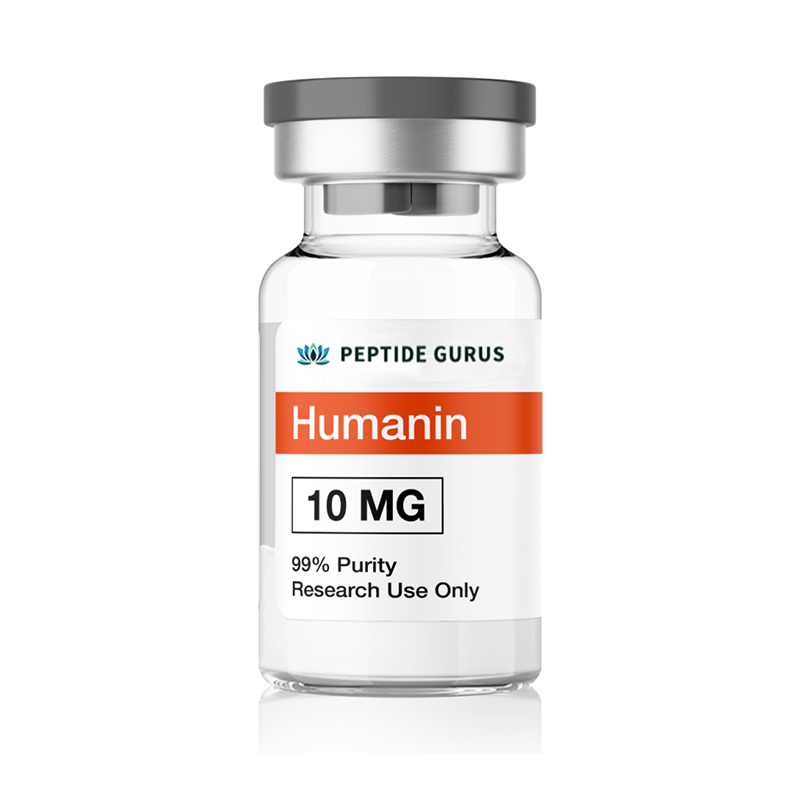
Unlike standard peptides and proteins, which are produced through posttranslational modification of larger peptides, micro-peptides are produced by short, open reading frames (sORFs) and do not undergo modification once they are produced. Ranging in size from 100-150 amino acids in length, sORFs were originally overlooked by researchers convinced that all peptides were produced by the same process of DNA to RNA to protein to modified protein. No one considered that the last step, modification, could be disregarded entirely.
In humans, a number of sORFs have been identified. Their functions range from enhancing mRNA processing to helping to repair DNA damage and interacting with other proteins to create complex macro-proteins. Humanin, one of the smallest micro-peptides known to date, is just 24 amino acids in length. It interacts with the Bcl2-associated X protein (Bax) to regulate apoptosis, blocking the function of Bax when necessary to preserve cells that would otherwise be destroyed.
神経保護
Research in rats indicates that humanin protects not just against apoptosis, but against programmed cell death in specific situations. In particular, the micro-peptide has been shown to protect neurons in the setting of Alzheimer’s disease, preventing the cell death that is induced by beta-amyloid plaque build-up[3]. Research shows that the peptide protects against excitotoxic neuron death in experiments using NMDA pulses[1].
Similar results to the above experiments were obtained when investigating neuron death occurring secondary to prion disease[4]. There is hope that this function of humanin can be exploited to slow or even halt neurodegenerative diseases like Alzheimer’s disease and other forms of dementia. Though it does not strike at the heart of the conditions (e.g. the formation of amyloid plaques in Alzheimer’s disease) humanin could be critical in tipping the delicate physiologic balance that plays out in these conditions, favoring the suspension of apoptosis[5].
Humanin appears to protect neurons through two different mechanisms, both of which have the ultimate function of preventing mitochondria from activating the apoptosis pathway. Under normal circumstances, the Bcl-2 family of proteins signal the release of proteins from the mitochondrial membrane, which in turn activate caspases that coordinate the orderly destruction and recycling of a cell[6]. This process is actually useful in many settings, such as during viral invasion, when the destruction of a handful of cells can prevent widespread tissue damage. Unfortunately, the process may become dysregulated in certain disease conditions with the result being unrestrained, widespread cell death. Humanin binds to Bcl-2 stimulating proteins Bid and tBid and blocks their function, thereby shutting down the apoptosis pathway at its origin[7].
Cutting edge research out of Argentina has found that humanin is actually released by astrocytes to protect synapses in hippocampal neurons[8]. As with many natural regulatory processes, there is some thought that humanin function may decline with age, thereby allowing for age-related memory loss and the increased prevalence of neurodegenerative disease. Some researchers speculate that there may be a role for humanin supplementation in older adults and a means of offsetting normal age-related declines in the production of this critical micro-peptide.Humanin levels in relation to age. A significant decline in humanin levels is seen in older individuals.
Source:PubMed
IGF-1とのHumaninインターフェイス
南カリフォルニア大学の最近の研究により、ヒューマンはインスリン様成長因子1(IGF-1)と相互作用することが明らかになりました。実際、2つのペプチドは互いに相互作用し、ヒューマンはIGF-1の循環レベルとIGF-1のレベルに影響を与えます。この相互作用のメカニズムはまだ完全には解明されていませんが、科学者は、ヒューマンがIGF-1シグナル伝達において新しい潜在的に重要なプレーヤーであるという説得力のある証拠を見つけます。ペプチドは、さまざまな方法で相乗効果を持ち、アポトーシスを阻害し、インスリンの感受性を高め、炎症を軽減し、特定の形態の心臓病から保護して、協力して協力しています。それ以外の場合、ペプチドは拮抗薬の役割を果たします。 IGF-1とHumaninが互いに影響を与える正確な方法を解明するには、より多くの研究が必要ですが、それらが確立された事実です[9]。心臓病Research out of the Mayo Clinic, America’s premiere healthcare institution, reveals that humanin is expressed in the walls of human vasculature and helps to protect blood vessels from the effects of oxidized LDL (bad) cholesterol. In particular, humanin interferes with the production of reactive oxygen species (free radicals) in response to LDL oxidation. In so doing, it reduces reactive oxygen species in the vasculature by 50% and reduces apoptosis by 50% as well[10].
It has already been established that humanin levels decline with age, but new research suggests that the micro-peptide may also be affected by certain disease states. Researchers in cardiology have long sought to find blood markers that can be used to quantify how effectively mitochondria are functioning in the setting of cardiovascular disease. This is a critical measure of health in patients with heart disease because it gives a good estimate of how ischemic the tissue is and how advanced the disease is and may be useful in deciding when intervention is necessary. Research out of Russia shows that humanin levels may be a good marker in this setting as the decline in proportion to the severity of cardiovascular disease[11]. In this cause, humanin may serve as both a diagnostic marker and as a potential treatment for the same condition as supplementation with humanin is likely to protect the already stressed mitochondria.
Bone loss is a serious condition that affects may people, particularly women, as they age. It is also a consequence of a number of disease states and is even caused by certain medical interventions. In the latter category, glucocorticoids used to treat severe inflammation (e.g. autoimmune inflammation) are the most notorious player and are known to cause extreme bone loss when used in high doses or for prolonged periods of time. Researchers in Sweden and Korea have discovered that humanin may be beneficial to bones in two different ways. First, the micro-peptide has been found to prevent the death of chondrocytes (the cells that produce the collagen matrix on which bone is built) without interfering with the anti-inflammatory effects of glucocorticoids like dexamethasone[13]. This effect helps to boost rates of bone and cartilage growth, offsetting some of the accelerated bone loss caused by glucocorticoids. At the same time that humanin promotes chondrocyte development, it appears to reduce osteoclast formation. Osteoclasts are the cells responsible for bone breakdown and remodeling. While useful and important in normal physiologic function, over-activation of these cells in pathologic states leads to severe bone loss. By preventing osteoclast formation, humanin helps to reduce excessive bone remodeling and loss[14].
Humanin exhibits minimal side effects, low oral and excellent subcutaneous bioavailability in mice. Per kilogram dosage in mice does not scale to humans. Humanin for sale at
Cohen Pinches、MD、USCレナードデイビス老年学部の学部長であり、エセルパーシーアンドラス老年学センターのエグゼクティブディレクターであり、ウィリアムとシルビアクーゲルディーンの老年学の椅子の所有者です。彼はミトコンドリアペプチドの研究の専門家であり、糖尿病、アルツハイマー病、および老化に関連する他の疾患の治療上の利点の可能性があります。これらのペプチドには、MT-16S-rRNAからコードされた24アミノ酸ペプチドであるヒトが含まれます。これは、糖尿病および関連する疾患における新しい治療および診断標的を表す、中心的に作用するインスリン感作および代謝性因子です。対象の他のミトコンドリアペプチドには、強力な抗糖尿病と抗肥満効果を有するミトコンドリア染色体の12代の小さなORFからコードされた2番目のPeptideであるMOTS-Cが含まれます。アイア博士のアルフォンソhas received his MD in 2004 from the University of the Republic in Montevideo Uruguay. Currently, he is working as a senior research fellow in the Division of Nephrology and Hypertension at Mayo Clinic, Rochester, MN. Dr. Eirin’s research is focused on understanding the pathogenesis of renal and cardiac injury due to atherosclerotic renovascular disease (ARVD) and the developing of treatment strategies to improve blood pressure and renal outcomes after revascularization in these patients.
Dr. Pinchas Cohen and Dr. Alfonso Eirin are being referenced as leading scientists involved in the research and development of Humanin. In no way are these doctors/scientists endorsing or advocating the purchase, sale, or use of this product for any reason. There is no affiliation or relationship, implied or otherwise, between
A. Caricasole、V。Bruno、I。Cappuccio、D。Melchiorri、A。Copani、およびF. Nicoletti、「広範な神経保護活性を備えたヒューマン様ペプチドをコードする新規ラット遺伝子」、Faseb J. Off。公開。給餌。午前。 Soc。 exp。 Biol。、vol。 16、いいえ。 10、pp。1331–1333、2002年8月。
M. Matsuoka、「ヒューマイン;アルツハイマー病に対する擁護者?」、最近の特許CNS Drug Discov。、Vol。 4、いいえ。 1、pp。37–42、2009年1月。
I. Sponne、A。Fifre、V。Koziel、B。Kriem、T。Oster、およびT. Pillot、「ヒューマンはプリオンペプチド誘発アポトーシスから皮質ニューロンを救助する」、Mol。細胞。 Neurosci。、vol。 25、いいえ。 1、pp。95–102、2004年1月。
A. R. White et al。、「プリオンペプチドPRP106-126の亜致死濃度またはアルツハイマー病のアミロイドベータペプチドは、原発性皮質ニューロンにおけるアポトーシス促進マーカーの発現を活性化します」とニューロビオール。 dis。、vol。 8、いいえ。 2、pp。299–316、2001年4月。
C. WangおよびR. J. Youle、「アポトーシスにおけるミトコンドリアの役割」、Annu。 Rev. Genet。、Vol。 43、pp。95–118、2009。
D. Zhai、F。Luciano、X。Zhu、B。Guo、A。C。Satterthwait、およびJ. C. Reed、「HumaninはBaxとBakの活性化をブロックすることにより、入札活動を拘束および無効にします」、J。Biol。 Chem。、vol。 280、いいえ。 16、pp。15815–15824、2005年4月。
S. C.Zárate、M。E。Traetta、M。G。Codagnone、A。Seilicovich、およびA. G.Reinés、「星状細胞によって放出されるミトコンドリア由来ペプチドであるヒューマンは、海馬ニューロンのシナプス損失を防止します」。老化神経筋、Vol。 11、p。 123、2019。
N. Kang、K。W。Kim、およびD. M. Shin、「Humaninは、AMP活性化プロテインキナーゼ活性化を介した核因子κBリガンド誘発性破骨細胞分化の受容体活性化因子を抑制します」、Korean J. Physiol。ファーマコール。オフ。 J. Korean Physiol。 Soc。韓国SOC。 Pharmacol。、vol。 23、いいえ。 5、pp。411–417、2019年9月。