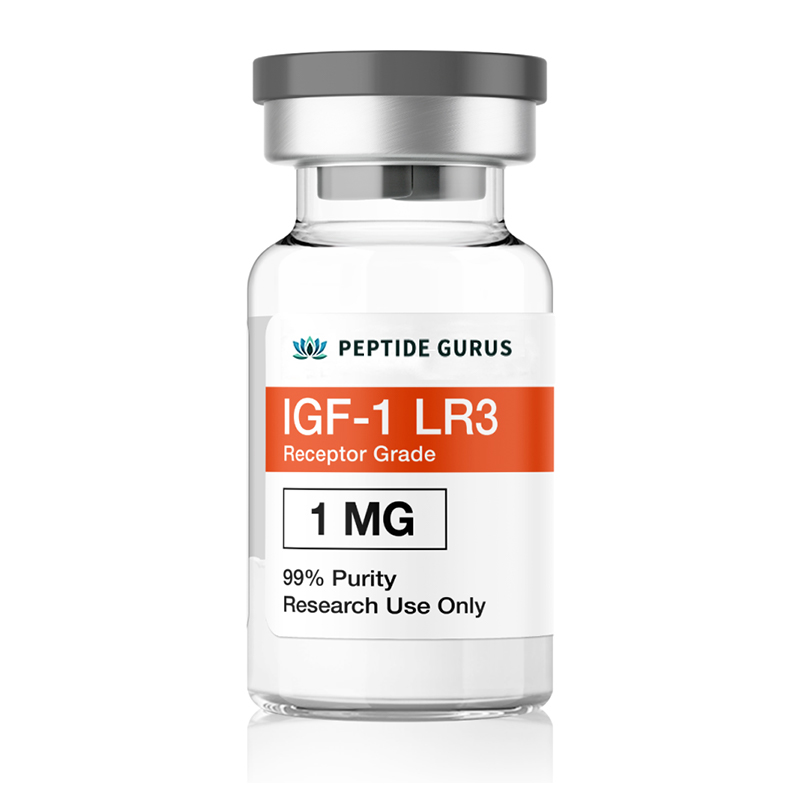
GF-1 LR31MG (수용체 등급)Receptor Grade IGF-1 LR3 is a premium research reagent for use in cell growth studies,IGF receptors and lGF binding proteins and is more potent than rH lGF-1 and MediaGrade lGF-1 LR3 in-vitro due to the drastic increase in biological activity (stronger affinityfor the lGF receptor). This increased biological activity is what sets Receptor Grade IGF-1LR3 apart from Media Grade (standard) IGF-1 LR3. Media grade lGF-1 LR3 is morecommonly used in commercial cell culture vs mammalian and can also be used as aresearch reagent at an economical cost to enable studies where biological potency is ofless value. To maximize results in an animal-based in-vitro cell study or production,Receptor Grade IGF-1 LR3 should be used exclusively. The supplementation ofmammalian cell cultures with Long R3 lGF-1 at a much lower concentration results inmore highly elevated productivity than with standard concentrations of insulin and/orstandard lGF-1. lGF-1 LR3 is better able to stimulate the type 1 lGF receptor and thusinduce a higher level of intracellular signaling, cell proliferation and inhibition of apoptosis.
Receptor Grade lGF-1 LR3 is more biologically active than standard lGF-1 LR3, in-vitro. Resultantly, Receptor Grade lGF-1 LR3 will deliver superior results incomparison to standard lGE.1 LR3.IGF-1 LR3, 리셉터 등급Sequence: MFPAMP LSSLF VNGPR TLCGA ELVDALOFVC GDRGF YFNKP TGYGS SSRRA POTGIVDECCFR SCDLRR LEMY CAPLK PAKSAMolar Mass: 9.111 Da
Synonyms:Long Arg3 lGF-1(Receptor Grade)
Long R3 IGF-1, Receptor Grade긴 R3 IGF-1의 IGFB 결합 및 증가 된 생물학적 활동LGFBP 결합에 저항함으로써, IGF-1 LR3은 LGF-1보다 더 큰 영향을 미칩니다. 동작의 장기는 동일한 효과와 함께 더 적은 양을 사용할 수 있습니다. LGF-1 단백질의 마지막 3 개의 N- 말단 아미노 산으로 구성된 GPE 유도체와 같은 일부 GPE-1 유도체는 뇌졸중과 같은 신경 학적 손상에 대한 치료 효과를 갖는 것으로 나타났습니다. IGF-1 유도체의 효과에 관한 대부분의 연구는 비인간 동물 모델 또는 세포 배양 연구에서 수행되었습니다.인슐린과 같은 성장 요소 receportornteractionsIGF-1 binds to at least two cell surface receptors: lGF-1R and the insulin receptor. TheIGF-1 receptor is referred to as the “physiologic” receptor because lGF-1 binds to it withsignificantly higher affinity (approximately 100 times higher) than it does to the insulinreceptor. By binding to IGF-1R, IGF-1 can affect metabolism, cell growth (hypertrophy),differentiation and cell division (hyperplasia), prevention of cell death (apoptosis), normaldevelopment, and even malignant growth. lGF-1R has been implicated in severaldifferent types of cancer include breast, prostate, and lung cancer. lGF-1 also binds to theinsulin receptor and activates it, thereby encouraging cells to take up glucose from theblood stream. The effects of lGF-1 on muscle cells are three-fold. Firstly, IGF-1encourages hyperplasia, or an increase in the number of muscle cells. Secondly, IGF-1has a strong effect on skeletal muscle – In regards to the life span of satellite cells.Satellite cells support muscle cells, providing them with needed nutrients and helpingthem to operate efficiently. By increasing the lifespan of these cells, lGF-1 helps toincrease their number with muscle tissue. Finally, IGF-1 encourages differentiation ofmyoblasts, which is to say that it encourages the conversion of stem cell progeny fromnonspecific pluripotent stem cells into dedicated muscle tissue. In this way, IGF-1increases the rate of muscle development by increasing the rate at which generic stemcells are converted to muscle cells.
ALL ARTICLES AND PRODUCT INFORMATION PROVIDED ON THIS WEBSITE AREFOR INFORMATIONAL AND EDUCATIONAL PURPOSES ONLY.
The products offered on this website are furnished for in-vitro studies only. In-vitro studies(Latin: in glass) are performed outside of the body. These products are not medicines ordrugs and have not been approved by the FDA to prevent, treat or cure any medicalcondition, ailment or disease. Bodily introduction of any kind into humans or animals isstrictly forbidden by law.