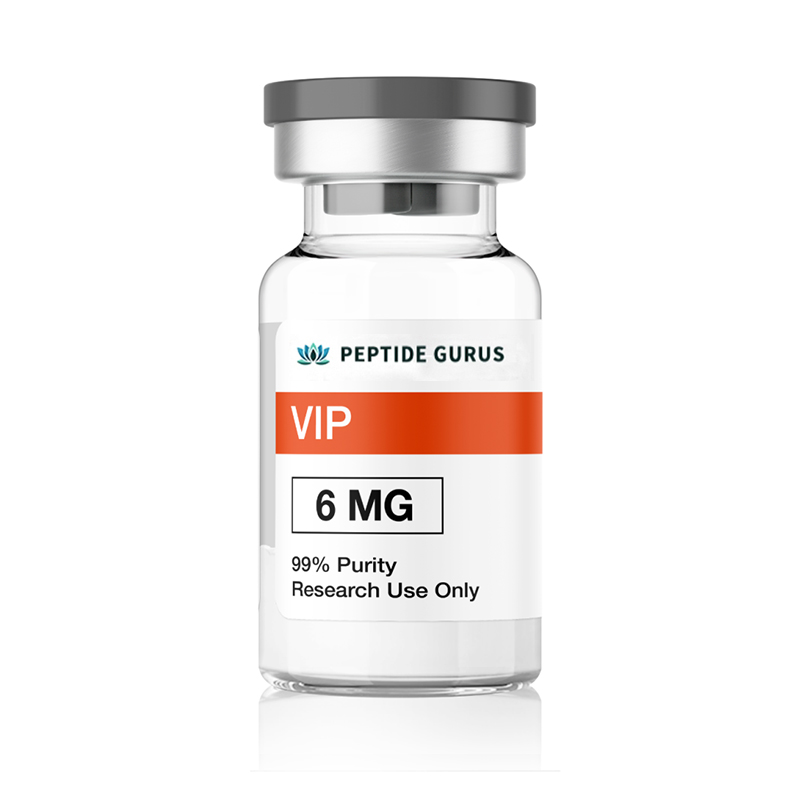
유리 (1) 30 ml 세균성 물자격을 갖춘 주문이 있습니다$ 500 USD.
(excludes capsule products, cosmetic peptides, promo codes and shipping)
Research shows that VIP can help to reduce inflammation throughout the body, but that it is particularly useful in the setting of neurodegenerative disease, pulmonary fibrosis, inflammatory bowel disease, and cardiac fibrosis. The peptide appears to be highly effective in a number of fibrotic pathways and may offer treatment benefits in the common process of fibrosis that leads to so much morbidity and mortality.
In addition to its antifibrotic effects, which appear to be mediated through anti-inflammatory actions, VIP is also a potent immune system regulator and general anti-inflammatory. The peptide has also been shown to protect the central nervous system against insult and is of active interest for its ability to preserve cognitive function in the setting of neurodegenerative disease.
Product Usage:이 제품은 연구 화학 물질로만 의도 된 것입니다.이 명칭은 시험 관내 시험 및 실험실 실험에만 연구 화학 물질을 엄격하게 사용할 수있게한다. 이 웹 사이트에서 제공되는 모든 제품 정보는 교육 목적으로 만 사용됩니다. 인간이나 동물에 어떤 종류의 신체적으로 소개되는 것은 법에 의해 엄격히 금지되어 있습니다. 이 제품은 라이센스가 부여 된 자격을 갖춘 전문가 만 처리해야합니다. 이 제품은 약물, 음식 또는 화장품이 아니며 약물, 음식 또는 화장품으로 잘못 브랜드화되거나 잘못 사용되거나 오해가되지 않을 수 있습니다.혈관 활성 장 펩티드 (VIP)
혈관 활성 장 펩티드 (VIP, 혈관 활성 장 폴리펩티드, PHM27)는 인간을 포함한 대부분의 척추 동물 동물의 장, 췌장 및 뇌에서 만든 짧은 펩티드 호르몬입니다. VIP는 클래스 I II G 단백질 결합 수용체에 결합하며
- increase the breakdown of glycogen in liver and muscle,
- lower blood pressure,
- relax smooth muscle throughout the GI tract,
- stimulate contraction of cardiac muscle (by boosting both heart rate and strength of contractions),
- stimulate the secretion of water in various areas of the GI tract,
- affect vaginal lubrication,
- regulate prolactin release,
- protect cartilage,
- protect neurons against ischemia and oxidative stress,
- 자율 신경 기능에 영향을 미칩니다
- 일주기 리듬을 조절하기위한 가벼운 단서와 중추 신경계 (특히 초상성 핵의 뉴런)를 동기화하는 데 도움이됩니다.
VIP는 오랫동안 위의 모든 이유에 대한 연구에 관심이있었습니다. 이 특정 펩티드에 대한 많은 과학 문헌이있어 VIP 연구의 모든 측면을 다루는 것이 거의 불가능합니다. 아래는 VIP 연구의 가장 중요한 측면을 포함하여 일부 높은 점 중 일부에 대한 요약입니다. VIP가 여러 가지 다른 기관에서 염증과 섬유증을 줄일 수 있다는 발견.VIP 펩티드 구조
아미노산 서열 :hsdavftdnyxrlrkmavkkylnsxln분자식 :기음147시간237N43영형43에스분자량 :인간 유전자 : 요일; 6q25.2Pubchem CID :44567960
CAS 번호 :37221-79-7동의어 :VIP, PHM27, 혈관 활성 장 폴리펩티드
원천:Pubch
장 염증
As it turns out, one of the primary producers of VIP is the immune nerve fibers in blood vessels of the central and peripheral nervous systems and heart. Additionally, VIP is produced directly by cells of the immune system where it helps to promote Th2-type responses which can reduce inflammation and quiet the immune system. VIP and analogues derived from it have been heavily investigated as potential inflammatory mediators in intestinal disease, heart disease, and neuroinflammatory conditions[1], [2].
The various roles of VIP in immunomodulation:
Source:약리학 적 검토In the setting of inflammatory bowel diseases (IBDs) like Crohn’s and ulcerative colitis, VIP has been found to improve intestinal barrier homeostasis and reduce inflammation driven by Th1 cell actions[3]. This latter approach, in particular, appears to generate T cells capable of producing the inflammation suppressing peptide interleukin-10[4]. In recent years it has become apparent that Th1 inflammation is one of several important pathways in IBD.
The benefit of improved intestinal barrier function should not be understated as it is hypothesized to be a contributing cause in the pathogenesis of inflammatory bowel disease. In particular, it is thought that compromised barrier function leads to increased antigenic material in the space between cells where it is more likely to interact with immune cells and set off an inflammatory response. Mitigating antigen presentation to immune cells via improved barrier function secondary to VIP would thus reduce what is believed to be one of the first steps in the cascade of events leading to colitis and severe inflammatory bowel disease[3].폐 기능에서 혈관 활성 장 펩티드
There are at least two ways in which VIP impacts lung function. In the first mechanism, VIP modulates pulmonary vascular remodeling in response to inflammation. It appears to have this effect though suppression of a peptide call NFAT, which activates T cells and leads to increased inflammation[5]. Consistent with its roll in modulating inflammation in other tissues, VIP appears to control T-cell mediate inflammation in the lungs, a process that heretofore has been difficult to address in models of inflammation. In particular, NFAT suppression may play a very important role in preventing pulmonary fibrosis, the end stage of a number of inflammatory conditions such as COPD, sarcoidosis, etc[6]. Thus, VIP may provide a very useful mechanism for preventing the kind of end stage lung disease that can only be cured by transplant and which often results in serious morbidity and even death.
VIP also appears to inhibit the proliferation of smooth muscles in pulmonary tissue. Smooth muscle cell proliferation is one of the long-term consequences of lung inflammation and is a particular problem in bronchial asthma that has been uncontrolled for extended periods[7]. There is hope that VIP will provide a mechanism by which to mitigate the effects of long-term inflammation secondary to asthma.
There is also exceptional evidence that the vasodilatory effects of VIP, which are known to help control blood pressure, may have a highly potent effect in pulmonary vasculature. Preliminary research shows that VIP lowers blood pressure significantly in the pulmonary artery, leading to increased cardiac output and improved venous oxygen saturation[8]. While more work remains to be done, there is significant hope that VIP will offer a new modality for improving lung function in the setting of primary vascular conditions.이식의 VIP
One of the primary problems with organ transplants is rejection by the body’s immune system. No matter how good the match between donor and recipient, the body mounts a response against transplanted organs that eventually leads to their destruction and failure. Currently, the only solution to this problem is the use of broad-spectrum anti-inflammatory medications. Unfortunately, these drugs can lead to susceptibility to serious infections and have side effects of their own, such as scarring and organ fibrosis, that can limit their use.
Research on VIP has revealed that the peptide affects dendritic cells (DCs). DCs are important in the immune response because they help the body to recognize antigens and mount appropriate countermeasures. By reducing DC proliferation and activation, VIP helps to thwart immune responses before they are even mounted. Interestingly, this function seems to favor DCs attached to antigens that are tolerogenic. In other words, VIP selectively inhibits the proliferation of DCs that might cause an autoimmune reaction. This is an area of active research as VIP could potentially reduce transplant rejection with fewer infection-promoting side effects[9]. This could make VIP or an analogue of it the foundation of transplant anti-rejection medicine in the future.신경 보호 제로 VIP
The role of VIP in the central nervous system is threefold: neurotransmitter, neurotrophic/neurogenic, and anti-inflammatory/neuroprotectant. As with the intestine, VIP’s role in the CNS begins with maintaining barriers. In this case, the peptide helps to maintain the very critical function of the blood-brain barrier (BBB)[10]. The BBB is a layer of cellular protection between blood vessels and the tissue of the central nervous system. It regulates what enters neurological tissue and thus controls everything from nutrition and oxygenation to immune function. Compromise of the BBB has been implicated in the pathophysiology of multiple sclerosis, encephalomyelitis, and even stroke.
VIP has also been shown to regulate the accumulation of beta amyloid in mouse models of Alzheimer’s disease and is known to offer neuroprotective effects in Parkinson’s disease[11], [12]. There is also evidence that VIP is an important neuroprotectant in the developing brain where it helps to ward of excitotoxic white matter damage and improve neuron fatty acid myelination[13]. In the case of Parkinson’s disease, VIP appears to offer a similar benefit as in other inflammatory settings by shifting the immune balance away from inflammatory Th1 responses toward anti-inflammatory Th2 responses[14].
The exact role of VIP in Alzheimer’s disease (AD) is less clear. Research shows that processing of VIP is inhibited in AD with levels of the peptide as well as amino acid byproducts being lower in the brains of people affected by AD[15], [16]. Again, the research is unclear at this point, but infusion of VIP into the brains of mice shows a substantial reduction in beta amyloid levels, proving that the peptide plays an important role in the pathophysiology of the disease.
The effects of VIP in protecting the CNS appear to be mediated through VPAC1 and VPAC2 receptors. In both cases, stimulation appears to result in increased secretion of neurotrophic factors like ADNP (activity-dependent neurotrophic factor) and BDNF (brain-derived neurotrophic factor). Both of these peptides help to protect synapses and astrocytes.
Source:Pubch
심장 섬유증
As with lung disease, fibrosis is the end stage of a number of different heart conditions. Cardiac fibrosis leads to a number of serious problems including valve dysfunction, decreases in contractility, changes in cardiac filling, and electrical problems. As in lung disease, cardiac fibrosis is the common end stage of many heart conditions and generally necessitates transplant in order to avoid mortality.
To date, most cardiac research has focused on preventing scar formation from occurring. A number of commonly used drugs can, at least to some extent, help to slow the process of cardiac remodeling that leads to scarring. Unfortunately, very few cases are 100% successful and most people experience progressive fibrosis and decline in cardiac function. Recent research in rats, however, indicates that VIP may not only slow fibrosis down, but can reverse scarring. It appears that at least part of this effect is mediated through a massive reduction in angiotensinogen and angiotensin receptor type 1a expression. This makes sense as angiotensin receptor blockers and ACE inhibitors have long been known to slow down cardiac modeling/fibrosis and are in fact the first line of prevention for fibrosis[17].
Source:과학
혈관 활성 장 펩티드 및 코비드 19
An interesting recent development out of Switzerland and the United States indicates that a synthetic version of VIP called aviptadil (RLF-100) may help to alleviate the lung complications in severe cases of Covid 19. Aviptadil, like VIP, inhibits pro-inflammatory cytokine production. In the lungs, this translates into protection of type-2 alveolar cells, the cells responsible for the bulk of oxygen exchange that takes place in the lungs. In fact, it appears that Aviptadil may actually prevent the SARS-2 coronavirus from penetrating these cells and infecting them. There are currently ongoing phase 2/3, placebo-controlled trials to investigate the effectiveness of this VIP derivative in protecting against serious complications of COVID 19[18].
According to Dr. Jonathan Javitt, CEO of NeuroRX (NeuroRX has paired with the maker of aviptadil to expedite development and use of the drug in the treatment of COVID), rapid recovery is seen in patients on ventilators and ECMO just three days after treatment with RLF-100. This is even that case in patients with severe medical comorbidities. The drugs has been administered on an emergency basis to patients too ill to be admitted to the clinical trial. Dr. Javitt points out that no antiviral agent has demonstrated the kind of rapid recovery from infection and demonstrated inhibition of viral replication the way that Aviptadil has.혈관 활성 장 펩티드 및 코비드 19
VIP is a member of a much larger group of neuro and endocrine peptides. It has been shown to have a number of effects in relation to the central nervous system, GI tract, pulmonary tissue, and immune system. It is known to play an active role in embryonic growth and development.
Research shows that VIP can help to reduce inflammation throughout the body, but that it is particularly useful in the setting of neurodegenerative disease, pulmonary fibrosis, inflammatory bowel disease, and cardiac fibrosis. The peptide appears to be highly effective in a number of fibrotic pathways and may offer treatment benefits in the common process of fibrosis that leads to so much morbidity and mortality.
In addition to its antifibrotic effects, which appear to be mediated through anti-inflammatory actions, VIP is also a potent immune system regulator and general anti-inflammatory. The peptide has also been shown to protect the central nervous system against insult and is of active interest for its ability to preserve cognitive function in the setting of neurodegenerative disease.
Finally, synthetic versions of VIP have shown promise in treating COVID 19 and have been fast-tracked by the FDA for stage 2/3 clinical trials. This may ultimately prove beneficial for other VIP-related treatments as evidence from successful clinical trials can help to inform future clinical trials and provide pharmaceutical companies with incentive to pursue therapeutics that have an increased potential of being approved for use in humans. The next decade is likely to bring a great deal of innovation and research to vasoactive intestinal peptide.
VIP exhibits minimal side effects, low oral and excellent subcutaneous bioavailability in mice. Per kg dosage in mice does not scale to humans. VIP for sale at
펩티드 전문가인간 소비가 아닌 교육 및 과학 연구로만 제한됩니다. 면허가있는 연구원 인 경우 VIP 만 구매하십시오.
기사 저자
위의 문헌은 M.D. E. Logan 박사가 연구, 편집 및 조직했습니다. E. Logan 박사는 박사 학위를 취득했습니다.사례 서부 예비 대학교 의과 대학그리고 B.S. 분자 생물학에서.과학 저널 저자
Jonathan Javitt 박사is a physician with a background in information technology, health economics, and public health. Dr. Javitt graduated in 1978 with honors in Biochemistry from Princeton University and earned his M.D. at Cornell University Medical College. He was awarded a Kellogg Foundation Fellowship to attend the Harvard School of Public Health, from which he graduated with an M.P.H. in Health Policy and Management. In 2015, he was designated an Alumnus of Merit, the highest honor bestowed by Harvard University to graduates of the School of Public Health.His scientific publications have been cited by more than 17,000 people and he is ranked among the top 1% of quoted scientists worldwide. At the Potomac Institute, he has focused on projects related to biodefense, drug and device approval policy, and the needs of first responders. Dr. Javitt previously served as a commissioned Presidential appointee in the areas of health care and biodefense.
Dr. Jonathan Javitt is being referenced as one of the leading scientists involved in the research and development of VIP. In no way is this doctor/scientist endorsing or advocating the purchase, sale, or use of this product for any reason. There is no affiliation or relationship, implied or otherwise, between
펩티드 전문가그리고이 의사. 의사를 인용하는 목적은이 펩티드를 연구하는 과학자들이 수행 한 철저한 연구 개발 노력을 인정, 인식 및 인정하는 것입니다. Jonathan Javitt 박사는 참조 인용에 따라 [18]에 상장되어 있습니다.