
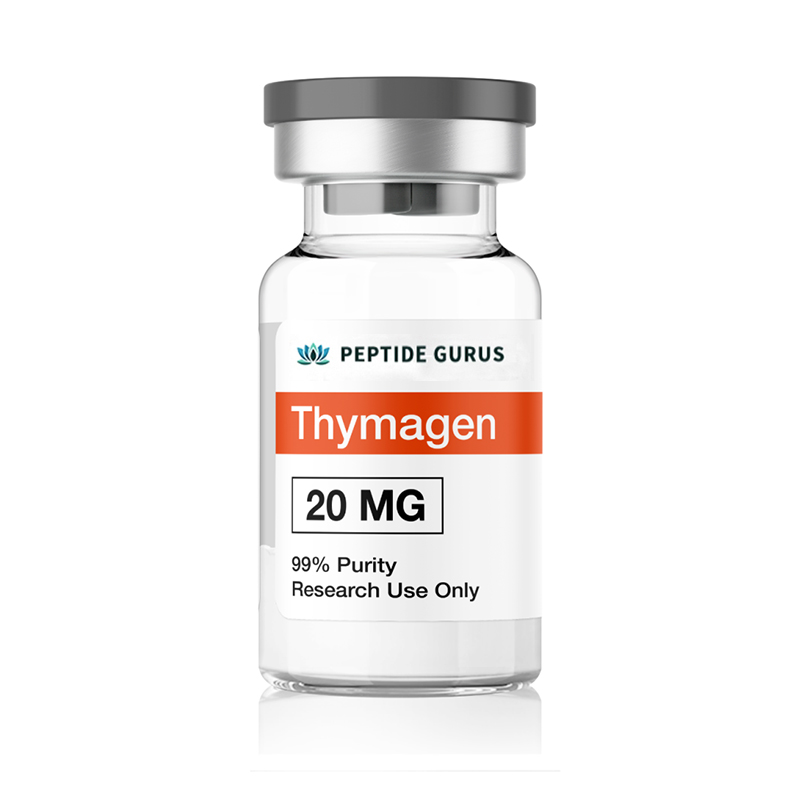
• Thymagen (Thymogen) peptide for surgical recovery improvement
q
X
q
Contact pour commander
Envoyez-nous un e-mail dès maintenant pour passer votre commande avec un support individuel. Stock limité ! Nous acceptons Zelle, CashApp, Venmo, virements bancaires et cryptomonnaies.
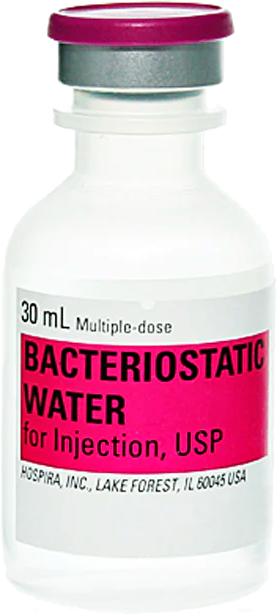
Eau bactériostatique

Eau bactériostatique libre (1) 30 ml
avec des commandes qualifiées sur500 USD. (exclut les produits de capsule, les peptides cosmétiques, les codes promotionnels et l'expédition)

Le thymagène (thymogène) est un peptide biorégulateur très actif avec des effets primaires sur les cellules du système immunitaire. Il a été démontré qu'il augmente la production et la différenciation des cellules T, stimule la sécrétion d'interférons, augmente les niveaux de nucléotides cycliques et favorise la fonctionnalité du système immunitaire inné. En raison de ses effets sur le système immunitaire inné, le thymagen s'est également avéré aider à prévenir le cancer et à réduire la gravité de la maladie. La recherche a montré que le thymagen est utile comme mesures préventives périopératoires contre l'infection. Il a été démontré qu'il augmente le taux de récupération après la chirurgie et est également potentiellement cardioprotecteur.
Utilisation du produit:Ce produit est conçu uniquement comme un produit chimique de recherche.Cette désignation permet l'utilisation de produits chimiques de recherche strictement pour les tests in vitro et l'expérimentation de laboratoire uniquement. Toutes les informations sur les produits disponibles sur ce site Web sont à des fins éducatives uniquement. L'introduction corporelle de toute nature dans l'homme ou les animaux est strictement interdite par la loi. Ce produit ne doit être géré que par des professionnels agréés et qualifiés. Ce produit n'est pas une drogue, de la nourriture ou un cosmétique et peut ne pas être mal étendu, mal utilisé ou erroné comme drogue, aliment ou cosmétique.

THYMAGEN 25MG – Research Grade Peptide

Thymagen is a peptide researched for its role in immune system and thymus-related cellular studies. It has been widely used in immunology research, aging-related studies, and investigations involving immune regulation at the cellular level.

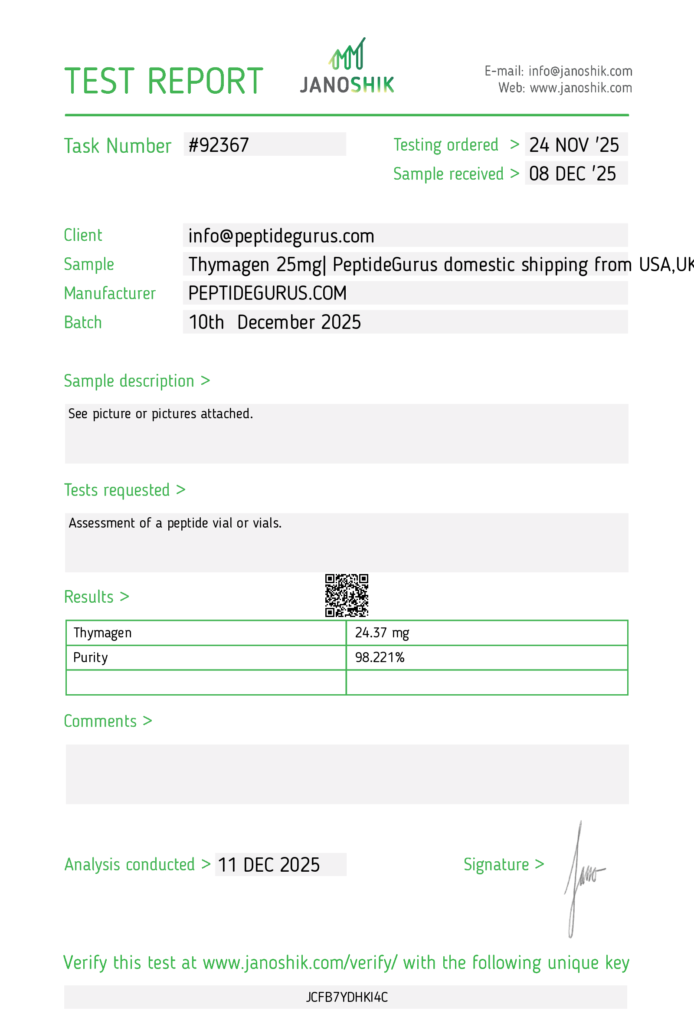
NotreThymagen 25mgis manufactured to research-grade standards, ensuringhigh purity, strong stability, and consistent quality. The lyophilized form protects the peptide structure and allows for extended storage without degradation.

This product is well-suited for laboratories, biotech companies, and distributors focusing on immune system and longevity-related peptide research.

Thymagen (thymogène)

Le thymagène (thymogène) est un biorgulateur dipeptide avec des effets primaires sur le thymus et le système immunitaire. À l'origine isolée du thymus du mollet, le thymagène est maintenant produit via des techniques d'ADN recombinantes. En Russie, Thymagen a été étudié pour sa capacité à traiter le cancer en régulant la réponse immunitaire innée du corps. Il a également été prometteur dans les maladies cardiaques, le diabète et comme traitement postopératoire pour améliorer les résultats chirurgicaux. La recherche montre qu'il peut stimuler la réponse immunitaire à un certain nombre de virus et à une variété d'infections bactériennes. Il a réussi le succès du traitement de l'hépatite B et de C.

Structure de thymagène

Séquence d'acides aminés:Glu-trp (ew)Formule moléculaire:C16H19N3O5Poids moléculaire:333,34 g / molPubChem CID: 100094 Numéro CAS:38101-59-6Synonymes:Oglufanide, thyrogèneMoleculeSource:Se publier

Thymagen et système immunitaire

Cyclic nucleotides are single-phosphate nucleotides with a cyclic bond arrangement between the sugar and phosphate groups. They are integral components of communication within cells, usually acting as second messengers within the cell after a protein on the cell surface has bound to something. In other words, cyclic nucleotides act as messengers within cells for substances that cannot enter the cells themselves. Research on Thymagen shows that it down regulates cyclic nucleotide catabolism. In other words, Thymagen slows the breakdown of cyclic nucleotides and thereby raises their levels within the cell[1]. This results in enhanced ability of cells, particularly those of the immune system, to respond to messages from other parts of the body. For example, increased levels of cyclic nucleotides could make cells of the immune system more responsive to invading pathogens by improving signaling between these cells. Summary of nucleoside signaling (nucleotides indicated as NTPs being converted to NMPs). Thymagen has been shown to increase the pool of NTPs and potentiate down-stream effects:NucleosidesSource:Se publierThe effects of Thymagen on the immune system begin, but don’t end at cyclic nucleotides though. Research in rat spleen and thymus has shown that Thymagen promotes the maturation of T-lymphoctye precursors into immunocompetent T-cells capable of fending off disease. This process of maturation is driven by the changes that Thymagen induces in cyclic GMP (cGMP) levels[2]. By optimizing cyclic nucleotide ratios, Thymagen helps to ensure that T-lymphocyte precursors are getting the signals that tell them they need to mature into full-flow cells of the immune system. Thymagen, along with other immunomodulatory molecules like Immunitor and Milife, has also been shown to induce interferon secretion[3]. Interferons are signaling proteins made by host cells in response to viral infection. They serve to modulate and coordinate immune defenses against viruses, but have also been shown to ward off cancer and are generally known as immune regulators. Interferons are used currently in the treatment of autoimmune diseases, such as multiple sclerosis, and in combination with chemotherapy and radiation in the treatment of certain cancers. They are also used in the treatment of both hepatitis B and C.

Thymagène et inflammation

L'inflammation est un processus principalement contrôlé par le système immunitaire. Il va donc de soi qu'une substance capable d'influencer le système immunitaire pourrait également avoir un impact sur l'inflammation. Cela s'avère être un raisonnement solide en ce qui concerne le thymagène. La recherche montre que le thymagen aide à normaliser le nombre de lymphocytes et à augmenter l'activité fonctionnelle des cellules T. Cela conduit à un effet désensibilisant qui régule à la baisse l'inflammation en réduisant les niveaux de cytokines pro-inflammatoires.

Thymagène et infection

Parlant spécifiquement de la capacité du thymagène à affecter la réponse immunitaire aux agents pathogènes envahisseurs a été une étude réalisée chez les cobayes infectés parYersinia Entérocolithique(Une bactérie liée aux bactéries qui provoque la peste). Les cobayes traités avec du thymagène dans cette étude ont montré une résistance non spécifique accrue aux bactéries ainsi qu'une réponse humorale (anticorps) spécifique accrue. Thymagen a semblé aider à réguler la réponse immunitaire en la concentrant sur l'immunité des cellules tueuses naturelles et en aidant à prévenir les réactions auto-immunes. Le résultat global était de diminuer la diffusion deY. entérocolithiqueet finalement pour aider à l'élimination du corps [4].

Thymagène et diabète

Research shows that patients with type 1 diabetes are suffering from secondary immunodeficiency in many cases. Thymagen, by promoting T-Cell differentiation, removes signs of this immunodeficiency and helps to correct the deficit. In fact, a clinical effect was seen in nearly 95% of patients in the study[5]. Diabetes actually leads to immunocompromise if left untreated. One of the primary results of this is infection with candida (yeast) species. These types of infection are notoriously difficult to treat and can lead to serious morbidity in people with diabetes. Research with Thymagen indicates that it can slow candidiasis in the setting of secondary immunodeficiency and give existing treatments and edge in eradicating the fungus[6].

Thymagen et chirurgie

Les infections après une chirurgie et non rares, en particulier pour la chirurgie abdominale et pour les personnes atteintes d'immunodéficience. Bien que les personnes âgées ne soient pas considérées comme immunodéficientes, elles sont plus sensibles à l'infection après la chirurgie en raison d'une fonction immunitaire réduite. La recherche avec du thymagen révèle que l'administration du peptide pendant une semaine avant la chirurgie réduit à la fois le nombre de variétés de complications postopératoires. Le peptide semble également réduire la période postopératoire en accélérant la récupération et le retour à l'activité normale [7].

Thymagen et le cœur

Thymagen has been studied as a possible treatment for several different heart conditions. The earliest research looked at the ability of Thymagen to reduce arrhythmia using 6 different models of the disease condition. Research showed a beneficial effect, including a solid dose-response curve that indicated that the observed changes were in fact legitimate[8]. Thymagen has also been studied in isolated heart models where it has been found to have superior protective properties compared to commonly used drugs like verapamil[9]. In the setting of cardiac ischemia, protecting heart muscle from further damage is one of the primary goals of treatment prior to restoration of blood flow via catheterization, bypass grafting, or clot dissolution. Treatment with cardioprotective drugs can help to prevent long-term consequences like heart failure or the need for transplant. Thus, Thymagen may be a useful adjuvant in treating ischemic cardiac injury.

Thymagen et cancer

Research in rats shows that radiation-induced carcinogenesis can be inhibited by Thymagen. In fact, all carcinogenesis is inhibited by Thymagen, with rats exposed to radiation living roughly average lifespans while rats with no radiation exposure live above average lifespans[10]. This suggests that Thymagen may be a useful cancer preventative, helping to ward off the disease even in the setting of unknown exposures. According to Dr. Vladimir Anisimov, a collaborator of Dr. Vladimir Khavinson and an expert in cancer development, rats treated with Thymagen have been shown to have a decreased incidence of GI cancer. In fact, regardless of immune status in the study, the rats treated with Thymagen had a 12% reduction in tumor incidence as well as a 1.7-fold reduction in the number of tumors if they did develop cancer[11]. In other words, Thymagen appears to boost immune function against cancer. This suggests that Thymagen works to boost the body’s natural killer cell defenses, which are the front line against cancer, along with other aspects of the innate immune system. This helps to not only prevent cancer from developing, but reduces the rate and severity of spread in rats that do develop cancer.

Résumé du thymagène

Thymagen is a highly active peptide with primary effects on cells of the immune system. It has been shown to increase production and differentiation of T cells, stimulate the secretion of interferons, boost levels of cyclic nucleotides, and promote the functionality of the innate immune system. As a result of its effects on the innate immune system, Thymagen has also been shown to both help prevent cancer and reduce the severity of the disease. There is good evidence that Thymagen is useful as a peri-operative preventative measures against infection. It has been shown to increase rate of recovery following surgery and is potentially cardioprotective as well.

Article auteur

La littérature ci-dessus a été étudiée, édité et organisée par le Dr E. Logan, M.D. Le Dr E. Logan est titulaire d'un doctorat à partir deCase Western Reserve University School of Medicineet un B.S. en biologie moléculaire.

Auteur de journal scientifique

Vladimir Khavinsonest professeur, président de la région européenne de l'Association internationale de gérontologie et de gériatrie; Membre duAcademies russes et ukrainiennes des sciences médicales; Gérontologue principal du comité de santé du gouvernement de Pétersbourg, Russie; Directeur du Saint-Pétersbourg Institute of Bioregulation and Gerontology; Vice-président de la Société gérontologique de laAcadémie russe des sciences; Chef du président de la gérontologie et de la gériatrie de l'Université médicale d'État de l'époque, St-Petersburg; Colonel of Medical Service (URSS, Russie), Retired.Vladimir Khavinson est connu pour la découverte, les études expérimentales et cliniques de nouvelles classes dePeptideBiorégulateurs ainsi que pour le développement de la thérapie peptidique biorégulante. Il est engagé dans l'étude du rôle des peptides dans la régulation des mécanismes de vieillissement. Son principal domaine d'actions est les études de conception, précliniques et cliniques de nouveaux peptidesgéroprotecteurs. A 40-year-long investigation resulted in a multitude of methods of application of peptide bioregulators to slow down the process of ageing and increase human life span. Six peptide-based pharmaceuticals and 64 peptide food supplements have been introduced into clinical practice by V. Khavinson. He is an author of 196 patents (Russian and international) as well as of 775 scientific publications.His major achievements are presented in two books: “Peptides and Ageing” (NEL, 2002)and “Gerontological aspects of genome peptide regulation” (Karger AG, 2005).Vladimir Khavinson introduced scientific specialty “Gerontology and Geriatrics” in the Russian Federation on the governmental level. Academic Council headed by V. Khavinson has oversighted over 200 Ph.D. and Doctorate theses from many different countries. Prof. Vladimir Khavinson is being referenced as one of the leading scientists involved in the research and development of Thymagen. In no way is this doctor/scientist endorsing or advocating the purchase, sale, or use of this product for any reason. There is no affiliation or relationship, implied or otherwise, between
Gourous peptidiquesEt ce médecin. Le but de citer le médecin est de reconnaître, de reconnaître et de créditer les efforts exhaustifs de recherche et de développement menés par les scientifiques qui étudient ce peptide.

Citations référencées

    S. V. Demidov, A. N. Kostromin, V. V. Kuĭbeda, I. V. Chernaia, and M. I. Borovok, “[Effect of thymagen, thymalin and vilosen on the cAMP and cGMP levels and phosphodiesterase activity in spleen lymphocytes during sensitization and anaphylactic shock],”Ukr. Biokhimicheskii Zhurnal 1978, vol. 63, no. 4, pp. 104–106, Aug. 1991. A. L. Kozhemiakin, V. G. Morozov, and V. K. Khavinson, “[Participation of the cyclase system in the molecular mechanisms of differentiation control of immunocompetent cells],”Biokhimiia Mosc. Russ., vol. 49, no. 4, pp. 658–666, Apr. 1984. D. S. Silin, O. V. Lyubomska, F. I. Ershov, V. M. Frolov, and G. A. Kutsyna, “Synthetic and natural immunomodulators acting as interferon inducers,”Curr. Pharm. Des., vol. 15, no. 11, pp. 1238–1247, 2009, doi: 10.2174/138161209787846847. N. D. Iushchuk, G. I. Tseneva, T. V. Alenushkina, and L. B. Kuliashova, “[The efficacy of using thymogen in an experimental infection caused by Yersinia enterocolitica],”Zh. Mikrobiol. Epidemiol. Immunobiol., no. 3, pp. 106–108, Jun. 1995. E. A. Zhuk and V. A. Galenok, “[Thymogen in the treatment of type-1 diabetes mellitus],”Ter. Arkh., vol. 68, no. 10, pp. 12–14, 1996. O. K. Khmel’nitskiĭ, G. M. Iakovlev, V. L. Belianin, V. K. Khavinson, V. G. Morozov, and V. I. Deĭgin, “[The effect of a synthetic thymus peptide (thymogen) on the immune system in candidiasis under immunodepression],”Arkh. Patol., vol. 52, no. 1, pp. 20–25, 1990. V. S. Smirnov, S. V. Petlenko, and S. S. El’tsin, “[Application thymogen for preoperative preparation of elderly patients with tumor processes in abdominal cavity],”Adv. Gerontol. Uspekhi Gerontol., vol. 24, no. 2, pp. 278–284, 2011. K. M. Reznikov, O. V. Vinokurova, V. V. Alabovskiĭ, and A. A. Vinokurov, “[The anti-arrhythmia properties of thymogen],”Eksp. Klin. Farmakol., vol. 57, no. 6, pp. 31–33, Dec. 1994. O. V. Filippova, K. M. Reznikov, V. V. Alabovskił, V. V. Khamburov, and A. A. Vinokurov, “[The effect of thymogen on the heart in ischemia and reperfusion],”Eksp. Klin. Farmakol., vol. 60, no. 3, pp. 27–29, Jun. 1997. V. N. Anisimov, G. I. Miretskiĭ, V. G. Morozov, I. A. Pavel’eva, and V. K. Khavinson, “[The effect of the synthetic immunomodulator thymogen on radiation-induced carcinogenesis in rats],”Vopr. Onkol., vol. 38, no. 4, pp. 451–458, 1992. V. G. Bespalov, D. N. Troian, A. S. Petrov, V. G. Morozov, and V. K. Khavinson, “[Inhibiting effect of thymogen on the development of tumors of the esophagus and forestomach induced by N-nitrososarcosine ethyl ester in rats],”Eksp. Onkol., vol. 11, no. 4, pp. 23–26, 1989.
Tous les articles et informations sur les produits fournis sur ce site Web sont à des fins informatiques et éducatives uniquement.Les produits proposés sur ce site Web sont fournis uniquement pour des études in vitro. Des études in vitro (latin: en verre) sont réalisées en dehors du corps. Ces produits ne sont pas des médicaments ou des médicaments et n'ont pas été approuvés par la FDA pour prévenir, traiter ou guérir une condition médicale, une maladie ou une maladie. L'introduction corporelle de toute nature dans l'homme ou les animaux est strictement interdite par la loi.
Écrivez votre propre critique

Demander une enquête

À propos de nous

Peptidegurus est l'un des principaux fournisseurs de peptides de recherche de fabrication américaine, offrant des produits de qualité supérieure à des prix compétitifs. En mettant l'accent sur l'excellence et le service à la clientèle, ils garantissent un processus de commande sécurisé et pratique avec l'expédition mondiale.

Demander un devis

  • Gourous peptidiques
  • info@peptidegurus.com
  • Glendale, c'est, USA
  • CONTACT

    Demander une enquête