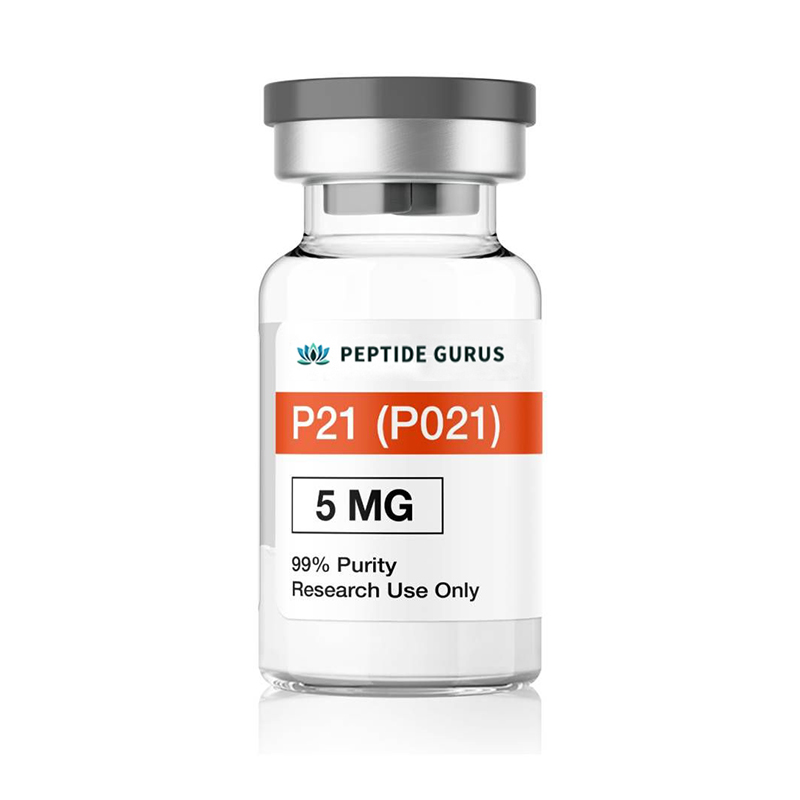
유리 (1) 30 ml 세균성 물 자격을 갖춘 주문이 있습니다$ 500 USD.
(캡슐 제품, 미용 펩티드, 프로모션 코드 및 배송 제외)
p21은 개선 된 신경 생성을 표적으로하는 이방성 펩티드이다. 동물 연구에서, p21은 BDNF (뇌 유래 신경 영양 인자)의 수준을 높여서 신경 생성 (신경 성장)을 촉진하고 알츠하이머 병에서 볼 수있는 아밀로이드 플라크 및 타우 단백질의 형성을 억제하는 것으로 나타났다. BDNF는 신경 생성 향상뿐만 아니라 알츠하이머 뇌에서 타우 및 아밀로이드 플라크 형성을 담당하는 특정 효소의 하향 조절과 관련이있다. P21은 동물 모델에서 인식을 향상시키는 것으로 나타났습니다.
제품 사용 :이 제품은 연구 화학 물질로만 의도 된 것입니다.이 명칭은 시험 관내 시험 및 실험실 실험에만 연구 화학 물질을 엄격하게 사용할 수있게한다. 이 웹 사이트에서 제공되는 모든 제품 정보는 교육 목적으로 만 사용됩니다. 인간이나 동물에 어떤 종류의 신체적으로 소개되는 것은 법에 의해 엄격히 금지되어 있습니다. 이 제품은 라이센스가 부여 된 자격을 갖춘 전문가 만 처리해야합니다. 이 제품은 약물, 음식 또는 화장품이 아니며 약물, 음식 또는 화장품으로 잘못 브랜드화되거나 잘못 사용되거나 오해가되지 않을 수 있습니다.
p21은 무엇입니까?
P21 is a modified, synthetic mimetic of CNTF. CNTF is a naturally occurring protein mediator of neuron growth in humans. The effects of CNTF have primarily been studied in the nervous system, though there are receptors for the peptide in other locations throughout the body (e.g. bone). It has been shown to promote neurotransmitter synthesis and neurite outgrowth. It also protects neurons and their supporting cells against inflammatory attacks. In addition to its neurotrophic effects, CNTF is known to increase satiety and thus reduce food intake.
CNTF and cerebrolysin are~ 아니다the same molecule. P21 and cerebrolysin are not the same either. It is discussed below and contrasted with P21.
A recombinant version of CNTF was developed under the brand name Axokine. It was tested as a treatment for amyotrophic lateral sclerosis and is currently not sold. Interestingly, the body is quick to generate antibodies against Axokine, suggesting that there may be a potential for administering P21 and exogenous CNTF together in some settings, thus boosting CNTF levels while keeping antibody activity to a minimum.
P21 is a small peptide derivative of CNTF. Small molecule mimetics can exert some or all of the effects of larger neutrophic molecules without the side effects mentioned above. P21 was developed through a process called epitope mapping, which uses antibodies to identify target binding sites. In the case of P21, antibodies against CNTF receptor active sites were used to first identify the CNTF binding site. They were then used to confirm which small, synthetic peptides mimicked CNTF binding and thus interfered with antibody binding[1]. The result was the production of P21, which not only binds to the CNTF receptor, but also crosses the blood-brain barrier and placental/lactational barriers. P21 is a tetra-peptide derived from the most active region of CNTF (amino acid residues 148–151). Admantylated glycine was added to the C-terminal end to increase blood–brain barrier permeability and decrease degradation by exopeptidases.
Natural CNTF is too large to cross the blood-brain barrier, has poor plasma stability, an unfavorable pharmacologic profile, and actually promotes the development of anti CNTF-antibodies when administered systemically. Direct administration to the cerebrospinal fluid, while an option, is generally avoided due to pain, risk of infection, and other adverse effects. Unlike full CNTF, P21 has better than 95% stability in artificial gastric juice over 30 minutes, long enough for it to pass through the stomach in most cases. It is roughly 100% stable in the intestine over two hours, which is long enough for it to be absorbed. It is stable in blood plasma for more than 3 hours[2].
P21은 어떻게 작동합니까?
P21 has several effects in the central nervous system, but its primary impact is in the dentate gyrus where it acts to enhance neurogenesis and neuron maturation in the granular cell layer and sub-granular zone. The dentate gyrus, which is part of the hippocampal formation in the temporal lobe of the brain, is thought to contribute to the formation of new episodic memories and the spontaneous exploration/learning that occurs in new environments. The dentate gyrus also plays an important role in pre-processing of information and pattern separation. In essence, pattern separation is what allows mammals to differentiate one memory from another. The dentate gyrus is also of great interest to neuroscientists because it is one of a few brain regions known to have significant rates of neurogenesis in adults.
Research in mouse models shows that P21 does not bind to the CNTF receptor, suggesting that even though it is referred to as a mimetic, it should be clear that P21 is not and analogue of CNTF. It appears, rather that P21 acts to inhibit antibodies or other molecules that neutralize CNTF. Thus, though P21 does not directly mimic the effects of P21, it increases the concentration of this most potent of neurogenesis promoters and thus effectively mimics its effects.
Research in mice shows that P21 increases levels of BrdU positive cells in the dentate gyrus. BrdU is a synthetic nucleoside (analogue of thymidine) used to detect proliferating cells in living tissues. In this experiment, it is found concentrated in the dentate gyrus of mice administered P21 but not in the DG of control mice, suggesting that P21 promotes proliferation of cells in this region. To determine if the cells are neurons or not, the expression of NeuN can be measured as it is a marker for mature neurons. It is also significantly increased in mice administered P21 and in the region of BrdU increase, supporting the idea that the increased proliferation is in fact increased neurogenesis[3].Image A shows BrdU in red and NeuN in green, highlighting the obvious increase in BrdU in P21-treated mice. Image B shows numbers of BrdU positive cells are increased substantially in P21-treated mice.
Source:FebspressP21 활동의 또 다른 구성 요소는 LIF-Stat 신호의 억제를 통해 발생하는 것으로 보입니다. 백혈병 억제 인자에 대한 짧은 LIF는 배아 발생에서 중요한 역할을하는 인터루킨 6과 유사한 사이토 카인입니다. 그것은 분화를 억제 할 책임이 있으므로 증식이 감소하더라도 조직 성숙을 향상시키는 데 중요한 과정 인 제어 된 방식으로 세포 증식을 종식시키는 역할을한다. LIF를 억제함으로써, p21은 신경 생성에 대한 장애물 중 하나를 제거하여 뇌를 뉴런 성장이 선호되는 더 배아 상태로 설정한다.The role of P21 (and the similar P6) in promoting neurogenesis. Note the inhibiting effect on LIF and the stimulating effects on BDNF.
Source:PubMedIn Alzheimers Disease (AD), the natural reaction of the brain to damage, which is to say neuron and synapse loss, is to increase activity in the dentate gyrus. Unfortunately, many aged brains lack the ability to support neurogenesis and thus the effort at replacement fails. P21 boosts dentate gyrus activity enough to overcome this limitation, helping to shift the balance neurotrophic factors toward neurogenesis. Thus, it may be that limiting amyloid deposition in the brain is not the only way to address the effects of AD. This may explain why even though plaque deposition begins early in AD, it isn’t until later in life, when neurotrophic factor balance shifts away from neurogenesis, that the effects of the deposition become apparent. Research shows that neurotrophic support by P21 leads to increased levels of brain-derived neurotrophic factor and neurotrophin-4 while decreasing the mitogenic effect of fibroblast growth factor 2. Interestingly, administration of P21 prior to the onset of AD in mouse models of the condition prevents the cognitive decline that usually occurs. This suggests that P21 could be even more important as a preventative than as a potential treatment[2], [4].
It is also important to note that BDNF has been linked not just to enhanced neurogenesis, but to the down regulation of certain enzyme responsible for tau and amyloid plaque formation in AD brains. Specifically, BDNF decreases the activity of the GSK3-beta protein, which catalyzes both the formation of amyloid beta from amyloid precursor protein as well as the phosphorylation of tau protein, steps in the development of AD that lead to inflammation and eventual neurodegeneration[5].TA schematic of P21 (P021) in Alzheimer’s pathology. Note that the increase in BDNF leads to a marked decrease in Tau phosphorylation as well as to a reduction in the development of amyloid plaques. This happens through activation of P13K and thus the down regulation of GSK-3beta. The latter has become a molecule of interest in AD as it is thought to directly affect the accumulation of plaque in the brain.
Source:PubMedIt is worth pointing out that GSK-3beta overproduction has been implicated in a number of disease processes including type 2 diabetes, several different forms of cancer, and bipolar disorder. There is hope that P21 and other GSK-3beta inhibitors may prove useful in the treatment of stroke, cancer, and especially bipolar disorder[6], [7].
In particular, P21 appears to rescue the trend in AD-affected brains toward a decrease in MAP2 expression. MAP2 (microtubule-associated protein 2) is a marker of synaptic growth between neurons. A decrease in levels of this protein is suggestive of decreased synaptogenesis/neurogenesis and is a marker of disease progression in AD. Similarly, P21 is seen to rescue decreases in:
•Synapsin I, a critical protein for synaptic communication between neurons.
•GluR1 (AMPA receptor), a receptor that mediates fast synaptic transmission.
•NR1, a glutamate receptor associated with synaptic plasticity and learning.
Perhaps most interestingly about the effects of P21 on synapsin I, GluR1, and NR1 is that it can boost them to supraphysiologic levels in both diseased and healthy brains. This has led researchers to conclude that P21 may be useful not just for restoring function in diseased brains, but for boosting function in normal brains. It may therefore be useful as a nootropic and performance enhancer for cognitive tasks. Research in this has not yet been undertaken in animal models, let alone human trials. In fact, P21 is so effective in promoting neurogenesis that it actually boosts levels of neurogenesis in diseased brains over those seen in healthy, untreated brains.
As Dr. Khalid Iqbal, professor of neurochemistry at the New York State Institute for Basic Research, points out, P21 administration is likely to be most beneficial in AD and other neurodegenerative disease when administered during the period of synaptic compensation. In other words, the best time to administered P21, at least in the setting of disease, is when it can augment and support the body’s own response to neuron loss. Because P21 has shown tremendous benefit and no serious side effects in animal studies, he suggests that the peptide may be an ideal candidate for use in this setting. Combined with early detection via clinical biomarkers, P21 may offer the first real chance neuroscience has had to slow or even halt the progression of neurodegeneration. As he explains, the problem in AD, at least early on in the course of the condition, is an imbalance between neuron death and neurogenesis. P21 shifts this balance toward neurogenesis and, at least in limited animal studies, improves diseased brains beyond even the neurogenesis seen in health brains. In short, P21 promotes neuroplasticity by overcoming deficits in neurogenesis, a function that is seen not just histologically, but in the clinical measures of cognition, memory, and reasoning.원천:PubMed
p21은 무엇을합니까?
In the simplest terms, P21 boosts cognition and protects the central nervous system from damage. It appears to do this by boosting the maturation of neurons from precursor cells into full-fledged neurons. It also appears to boost synaptogenesis or the interconnection between neurons, which is a fundamental component of learning and strengthening memory.
In more specific terms, the molecule has a host of benefits on learning, memory, and cognitive function. In mouse models, for instance, P21 enhances object discrimination and improves spacial reasoning. It has been shown to boost levels of brain-derived neurotrophic factor and neurotrophin-4. It has been shown in animal studies to boost levels of synapsin 1, GluR1, and NR1, all of which are markers of neurogenesis and synapse formation. Interestingly, it boosts levels of these proteins in disease, but boosts them to supraphysiologic levels in health, suggesting that P21 may aid learning and memory even in healthy brains.
음식 섭취
음식 섭취에 대한 p21의 영향을 평가하는 직접적인 연구는 없었지만 식욕을 억제 할 수 있다고 믿을만한 이유가 있습니다. 이것은 알파-멜라노 사이트 자극 호르몬 합성의 자극의 결과로 발생하며, 이는 CNTF 수준의 증가에 의해 유발된다. 중화 항체 감소를 통해 CNTF 수준을 효과적으로 증가시킴으로써, p21은 JAK/STAT 경로를 활성화시키고 결국 알파 -MSH의 수준을 향상시킨다. 알파 -MSH와 신경 생성은 모두 음식 섭취 감소와 관련이 있으므로, P21이 향후 연구에서 포만감에 영향을 미치는 것은 놀라운 일이 아닙니다 [8].
p21은 부작용이 있습니까?
In mouse models of Alzheimer’s disease (AD), P21 and the similar P22 have not shown any apparent side effects. This is not to say that the compounds are without side effects in humans (this is currently unknown), but rather to say that adverse effects in mouse models are not obvious and thus there is good reason to be hopeful that P21 will have limited side effects when and if it reaches clinical trials. In fact, the only side effect noted thus far is that mice treated with P21 have lower anxiety levels than control animals[3]. It would be hard to list that as an adverse effect even if it isn’t necessarily the target effect.
Many neurogenic compounds produce fatigue. Though this has not been demonstrated with P21, it wouldn’t be all that surprising if mild fatigue is a side effect in some settings.
Cerebrolysin이란 무엇입니까?
Cerebrolysin과 p21은 종종 혼란 스럽지만 동일하지는 않습니다. p21은 수용체-특이 적 효과를 갖는 단일 분자 인 반면, Cerebrolysin은 실제로 신경 생성을 포함한 다수의 효과를 갖는 펩티드 혼합물이다. P21은 동물 연구에서 뇌리 신보다 더 효과적인 것으로 나타났다.
Cerebrolysin은 어떻게 작동합니까?
Like P21, cerebrolysin also seems to have important effects in the dentate gyrus. Research in mouse models of Alzheimer’s disease indicate that cerebrolysin improves synaptic plasticity and cognitive performance. It appears to have neuroprotective effects, though the mechanisms underlying these benefits are not entirely clear. It is thought that cerebrolysin may protect neural progenitor cells (NPCs) against things like amyloid plaques and thus increase the rate of neurogenesis simply by ensuring that NPCs survive to differentiate into full-fledged neurons[11].
There is good reason to believe that one of the components of cerebrolysin acts to neutralize antibodies against CNTF, the same molecule that P21 mimics. Though cerebrolysin contains CNTF, it is thought that this antibody-neutralizing component is the more potent contributor to cerebrolysin’s overall function[12]. In fact, researchers have used epitope mapping to isolate the likely component responsible for antibody neutralization. It is an 11-amino-acid long peptide (VGDGGLFEKKL) that can be reduced entirely to DGGL to enhance hippocampus-dependent learning and memory in normal adult mice via neurogenesis. Note that this shorter peptide DGGL is actually a sub-component of P21[3]. It is P21, but without the admantylated glycine moiety. This latter component is not the active component of P21, but rather helps to prevent degradation of the DGGL peptide and boosts its ability to cross the blood-brain barrier. Thus, though cerebrolysin is not P21, it contains the precursor to P21 and can thus be considered a precursor to P21 isolation and development.
Cerebrolysin Verus p21을 명확하게합니다
Cerebrolysin 및 p21은입니다~ 아니다the same compound, though they are sometimes used interchangeably in discussions about nootropics. P21 is also sometimes referred to as a derivative of cerebrolysin, but this is not an entirely accurate explanation of P21 either. P21 is a synthetic analogue of CNTF and CNTF is one component of cerebrolysin. P21 is made up of just four amino acids from CNTF along with an added adamantane moiety. Thus, P21 is best described as a synthetic analogue of one component of cerebrolysin. It has been speculated that that part of P21 may be contained within cerebrolysin as a result of the breakdown of CNTF, but P21 itself is a synthetic molecule that is not found in cerebrolysin.
P21 has been shown to be more efficacious than cerebrolysin in animal studies. In fact, cerebrolysin has been virtually abandoned as a treatment because it causes the production of autoantibodies against CNTF and eventually not only becomes ineffective, but actually makes the situation worse. It is likely that part of the reason that cerebrolysin is antigenic (raises antibodies) is that it is a purified porcine product and thus considered foreign by other species. There is also concern that cerebrolysin, as a purified animal product, may be at risk of contamination.
Cerebrolysin was, at one point in time, the best option available. It is a complicated mixture of several different brain chemicals that is initially and effective treatment (probably because it contains molecules that are similar to P21). Unfortunately, this benefit is outweighed over time by the high levels of foreign CNTF that promote the production of auto-antibodies against native CNTF. In the end, this antigenicity leads to adverse reactions and the need to abandon cerebrolysin treatment. In fact, CNTF auto-antibodies may arise naturally against the molecule and may be part of the reason that neurogenesis slows over time. P21 appears to sequester these auto-antibodies and help to eliminate them, leading to increased efficacy of native CNTF and increased neurogenesis. Thus far, P21 has not been shown to be antigenic in and of itself. Additionally, it has not been shown to lose efficacy over time.
요약
P21 is a nootropic peptide of primary interest for its ability to promote neurogenesis both in health and disease. It has currently only been tested in mouse and rat models where is shows a great deal of promise. The peptide contains adamantane, a common additive in neurogenic peptides, that helps it to cross the blood-brain barrier. In animal studies, administration of P21 has been shown to boost levels of BDNF, thus promoting neurogenesis and inhibiting the formation of the plaques and defibrillation tangles seen in AD. The peptide may also have effects on satiety and weight gain, though no research has been performed in this area. P21 and cerebrolysin, though often confused, are not the same substance.
P21 exhibits minimal side effects, low oral and excellent subcutaneous bioavailability in mice. Per kg dosage in mice does not scale to humans. P21 for sale at
펩티드 전문가인간 소비가 아닌 교육 및 과학 연구로만 제한됩니다. 면허가있는 연구원 인 경우 P21 만 구매하십시오.
기사 저자
위의 문헌은 M.D. E. Logan 박사가 연구, 편집 및 조직했습니다. E. Logan 박사는 박사 학위를 취득했습니다.사례 서부 예비 대학교 의과 대학그리고 B.S. 분자 생물학에서.
과학 저널 저자
Khalid Iqbal is Professor and Chairman, Department of Neurochemistry, at the New York State Institute for Basic Research in Developmental Disabilities, Staten Island, New York. He received his Ph.D. in Biochemistry in 1969 from the University of Edinburgh, Edinburgh, U.K. Dr. Iqbal was the first to describe in 1974 the bulk isolation and protein composition of neurofibrillary tangles/paired helical filaments (PHF) from Alzheimer disease brains. In 1986 he, along with Dr. Inge Grundke-Iqbal, discovered that the PHF protein and the microtubule-associated protein tau are the same and that tau in PHF is hyperphosphorylated. Their search for an upstream-to-tau-pathology event led them to neurotrophic factors. In 1999 they discovered that CNTF could neutralize the FGF-2-mediated tau hyperphosphorylation in adult rat hippocampal neuroprogenitor cells and then, in 2003, they demonstrated that the pharmacologic enhancement of the dentate gyrus neurogenesis could improve the cognitive performance in adult rats. These pioneering studies led Drs. Iqbal and Grundke-Iqbal to the development of CNTF peptidergic compounds and a novel therapeutic approach that involved shifting the balance from neurodegeneration to the regeneration of the brain. They have shown that the CNTF peptidergic compounds can rescue cognitive impairment by rescuing the neurogenesis and the neuronal plasticity deficits in rodent models of familial and sporadic Alzheimer disease and Down syndrome.
Dr. Iqbal is the recipient of many prestigious honors and awards, including the Potamkin Prize for Alzheimer Disease research from the American Academy of Neurology, and the Zenith Award from the Alzheimer’s Association, U.S.A. He founded and chaired the biennial International Conference on Alzheimer’s Disease from 1988 to 2008. In 2007, the Alzheimer’s Association, U.S.A. established a Khalid Iqbal Life Time Achievement Award for Alzheimer’s Disease Research, which is given out annually at the International Conference on Alzheimer’s Disease (ICAD) to a senior established Alzheimer disease researcher. Dr. Iqbal has authored over 300 scientific papers in prestigious American and international scientific journals and edited seven books on research advances in Alzheimer disease and related neurodegenerative disorders. He currently serves on the editorial boards of several journals.칼리드 이크발, 박사P-21의 연구 및 개발에 관여하는 주요 과학자 중 한 명으로 언급되고 있습니다. 이 의사/과학자가 어떤 이유로 든이 제품의 구매, 판매 또는 사용을지지하거나 옹호하는 것은 아닙니다. 묵시적 또는 다른 방식으로 제휴 나 관계가 없습니다.
펩티드 전문가그리고이 의사. 의사를 인용하는 목적은이 펩티드를 연구하는 과학자들이 수행 한 철저한 연구 개발 노력을 인정, 인식 및 인정하는 것입니다. Igbal 박사는 참조 인용에 따라 [5]에 나열되어 있습니다.
참조 인용
“Epitope Mapping – an overview | ScienceDirect Topics.” https://www.sciencedirect.com/topics/neuroscience/epitope-mapping (accessed Aug. 24, 2020).
N. Baazaoui and K. Iqbal, “Prevention of dendritic and synaptic deficits and cognitive impairment with a neurotrophic compound,”Alzheimers Res. Ther., vol. 9, Jun. 2017, doi: 10.1186/s13195-017-0273-7.
B. Liet al., “Neurotrophic peptides incorporating adamantane improve learning and memory, promote neurogenesis and synaptic plasticity in mice,”FEBS Lett., vol. 584, no. 15, pp. 3359–3365, 2010, doi: 10.1016/j.febslet.2010.06.025.
S. F. Kazimet al., “Disease modifying effect of chronic oral treatment with a neurotrophic peptidergic compound in a triple transgenic mouse model of Alzheimer’s disease,”Neurobiol. Dis., vol. 71, pp. 110–130, Nov. 2014, doi: 10.1016/j.nbd.2014.07.001.
S. F. Kazim and K. Iqbal, “Neurotrophic factor small-molecule mimetics mediated neuroregeneration and synaptic repair: emerging therapeutic modality for Alzheimer’s disease,”Mol. Neurodegener., vol. 11, Jul. 2016, doi: 10.1186/s13024-016-0119-y.
J. J. Luykx, M. P. M. Boks, A. P. R. Terwindt, S. Bakker, R. S. Kahn, and R. A. Ophoff, “The involvement of GSK3β in bipolar disorder: Integrating evidence from multiple types of genetic studies,”Eur. Neuropsychopharmacol., vol. 20, no. 6, pp. 357–368, Jun. 2010, doi: 10.1016/j.euroneuro.2010.02.008.
M. K. Mohammadet al., “Olanzapine inhibits glycogen synthase kinase-3beta: an investigation by docking simulation and experimental validation,”Eur. J. Pharmacol., vol. 584, no. 1, pp. 185–191, Apr. 2008, doi: 10.1016/j.ejphar.2008.01.019.
B. Xu and X. Xie, “Neurotrophic factor control of satiety and body weight,”Nat. Rev. Neurosci., vol. 17, no. 5, pp. 282–292, May 2016, doi: 10.1038/nrn.2016.24.
K. Iqbal, S. F. Kazim, S. Bolognin, and J. Blanchard, “Shifting balance from neurodegeneration to regeneration of the brain: a novel therapeutic approach to Alzheimer’s disease and related neurodegenerative conditions,”Neural Regen. Res., vol. 9, no. 16, pp. 1518–1519, Aug. 2014, doi: 10.4103/1673-5374.139477.
“Rat and Mice Weights | Animal Resources Centre.” http://www.arc.wa.gov.au/?page_id=125 (accessed Aug. 26, 2020).
E. Rockenstein, M. Mante, A. Adame, L. Crews, H. Moessler, and E. Masliah, “Effects of Cerebrolysin on neurogenesis in an APP transgenic model of Alzheimer’s disease,”Acta Neuropathol. (Berl.), vol. 113, no. 3, pp. 265–275, Mar. 2007, doi: 10.1007/s00401-006-0166-5.
H. Chen, Y.-C. Tung, B. Li, K. Iqbal, and I. Grundke-Iqbal, “Trophic factors counteract elevated FGF-2-induced inhibition of adult neurogenesis,”Neurobiol. Aging, vol. 28, no. 8, pp. 1148–1162, Aug. 2007, doi: 10.1016/j.neurobiolaging.2006.05.036.이 웹 사이트에 제공된 모든 기사 및 제품 정보는 정보 및 교육 목적만을위한 것입니다.이 웹 사이트에서 제공되는 제품은 투명한 연구를 위해 제공됩니다. 내역 연구 (라틴어 : 유리)는 신체 외부에서 수행됩니다. 이 제품은 의약품이나 약물이 아니며 FDA에 의해 의학적 상태, 질병 또는 질병을 예방, 치료 또는 치료하기 위해 승인되지 않았습니다. 인간이나 동물에 어떤 종류의 신체적으로 소개되는 것은 법에 의해 엄격히 금지되어 있습니다.