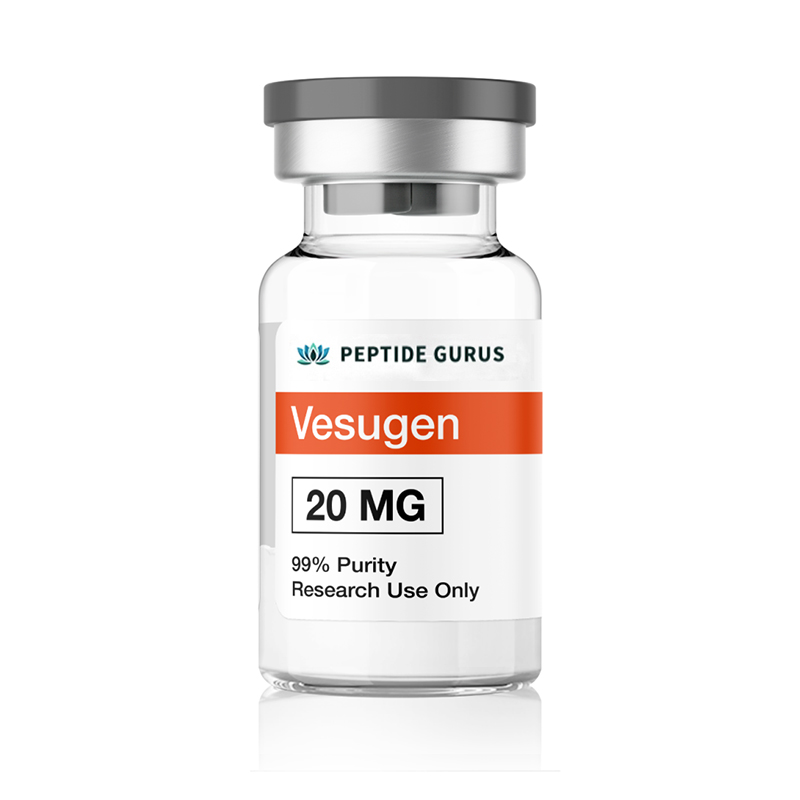
Schreiben Sie uns jetzt eine E-Mail, um Ihre Bestellung mit dem 1-zu-1-Support aufzugeben. Begrenzter Bestand! Wir akzeptieren Zelle, CashApp, Venmo, Banküberweisungen und Krypto.
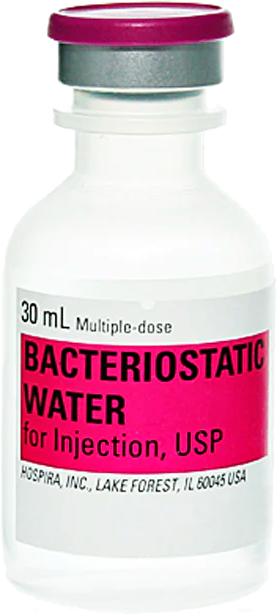
Freies (1) 30 ml bakteriostatisches Wasser mit qualifizierten Bestellungen über$ 500 USD.
(Ausgeschlossene Kapselprodukte, kosmetische Peptide, Promo -Codes und Versand)
Vesugen ist ein Bioregulator und ein geroprotektives Tripeptid. Untersuchungen haben gezeigt, dass es das Gefäßsystem vor den Auswirkungen des Alterns schützt, indem die Entwicklung der Atherosklerose und die Verringerung der Dysfunktion der endothelialen Zellen im gesamten Endothelzellen begrenzt wird. Systeme, die empfindlich gegenüber Gefäßschäden und Abneiungen reagieren, zeigen daher die offensichtlichsten Auswirkungen der Vesugen -Verabreichung. Diese Systeme umfassen das Zentralnervensystem und das kardiovaskuläre System. Vesugen scheint eine herausragende Rolle bei der Regulierung von Proteinspiegeln der Sirtuin 1 zu spielen. Sirtuin 1 hat wichtige Auswirkungen auf Stoffwechselprozesse und hilft, die Auswirkungen des Alterns zu verringern. Sirtuin 1 wird als Ergebnis einer Kalorienbeschränkung aktiviert und wird daher als eines der Proteine angesehen, die für die tiefgreifenden Anti-Aging-Effekte im Zusammenhang mit der Kalorienbeschränkung verantwortlich sind.
Produktnutzung:Dieses Produkt ist nur als Forschungschemikalie gedacht.Diese Bezeichnung ermöglicht die Verwendung von Forschungschemikalien ausschließlich für In -vitro -Tests und Laborversuche. Alle auf dieser Website verfügbaren Produktinformationen dienen nur zu Bildungszwecken. Die körperliche Einführung jeglicher Art in Menschen oder Tiere ist gesetzlich streng verboten. Dieses Produkt sollte nur von lizenzierten, qualifizierten Fachleuten behandelt werden. Dieses Produkt ist keine Droge, Nahrung oder Kosmetik und darf als Medikament, Nahrung oder Kosmetik nicht missbraucht, missbraucht oder missbräuchlich werden.
Vesugen
Vesugen (Lys-Glu-ASP) ist ein Tripeptid mit primären Wirkungen auf das Gefäßsystem. Da das Gefäßsystem im gesamten Körper und in jedem Stoffwechselprozess wichtig ist, hat Vesugen weitreichende Auswirkungen. Untersuchungen zeigen, dass es das Überleben der Neuronen im Zentralnervensystem verbessern, die Atherosklerose/Restenose verringern kann, um Blutgefäße zu schützen und das Überleben der Zellen und die Gewebegesundheit im gesamten Körper zu erhöhen. Es gibt auch Untersuchungen, die darauf hindeuten, dass Vesugen für die Regulierung des Sucht- und Belohnungsverhaltens wichtig sein kann. Vesugen ist ein Anti-Aging-Peptid, teilweise, weil es einige der Wirkungen der Kalorienbeschränkung nachahmt. Die Kalorienbeschränkung wurde seit langem als Förderung der Langlebigkeit verstanden.
Vesugen is a promising neuroprotective peptide with potential applications in the treatment of Alzheimer’s disease. Oral administration of the peptide to elderly individuals with functional disorders of the central nervous system (CNS) has resulted in improved memory in past experiments. The peptide has also been shown to restore synaptic plasticity, which is to say the ability of neurons to make and strengthen connections between themselves[1].
Like most bioregulatory peptides, Vesugen appears to regulate the expression of genes involved in apoptosis and neuron differentiation. Research shows that Vesugen has an impact on the genes for p16, p21, NES, GAP43, nestin, SUMO, APOE, and IGF1. Some of these peptides are involved in apoptosis (programmed cell death) of neurons while others are involved in neuron growth or have been shown to play a role in Alzheimer’s disease pathogenesis[1].
Research also shows that peptides like Vesugen, Epitalon, Pinealon, and Violon can reduce the effects of hypoxia (oxygen deprivation) in the central nervous system. They appear to do this by boosting anti-oxidative enzyme levels and thus helping to counteract the increase in neurotoxic reactive oxygen species that occurs when oxygen levels decline[2]. According to Dr. Linkova, a Russia specialist in aging and gerontology, this effect of Vesugen could not only be useful in the setting of hypoxic events like stroke or heart attack, but also in the setting of neonatal hypoxia during birth.Quelle:PubChem
Vesugen- und Blutgefäße
At least part of the reason that Vesugen protects the central nervous system comes down to the fact that it protects blood vessels from the clogging effects of atherosclerosis and therefore serves to maintain both the supply of nutrients to various tissues as well as the removal of waste products. The latter may be more important in long-term brain health given that research has shown the brain to produce high amounts of metabolic byproducts that, if not removed promptly, can be toxic to neurons. Having a robust blood supply helps to ensure neurons remain in a healthy environment. In fact, the bulk (though not all) of Vesugen’s geroprotective effects may boil down to its impact on vascular health.
Research shows that Vesugen is effective in the treatment of atherosclerosis and other cardiovascular disorders, particularly in older individuals. It affects the expression of genes responsible for endothelial regulation and health. Endothelial cells are the cells that line the insides of blood vessels. Research in mice shows that Vesugen prevents the development of atherosclerosis and vascular stenosis (narrowing due to endothelial overgrowth) by normalizing endothelin-1 expression and increasing sirtuin 1 expression[3]. Sirtuin helps to prevent lipid production and stimulates the oxidation (burning) of fatty acids by altering transcription factors and thus controlling large numbers of genes. Research shows that it contributes to longevity, which means that Vesugen is, at least indirectly, and anti-aging peptide.
The ability of Vesugen to prevent lipid peroxidation (a process that is different from oxidation) increases the stability of red blood cell membranes, which stabilizes the vasculature. This leads to a decrease in the percent of dead cells circulating through blood vessels (especially in the central nervous system) and may serve to reduce rates of apoptosis/necrosis[4].
Additional research reveals that Vesugen stimulates proliferation-associated protein Ki-67 in blood vessels and that levels of Vesugen naturally decline with age[5]. This would suggest that at least part of the reason that rates of vascular disease rise with age is not because of diet or environmental exposure, but simply because these cells start to lose protective mechanisms as Vesugen levels decline. Supplementation with Vesugen 20mg, which has been shown to be orally active, could help to prevent this age-related decline.
Vesugen und Diabetes
Vesugen 20mg, as pointed out in the section on blood vessel health, activates sirtuin 1, which has been shown to play important roles in insulin sensitivity. Research in mice shows that activation of sirtuin 1 by compounds like Vesugen or the antioxidant resveratrol, increase insulin sensitivity and helps to attenuate the insulin resistance caused by eating a high fat diet[6].
In addition to helping to regulate insulin sensitivity, sirtuin 1 has also been shown to affect the activity of PGC1-alpha and the ERR-alpha complex. These proteins are important regulators of large components of the metabolic pathway. Regulation of these pathways helps to improve overall metabolism and fight off the development of metabolic syndrome[7], [8].
Vesugen und Sucht
Untersuchungen zeigen, dass Sirtuin 1 Teil eines großen Proteinkomplexes ist, der den D1-Typ dopaminergen stacheligen Neuronen im Zentralnervensystem reguliert. Diese Neuronen sind wichtig für die Pathogenese der Sucht. Diese Neuronen spielen eine wichtige Rolle bei Motivation, Belohnung und Gewohnheitsbildung. Die Funktionsstörungen dieser Systeme sind mit Sucht und Schizophrenie sowie der Parkinson -Krankheit verbunden. Die Fähigkeit zur Regulierung ihrer Funktion kann wichtige neue Instrumente bei der Behandlung verschiedener psychiatrischer und neurologischer Störungen liefern.
Vesugen und Altern
It has long been known that caloric restriction is a highly effective means of prolonging life. In fact, research suggests that calorie restriction may have the single largest impact on longevity of anything discovered to date. What is unclear, however, is exactly how calorie restriction produces this effect.
At least part of the answer, it appears, comes down to changes in patterns of protein expression. Research shows that increases in sirtuin 1 that result from calorie restriction result in deactivation of the p53 protein. Down regulation of p53 function helps to slow the rate of apoptosis, which means that cells survive for longer. This is critical in tissue where cells are either slowly replaced (cardiac tissue) or are not replaced at all (neurons).
In addition, sirutin 1 also stimulates the process of autophagy[9]. Autophagy is an important component of tissue health in which cellular components are recycled and renewed. This leads to improved functionality of cells and decreases the presence of waste materials and debris.
Overall, the activation of sirtuin 1 helps to improve cell and tissue health both by helping cells with regular housekeeping duties and by prolonging survival. This effect can be achieved via fasting or calorie restriction, but these practices are not easy to maintain over a lifetime. Dr. Vladimir Khavinson, considered to be the father of bioregulator peptide investigation, Vesugen has the same effect as calorie restriction. Thus, the peptide may be a suitable alternative to achieving the effects of calorie restriction without actually restricting calories.
Research on Vesugen indicates that it is, indeed, and anti-aging peptide. Administration of Vesugen to adults with polymorbidity and organic brain syndrome shows that the peptide has significant anabolic (tissue and cell building) effects. These anabolic effects lead to improved activity both in the central nervous system and throughout the body. Measurement of biological indicators of age reveals an overall slowing of the rate of aging in this setting. In some ways, Vesugen shows more potent geroprotective effects than the vaunted Pinealon peptide[10]. The two peptides are likely synergistic when administered in combination.
Vesugen Zusammenfassung
Vesugen ist ein Bioregulator und ein geroprotektives Tripeptid. Es schützt das Gefäßsystem vor den Auswirkungen des Alterns durch Begrenzung der Entwicklung von Atherosklerose und die Verringerung der Dysfunktion der endothelialen Zellen des Gesamts. Systeme, die empfindlich gegenüber Gefäßschäden und Abneiungen reagieren, zeigen daher die offensichtlichsten Auswirkungen der Vesugen -Verabreichung. Diese Systeme umfassen das Zentralnervensystem und das kardiovaskuläre System. Vesugen scheint eine herausragende Rolle bei der Regulierung von Proteinspiegeln der Sirtuin 1 zu spielen. Sirtuin 1 hat wichtige Auswirkungen auf Stoffwechselprozesse und hilft, die Auswirkungen des Alterns zu verringern. Sirtuin 1 wird als Ergebnis einer Kalorienbeschränkung aktiviert und wird daher als eines der Proteine angesehen, die für die tiefgreifenden Anti-Aging-Effekte im Zusammenhang mit der Kalorienbeschränkung verantwortlich sind.
Wladimir Chawinsonist Professor, Präsident der europäischen Region der theInternationalen Vereinigung für Gerontologie und Geriatrie; Mitglied derRussische und ukrainische Akademien der medizinischen Wissenschaften; Hauptgerontologin des Gesundheitsausschusses der Regierung von Petersburg, Russland; Direktor des Saint Petersburg Institute of Bioregulation and Gerontology; Vizepräsident der Gerontologischen Gesellschaft derRussische Akademie der Wissenschaften; Leiter des Vorsitzenden für Gerontologie und Geriatrie der damaligen staatlichen Medizinischen Universität in St.-Petersburg; Oberst des medizinischen Dienstes (UdSSR, Russland), im Ruhestand.PeptidBioregulatoren sowie für die Entwicklung einer bioregulierenden Peptidtherapie. Er untersucht die Rolle von Peptiden bei der Regulierung der Mechanismen des Alterns. Sein Hauptbereich der Handlungen sind Design, präklinische und klinische Studien von neuem PeptidGeroprotektoren. A 40-year-long investigation resulted in a multitude of methods of application of peptide bioregulators to slow down the process of ageing and increase human life span. Six peptide-based pharmaceuticals and 64 peptide food supplements have been introduced into clinical practice by V. Khavinson. He is an author of 196 patents (Russian and international) as well as of 775 scientific publications.His major achievements are presented in two books: “Peptides and Ageing” (NEL, 2002)and “Gerontological aspects of genome peptide regulation” (Karger AG, 2005).Vladimir Khavinson introduced scientific specialty “Gerontology and Geriatrics” in the Russian Federation on the governmental level. Academic Council headed by V. Khavinson has oversighted over 200 Ph.D. and Doctorate theses from many different countries.
Prof. Vladimir Khavinson is being referenced as one of the leading scientists involved in the research and development of Vesugen. In no way is this doctor/scientist endorsing or advocating the purchase, sale, or use of this product for any reason. There is no affiliation or relationship, implied or otherwise, between
Peptid-Gurusund dieser Arzt. Der Zweck des Arztes besteht darin, die erschöpfenden Forschungs- und Entwicklungsbemühungen der Wissenschaftler, die dieses Peptid untersuchen, anerkennen, anzuerkennen und zu verdanken.
Referenzierte Zitate
V. K. Khavinson, N. S. Lin’kova, and R. S. Umnov, “Peptide KED: Molecular-Genetic Aspects of Neurogenesis Regulation in Alzheimer’s Disease,”Bull. Exp. Biol. Med., vol. 171, no. 2, pp. 190–193, May 2021, doi: 10.1007/s10517-021-05192-6.
L. S. Kozina, “[Investigation of antihypoxic properties of short peptides],”Adv. Gerontol. Uspekhi Gerontol., vol. 21, no. 1, pp. 61–67, 2008.
K. L. Kozlovet al., “[Molecular aspects of vasoprotective peptide KED activity during atherosclerosis and restenosis],”Adv. Gerontol. Uspekhi Gerontol., vol. 29, no. 4, pp. 646–650, 2016.
L. S. Kozina, A. V. Arutiunian, S. L. Stvolinskiĭ, and V. K. Khavinson, “[Biological activity of regulatory peptides in model experiments in vitro],”Adv. Gerontol. Uspekhi Gerontol., vol. 21, no. 1, pp. 68–73, 2008.
V. K. Khavinson, S. I. Tarnovskaia, N. S. Lin’kova, E. O. Guton, and E. V. Elashkina, “[Epigenetic aspects of peptidergic regulation of vascular endothelial cell proliferation during aging],”Adv. Gerontol. Uspekhi Gerontol., vol. 27, no. 1, pp. 108–114, 2014.
C. Sunet al., “SIRT1 improves insulin sensitivity under insulin-resistant conditions by repressing PTP1B,”Cell Metab., vol. 6, no. 4, pp. 307–319, Oct. 2007, doi: 10.1016/j.cmet.2007.08.014.
S. Nemoto, M. M. Fergusson, and T. Finkel, “SIRT1 functionally interacts with the metabolic regulator and transcriptional coactivator PGC-1{alpha},”J. Biol. Chem., vol. 280, no. 16, pp. 16456–16460, Apr. 2005, doi: 10.1074/jbc.M501485200.
M. Lagougeet al., “Resveratrol improves mitochondrial function and protects against metabolic disease by activating SIRT1 and PGC-1alpha,”Cell, vol. 127, no. 6, pp. 1109–1122, Dec. 2006, doi: 10.1016/j.cell.2006.11.013.
I. H. Leeet al., “A role for the NAD-dependent deacetylase Sirt1 in the regulation of autophagy,”Proc. Natl. Acad. Sci. U. S. A., vol. 105, no. 9, pp. 3374–3379, Mar. 2008, doi: 10.1073/pnas.0712145105.
V. N. Meshchaninov, E. L. Tkachenko, S. V. Zharkov, I. V. Gavrilov, and I. E. Katyreva, “[EFFECT OF SYNTHETIC PEPTIDES ON AGING OF PATIENTS WITH CHRONIC POLYMORBIDITY AND ORGANIC BRAIN SYNDROME OF THE CENTRAL NERVOUS SYSTEM IN REMISSION],”Adv. Gerontol. Uspekhi Gerontol., vol. 28, no. 1, pp. 62–67, 2015.Alle Artikel und Produktinformationen auf dieser Website dienen nur für informatonale und pädagogische Zwecke.Die auf dieser Website angebotenen Produkte sind nur für In-Vitro-Studien bereitgestellt. In-vitro-Studien (lateinisch: in Glas) werden außerhalb des Körpers durchgeführt. Diese Produkte sind keine Arzneimittel oder Medikamente und wurden von der FDA nicht zur Verhinderung, Behandlung oder Heilung von Krankheit oder Krankheit zugelassen. Die körperliche Einführung jeglicher Art in Menschen oder Tiere ist gesetzlich streng verboten.
Peptidegurus ist ein führender Anbieter von amerikanisch gefertigten Forschungspeptiden und bietet höchste Qualitätsprodukte zu wettbewerbsfähigen Preisen. Mit einem Fokus auf Exzellenz und Kundenservice gewährleisten sie einen sicheren und bequemen Bestellprozess mit globaler Versand.