

• PE-22-28 peptide potential in treating neurodegenerative diseases
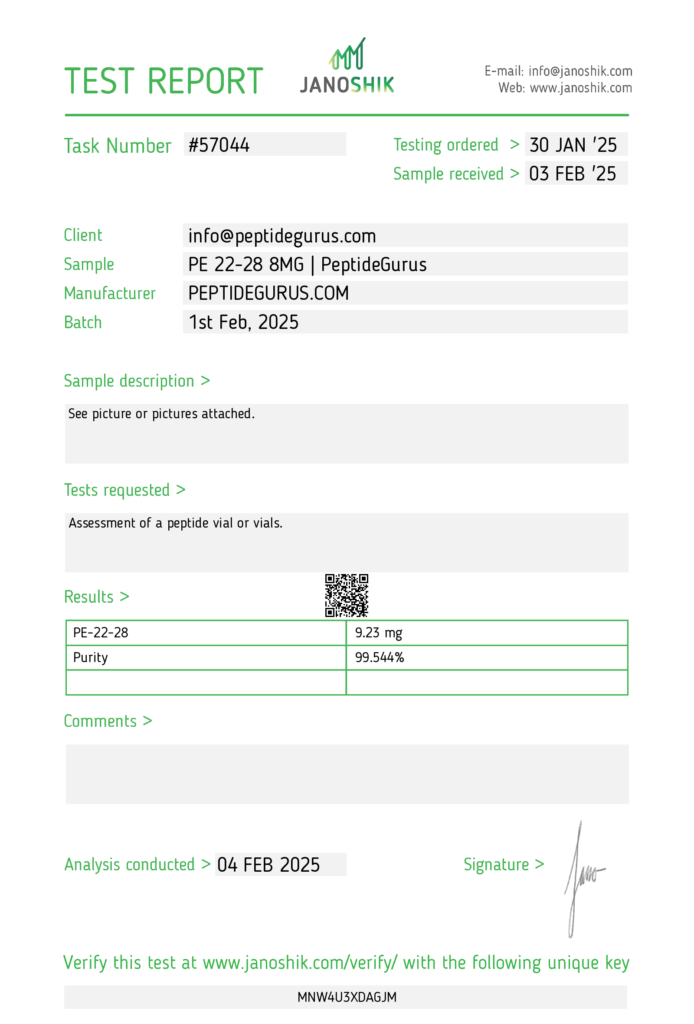
Rapporto di prova PE 22-28 8mg
X
Rapporto di prova PE 22-28 8mg
Contatto per ordine
Scrivici subito per effettuare il tuo ordine con supporto individuale. Scorte limitate! Accettiamo Zelle, CashApp, Venmo, bonifici bancari e criptovalute.
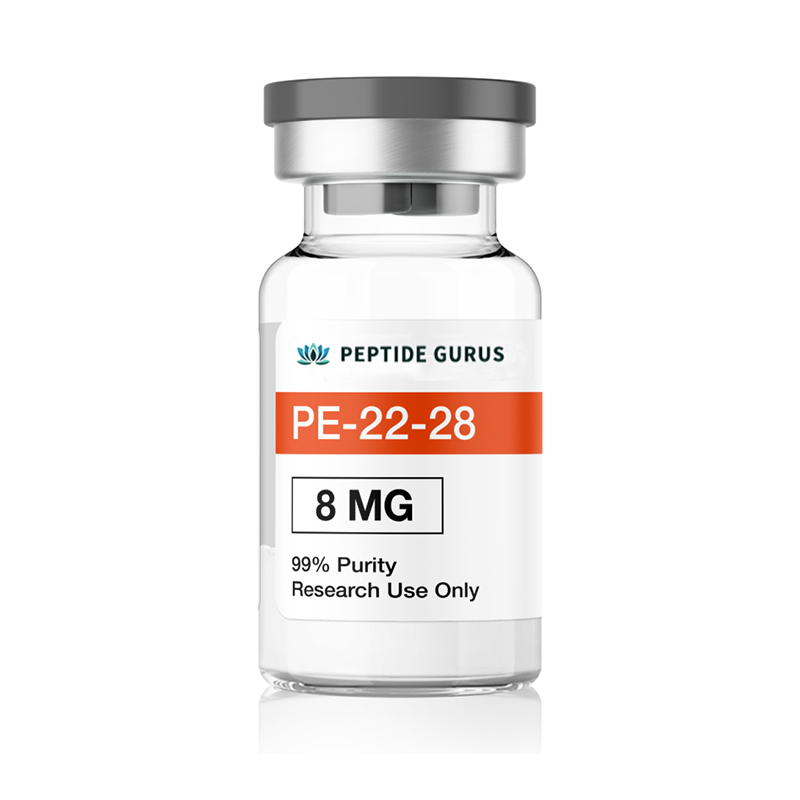
Chiama 22-28 8mgè un peptide sintetico progettato per promuovere vari processi biologici, in particolare correlati alla modulazione del sistema immunitario e alla rigenerazione dei tessuti. PE 22-28 è un frammento di una proteina più ampia chiamata timosina beta-4, che è naturalmente coinvolta nella riparazione dei tessuti, nella guarigione e nella funzione immunitaria. Questo frammento specifico (PE 22-28) ha dimostrato di avere forti proprietà rigenerative e curative, in particolare nei tessuti muscolari e connettivi.

Proprietà chiave e usi di PE 22-28 8mg:

  1. Tissue Regeneration:
    • PE 22-28 svolge un ruolo chiave nella rigenerazione e nella riparazione dei tessuti, in particolare nei tessuti muscolari, della pelle e del connettivo. Viene spesso usato per promuovere la guarigione delle ferite e accelerare il recupero da lesioni o interventi chirurgici.
  2. Anti-inflammatory Effects:
    • Questo peptide ha potenti proprietà anti-infiammatorie, che lo rendono utile per ridurre il gonfiore e il disagio causato da lesioni o condizioni infiammatorie. Abbassando l'infiammazione, PE 22-28 supporta una guarigione e un recupero più rapidi.
  3. Muscle Repair and Growth:
    • PE 22-28 è comunemente usato da atleti e bodybuilder per accelerare il recupero muscolare e ridurre i danni muscolari dopo un intenso esercizio fisico. Può aiutare a riparare le fibre muscolari, migliorando i tempi di recupero complessivi del corpo e le prestazioni.
  4. Cell Migration and Regeneration:
    • Una delle funzioni più importanti di PE 22-28 è la sua capacità di promuovere la migrazione e la rigenerazione cellulare, che è essenziale per la riparazione dei tessuti. Aiuta a stimolare la produzione di nuove cellule nelle aree tissutali danneggiate, accelerando il processo di guarigione.
  5. Wound Healing:
    • PE 22-28 è spesso utilizzato in contesti clinici per supportare la guarigione di ferite croniche, ferite chirurgiche e ustioni. Incoraggia una nuova formazione di tessuti e aiuta a chiudere le ferite in modo più rapido ed efficiente.
  6. Immune System Support:
    • Come parte della famiglia di timosina Beta-4, PE 22-28 svolge un ruolo nel sostenere la funzione del sistema immunitario. Può aiutare a modulare le risposte immunitarie, migliorando la capacità del corpo di combattere le infezioni e promuovere il benessere generale.

Amministrazione e dosaggio:

  • Amministrazione: PE 22-28 viene generalmente somministrato attraverso l'iniezione sottocutanea o intramuscolare. Ciò consente l'assorbimento diretto nel flusso sanguigno, mirando all'area in cui sono necessarie riparazioni e rigenerazione dei tessuti.
  • Dosaggio: Il dosaggio tipico di PE 22-28 è 8 mg per iniezione, sebbene il dosaggio esatto e la frequenza delle iniezioni possano variare in base agli obiettivi individuali e alla condizione specifica da trattare. I cicli di trattamento durano generalmente da poche settimane a diversi mesi, a seconda della gravità della lesione o delle condizioni.

Considerazioni e avvertimenti:

  • Effetti collaterali: PE 22-28 è generalmente ben tollerato, ma alcuni individui possono sperimentare lievi effetti collaterali come arrossamento o irritazione nel sito di iniezione. Meno comunemente, potrebbero esserci effetti sistemici come vertigini o nausea, sebbene questi siano rari.
  • Supervisione medica: A causa dei potenti effetti biologici di PE 22-28, dovrebbe essere utilizzato sotto la supervisione di un professionista sanitario, in particolare per le persone con condizioni di salute sottostanti o per coloro che sono incinta o all'allattamento.
  • Stato normativo: PE 22-28 viene spesso venduto come peptide di ricerca e potrebbe non essere ampiamente approvato per l'uso clinico in tutte le regioni. Garantire il rispetto delle leggi e dei regolamenti locali in merito all'uso dei peptidi.

Riepilogo:

PE 22-28 8mg è un potente peptide usato per promuovere la rigenerazione dei tessuti, ridurre l'infiammazione e supportare la riparazione e il recupero dei muscoli. È comunemente usato nei contesti medici, sportivi e del benessere per accelerare la guarigione e migliorare la salute generale dei tessuti. A causa dei suoi potenti effetti, dovrebbe essere somministrato sotto la supervisione medica per garantire sicurezza e efficacia.Acqua batteriostatica libera (1) da 30 mlcon ordini qualificati$ 500 USD. (excludes capsule products, cosmetic peptides, promo codes and shipping) Product Usage:Questo prodotto è inteso solo come chimica di ricerca.Questa designazione consente l'uso di sostanze chimiche di ricerca rigorosamente solo per test in vitro e sperimentazione di laboratorio. Tutte le informazioni sul prodotto disponibili su questo sito Web sono solo a scopo educativo. L'introduzione corporea di qualsiasi tipo nell'uomo o negli animali è severamente vietata dalla legge. Questo prodotto dovrebbe essere gestito solo da professionisti autorizzati e qualificati. Questo prodotto non è un farmaco, un cibo o un cosmetico e potrebbe non essere maltrattato, utilizzato in modo improprio o erroneamente come droga, cibo o cosmetici.

Cos'è PE-22-28?

PE-22-28 is a synthetic derivative of the naturally occurring peptide spadin. Spadin is a secreted peptide derived from sortilin. It is an antagonist of the TREK-1 (TWIK-related-potassium channel) receptor, a two-pore potassium channel identified as a potential target in the treatment of depression and as a possible neurogenic regulator. Early studies in mice have shown that a deletion of the TREK-1 receptor makes them resistant to depression. Similarly, treatment with sortilin leads to resistance to depression boosts the growth of both neurons and the synaptic interconnections between neurons[1]. Interestingly, shortened analogs of spadin actually show better TREK-1 inhibition than spadin itself. PE-22-28 is the representative peptide for this group of synthetic spadin analogs. PE-22-28 has been shown to be more stable and have improved antidepressant activity and neurogenic properties over the naturally occurring spadin. It is important to note that one of the long-term consequences of taking anti-depressant medications (e.g. SSRIs) is neurogenesis. In fact, the growth of new neurons is considered to be one indication that depression is being adequately treated and that antidepressants are working. PE-22-28 has been shown to induce neurogenesis after just 4 days, which is substantially faster than any known antidepressant. This also suggests that PE-22-28 might be useful in other applications such as learning, stroke recovery, and perhaps even the battle against neurodegenerative diseases[2]. TREK-1, which is primarily found in the brain, is also found in the heart, smooth muscle cells, lung tissue, the prostate, and in specific areas of the pancreas. Though it has been primarily studied as a target for antidepressant activity, TREK-1 plays important roles in pain perception, anesthesia, and neuroprotection. These properties have made TREK-1 a major research target in academia and industry.

Strutture

Sequenza di spadin:YaplprwsgpigvswglrFormula molecolare:C96H142N26O22 Peso molecolare:2012.3492 G/molSequenza PE-22-28:GvswglrFormula molecolare:C35H55N11O9 Peso molecolare:773.8947 g/mol

Ricerca PE-22-28

Cos'è Trek-1?

Il recettore a cui si lega la spadina e quindi PE-22-28 è principalmente Trek-1. Trek-1 è un canale di potassio a due pori regolato da diverse molecole. Appartiene a una grande famiglia di canali di potassio a due pori che sono importanti per regolare l'eccitabilità dei neuroni. Trek-1, in particolare, si trova nelle regioni del cervello che controlla l'umore, la memoria e l'apprendimento. Queste aree includono la corteccia prefrontale, l'amigdala e l'ippocampo. La stimolazione dell'attività di trek-1 riduce l'eccitabilità del neurone riducendo al contempo la funzione di trek-1 aumenta l'eccitabilità e aumenta la probabilità di un evento di depolarizzazione [3]. Riducendo l'eccitabilità del neurone, Trek-1 può aiutare a proteggere dall'eccitotossicità.

Depressione

Research in mouse models of depression indicates that PE-22-28 is more effective in reversing the symptoms of depression than any currently used treatment and that it does so with fewer side effects. In fact, PE-22-28 has been shown to relieve depression in just 4 days without producing any side effects on other functions that are controlled by the TREK-1 channel. There is strong evidence to show that the hippocampus is smaller (of reduced volume) in patients suffering from depressive disorder and other affect disorders. Additionally, research has shown that long-term administration of classic antidepressants (5-HT or norepinephrine selective reuptake inhibitors) boosts neurogenesis in the adult rodent hippocampus and leads to increased hippocampus volume[4]. The ability of PE-22-28 to reverse this loss of volume by stimulating neurogenesis indicates that it is fighting depression at its source and that it may help to uncover some of the underlying physiologic pathways that are deficient in the setting of depression[5]. The lack of side effects caused by spadin and PE-22-28 is just as important as the effects of these peptides. Current treatments for depression have a host of known side effects ranging from suicidality to changes in libido and problems with cognition. In fact, side effects are the number one reason that people stop using their antidepressants and are reluctant to return to them even after their depression worsens. Even ketamine, which has been newly touted as a potential rapid-onset treatment for depression has a host of side effects including delirium, hallucinations, muscle tremors, high blood pressure, and increased heart rate. So, despite its rapid onset of action, doctors have been reluctant to use ketamine in the treatment of depression because of the range and severity of its side effects[6]. There was initial concern that spadin would also cause a host of side effects because the TREK-1 receptor has been implicated in pain sensitivity, seizure activity, and cardiac ischemia. There was also concern that spadin and PE-22-28 may inhibit currents in TREK-2, TRAAK, TASK, and TRESK channels leading additional side effects. Research in mice, however, shows that none of these side effects are observed and, in fact, PE-22-28 has one of the smallest side effect profiles of any existing or experimental treatment for depression[7].

Depressione post-ictus

La depressione post-ictus (PSD) è una condizione comune a seguito dell'ischemia cerebrale ed è particolarmente refrattaria al trattamento standard. Ricerche recenti hanno dimostrato che la sovraespressione di Trek-1 probabilmente svolge un ruolo causale in questa condizione. Nei modelli di topo sperimentale, questa upregulation può essere soppressa o invertita usando sia antidepressivi SSRI che bloccanti di trek-1 come Spadin [3]. Naturalmente, gli SSRI impiegano molto più tempo ad agire e hanno una serie di effetti collaterali. Ciò suggerisce che PE-22-28 potrebbe rivelarsi efficace nelle prove future che esplorano il trattamento del PSD.

Neurogenesi

The ability of antidepressant drugs to upregulate neurogenesis in the hippocampus has been well-established. Research with PE-22-28 shows that this peptide can perform the same function, but in a shorter duration of time. Studies in mice show that PE-22-28 increases both neurogenesis and synaptogenesis after just four days. Preliminary results indicate that PE-22-28 roughly doubles the amount of BrdU (an exogenous marker that is incorporated into DNA and used to detect replication) positive cells in the hippocampus. In the case of synaptogenesis, PE-22-28 appears to double the rate of synapse formation[2], [8]. Another clue that PE-22-28 is boosting cell division in the brain is the increase in CREB seen after its administration. CREB (cAMP response element-binding protein) is a transcription factor associated with neuronal plasticity, memory formation, and the development of spatial memory. CREB appears to be a necessary component in not just the growth of neurons, but in their protection as well. Research in Alzheimer’s disease has shown a down-regulation of CREB and scientists have long sought a drug capable of boosting CREB as a means of treating Alzheimer’s[9], [10]. PE-22-28 is being actively investigated for its ability to both prevent and reverse the symptoms of Alzheimer’s disease. The hippocampus, while playing an important role in depression, is also a critical structure for learning and memory. It is a very plastic structure that research has revealed to be vulnerable to damage by a variety of insults. The hippocampus has been implicated in diseases ranging from depression to anxiety to Alzheimer’s disease. Improving its ability to regenerate following injury could help to treat a number of diseases. Notably, the role of the hippocampus in learning, memory, and spatial navigation suggests that PE-22-28 or a similar TREK-1 antagonist may prove to be an effective nootropic. Now, it has generally been demonstrated in animal models that removing the TREK-1 channel is a recipe for disaster. In previous mouse models, knockout of TREK-1 increased significantly the likelihood of seizure activity and reduced the normal ability of this two-pore potassium channel to protect neurons from excitotoxicity. It came as a bit of surprise then that neither spadin nor PE-22-28 enhanced seizure activity. Even more interesting is the fact that mice treated with spadin are more resistant to developing generalized seizures[3]. PE-22-28 has even more profound protective effects than spadin. Top: Number of cells in the hippocampus of mice treated with saline, fluoxetine(Prozac), and spadin for four days. Middle: Quantification of CREB activity in the brain of mice treated with saline andspadin. Bottom: Effect of spadin on the firing rate of 5-HT neurons (neurons implicated indepression) at baseline (WT), in TREK-1 knockout mice (KO), and afteradministration of spadin and saline. Note that spadin boosts firing in neurons almostas much as removing TREK-1 entirely.

Funzione muscolare

Ci sono alcune ricerche che suggeriscono che Trek-1 svolge un ruolo importante nella capacità del muscolo di rispondere alla stimolazione meccanica. In particolare, il blocco di Trek-1 sembra aumentare la contrattilità nel tessuto muscolare mentre l'attivazione del canale sembra promuovere il rilassamento muscolare. Mentre questo particolare aspetto del canale Trek-1 è ancora nelle prime fasi dell'indagine, sta diventando sempre più importante. Si spera che comprendere il ruolo di molecole come PE-22-28 nella contrazione muscolare e nel rilassamento possa non solo fornire nuove modalità di trattamento per condizioni come la disfunzione della vescica miogenica, ma possa anche aprire nuovi percorsi per comprendere la fisiologia delle prestazioni muscolari [11].

Riepilogo

According to Dr. Jean Mazella, one of the lead researchers in the development of PE-22-28, the peptide was specifically designed to move forward the use of spadin analogs in clinics. PE-22-28 appears to be an effective treatment for depression and a potent stimulator of neurogenesis and synaptogenesis in the hippocampus. It has far fewer side effects than existing antidepressant medications and appears to retain much of its ability to antagonize TREK-1 even after modifications that boost half-life or alter the route of administration. In short, PE-22-28 appears to offer a strong target for guiding the development of a new generation of antidepressants and is helping to shed light on the burgeoning field of nootropics. It is also helping to expand the arsenal of drugs used to treat neurodegenerative diseases like Alzheimer’s disease. The products offered on this website are furnished for in-vitro studies only. In-vitro studies (Latin: in glass) are performed outside of the body. These products are not medicines or drugs and have not been approved by the FDA to prevent, treat or cure any medical condition, ailment or disease. Bodily introduction of any kind into humans or animals is strictly forbidden by law.

Richiesta di indagine

Chi siamo

Peptidegurus è un fornitore leader di peptidi di ricerca di fabbricazione americana, che offre prodotti di alta qualità a prezzi competitivi. Con un focus sull'eccellenza e il servizio clienti, assicurano un processo di ordinazione sicuro e conveniente con la spedizione globale.

Richiedere un preventivo

  • Guru peptidici
  • info@peptidegurus.com
  • Glendale, è, USA
  • CONTATTO

    Richiesta di indagine