

• PE-22-28 peptide potential in treating neurodegenerative diseases
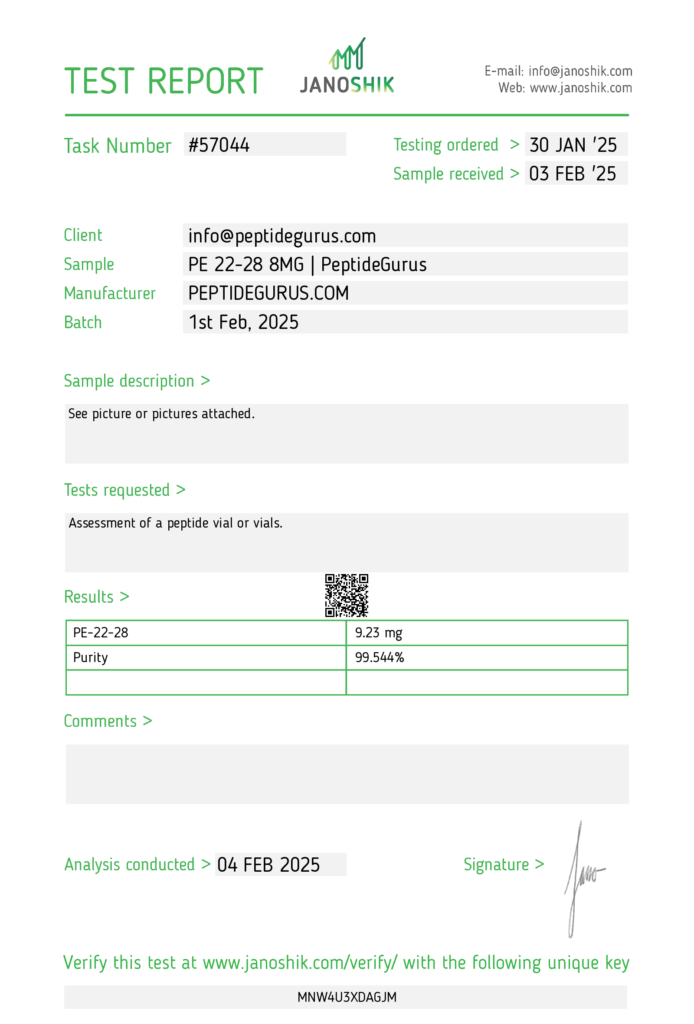
テストレポートPE 22-28 8mg
X
テストレポートPE 22-28 8mg
注文するには連絡先
今すぐメールでご注文をし、1対1のサポートでご注文いたします。在庫が限られています!Zelle、CashApp、Venmo、銀行振込、暗号通貨もご利用いただけます。
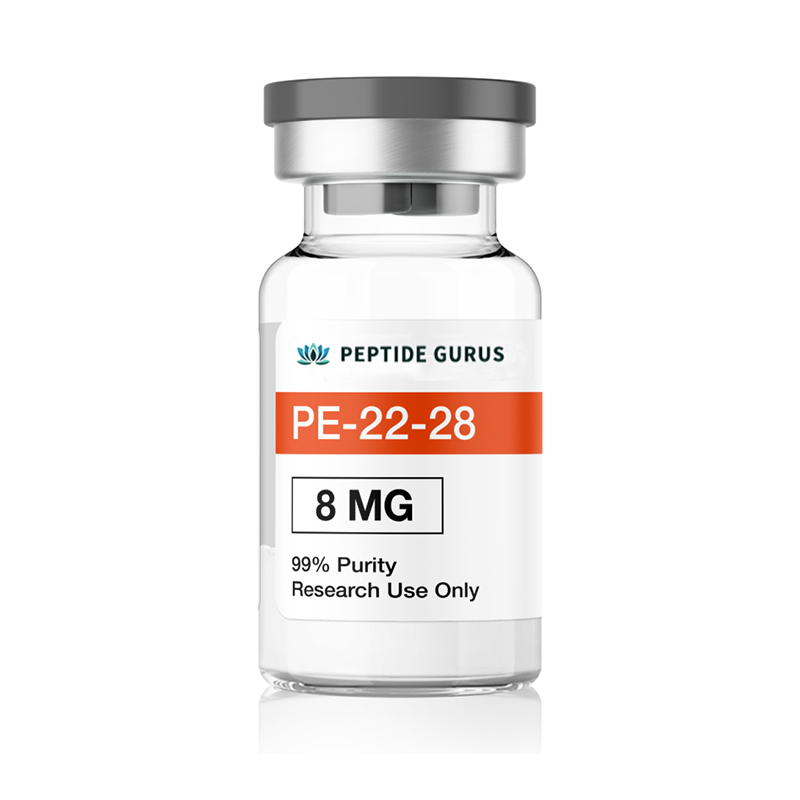
22-28 8mgに電話してください特に免疫系の変調と組織再生に関連するさまざまな生物学的プロセスを促進するように設計された合成ペプチドです。 PE 22-28は、チモシンベータ4と呼ばれるより大きなタンパク質の断片であり、組織の修復、治癒、および免疫機能に自然に関与しています。この特定の断片(PE 22-28)は、特に筋肉および結合組織において、強い再生および治癒特性を持つことが示されています。

PE 22-28 8mgの主要なプロパティと使用:

  1. Tissue Regeneration:
    • PE 22-28は、特に筋肉、皮膚、および結合組織において、組織の再生と修復において重要な役割を果たします。多くの場合、傷の治癒を促進し、怪我や手術からの回復を加速するために使用されます。
  2. Anti-inflammatory Effects:
    • このペプチドには強力な抗炎症特性があり、怪我や炎症状態によって引き起こされる腫れや不快感を減らすのに役立ちます。炎症を下げることにより、PE 22-28はより速い治癒と回復をサポートします。
  3. Muscle Repair and Growth:
    • PE 22-28は、筋肉の回復を加速し、激しい運動後の筋肉の損傷を減らすために、アスリートとボディービルダーによって一般的に使用されています。筋肉繊維の修復に役立ち、体の全体的な回復時間とパフォーマンスを改善します。
  4. Cell Migration and Regeneration:
    • PE 22-28の最も重要な機能の1つは、組織の修復に不可欠な細胞移動と再生を促進する能力です。損傷した組織領域での新しい細胞の産生を刺激し、治癒プロセスを加速させます。
  5. Wound Healing:
    • PE 22-28は、慢性創傷、外科的傷、火傷の治癒をサポートするために臨床環境でよく使用されます。それは新しい組織の形成を促進し、傷をより迅速かつ効率的に閉鎖するのに役立ちます。
  6. Immune System Support:
    • チモシンベータ4ファミリーの一部として、PE 22-28は免疫系機能のサポートに役割を果たします。免疫応答を調節し、感染症と戦い、全体的な健康を促進する身体の能力を改善するのに役立ちます。

投与と投与量:

  • 管理:PE 22-28は、通常、皮下または筋肉内注射によって投与されます。これにより、血流への直接吸収が可能になり、組織の修復と再生が必要な領域を標的とします。
  • 投与量:PE 22-28の典型的な投与量は注射あたり8mgですが、注射の正確な用量と頻度は、個々の目標と治療中の特定の状態によって異なる場合があります。治療サイクルは一般に、怪我や状態の重症度に応じて、数週間から数ヶ月まで続きます。

考慮事項と警告:

  • 副作用:PE 22-28は一般的に忍容性が高いですが、一部の個人は、注射部位での発赤や刺激などの軽度の副作用を経験する場合があります。あまり一般的ではないが、めまいや吐き気などの全身効果があるかもしれないが、これらはまれです。
  • 医療監督:PE 22-28の強力な生物学的効果のため、特に健康状態の根底にある個人または妊娠または母乳育児をしている人のために、医療専門家の監督の下で使用する必要があります。
  • 規制状況:PE 22-28はしばしば研究ペプチドとして販売されており、すべての地域で臨床使用が広く承認されていない可能性があります。ペプチドの使用に関する現地の法律や規制の遵守を確保します。

まとめ:

PE 22-28 8mgは、組織の再生を促進し、炎症を軽減し、筋肉の修復と回復をサポートするために使用される強力なペプチドです。治癒を加速し、全体的な組織の健康を改善するために、医療、スポーツ、ウェルネスのコンテキストで一般的に使用されています。その強力な影響により、安全性と有効性を確保するために医療監督の下で管理する必要があります。遊離(1)30 mlの細菌性水資格のある注文があります500米ドル. (excludes capsule products, cosmetic peptides, promo codes and shipping) Product Usage:この製品は、研究化学物質としてのみ意図されています。この指定により、in vitroテストと実験室の実験のために、研究化学物質を厳密に使用することができます。このウェブサイトで利用可能なすべての製品情報は、教育目的のみを目的としています。あらゆる種類の人間や動物への身体導入は、法律によって厳密に禁じられています。この製品は、認可された資格のある専門家によってのみ処理される必要があります。この製品は薬物、食品、または化粧品ではなく、薬物、食品、化粧品として誤ってブランド化されたり、誤用されたり、誤ったりしたりすることはない場合があります。

PE-22-28とは何ですか?

PE-22-28 is a synthetic derivative of the naturally occurring peptide spadin. Spadin is a secreted peptide derived from sortilin. It is an antagonist of the TREK-1 (TWIK-related-potassium channel) receptor, a two-pore potassium channel identified as a potential target in the treatment of depression and as a possible neurogenic regulator. Early studies in mice have shown that a deletion of the TREK-1 receptor makes them resistant to depression. Similarly, treatment with sortilin leads to resistance to depression boosts the growth of both neurons and the synaptic interconnections between neurons[1]. Interestingly, shortened analogs of spadin actually show better TREK-1 inhibition than spadin itself. PE-22-28 is the representative peptide for this group of synthetic spadin analogs. PE-22-28 has been shown to be more stable and have improved antidepressant activity and neurogenic properties over the naturally occurring spadin. It is important to note that one of the long-term consequences of taking anti-depressant medications (e.g. SSRIs) is neurogenesis. In fact, the growth of new neurons is considered to be one indication that depression is being adequately treated and that antidepressants are working. PE-22-28 has been shown to induce neurogenesis after just 4 days, which is substantially faster than any known antidepressant. This also suggests that PE-22-28 might be useful in other applications such as learning, stroke recovery, and perhaps even the battle against neurodegenerative diseases[2]. TREK-1, which is primarily found in the brain, is also found in the heart, smooth muscle cells, lung tissue, the prostate, and in specific areas of the pancreas. Though it has been primarily studied as a target for antidepressant activity, TREK-1 plays important roles in pain perception, anesthesia, and neuroprotection. These properties have made TREK-1 a major research target in academia and industry.

構造

Spadinシーケンス:yaplprwsgpigvswglr分子式:c96h142n26o22 分子量:2012.3492 g/molPE-22-28シーケンス:gvswglr分子式:c35h55n11o9 分子量:773.8947 g/mol

PE-22-28研究

Trek-1とは何ですか?

スパジン、したがってPE-22-28が主に結合する受容体はTrek-1です。 Trek-1は、多くの異なる分子によって調節される2ポアのカリウムチャネルです。これは、ニューロンの興奮性を調節する上で重要な2ポアのカリウムチャネルの大家族に属します。特に、Trek-1は、気分、記憶、学習を制御する脳の領域で見られます。これらの領域には、前頭前野、扁桃体、および海馬が含まれます。 Trek-1活性を刺激すると、ニューロンの興奮性が低下し、Trek-1機能を減らし、興奮性が向上し、脱分極イベントの可能性が高まります[3]。ニューロンの興奮性を低下させることにより、Trek-1は励起毒性から保護するのに役立ちます。

うつ

Research in mouse models of depression indicates that PE-22-28 is more effective in reversing the symptoms of depression than any currently used treatment and that it does so with fewer side effects. In fact, PE-22-28 has been shown to relieve depression in just 4 days without producing any side effects on other functions that are controlled by the TREK-1 channel. There is strong evidence to show that the hippocampus is smaller (of reduced volume) in patients suffering from depressive disorder and other affect disorders. Additionally, research has shown that long-term administration of classic antidepressants (5-HT or norepinephrine selective reuptake inhibitors) boosts neurogenesis in the adult rodent hippocampus and leads to increased hippocampus volume[4]. The ability of PE-22-28 to reverse this loss of volume by stimulating neurogenesis indicates that it is fighting depression at its source and that it may help to uncover some of the underlying physiologic pathways that are deficient in the setting of depression[5]. The lack of side effects caused by spadin and PE-22-28 is just as important as the effects of these peptides. Current treatments for depression have a host of known side effects ranging from suicidality to changes in libido and problems with cognition. In fact, side effects are the number one reason that people stop using their antidepressants and are reluctant to return to them even after their depression worsens. Even ketamine, which has been newly touted as a potential rapid-onset treatment for depression has a host of side effects including delirium, hallucinations, muscle tremors, high blood pressure, and increased heart rate. So, despite its rapid onset of action, doctors have been reluctant to use ketamine in the treatment of depression because of the range and severity of its side effects[6]. There was initial concern that spadin would also cause a host of side effects because the TREK-1 receptor has been implicated in pain sensitivity, seizure activity, and cardiac ischemia. There was also concern that spadin and PE-22-28 may inhibit currents in TREK-2, TRAAK, TASK, and TRESK channels leading additional side effects. Research in mice, however, shows that none of these side effects are observed and, in fact, PE-22-28 has one of the smallest side effect profiles of any existing or experimental treatment for depression[7].

脳卒中後のうつ病

脳卒中後のうつ病(PSD)は、脳虚血に続く一般的な状態であり、特に標準的な治療に難治性です。最近の研究では、TREK-1の過剰発現がこの状態で原因となる役割を果たす可能性が高いことが示されています。実験的なマウスモデルでは、SSRI抗うつ薬とSpadinのようなTREK-1ブロッカーの両方を使用して、このアップレギュレーションを抑制または逆転させることができます[3]。もちろん、SSRIは行動するのにはるかに時間がかかり、多くの副作用があります。これは、PE-22-28がPSDの治療を調査する将来の試験で効果的であることが証明される可能性があることを示唆しています。

神経新生

The ability of antidepressant drugs to upregulate neurogenesis in the hippocampus has been well-established. Research with PE-22-28 shows that this peptide can perform the same function, but in a shorter duration of time. Studies in mice show that PE-22-28 increases both neurogenesis and synaptogenesis after just four days. Preliminary results indicate that PE-22-28 roughly doubles the amount of BrdU (an exogenous marker that is incorporated into DNA and used to detect replication) positive cells in the hippocampus. In the case of synaptogenesis, PE-22-28 appears to double the rate of synapse formation[2], [8]. Another clue that PE-22-28 is boosting cell division in the brain is the increase in CREB seen after its administration. CREB (cAMP response element-binding protein) is a transcription factor associated with neuronal plasticity, memory formation, and the development of spatial memory. CREB appears to be a necessary component in not just the growth of neurons, but in their protection as well. Research in Alzheimer’s disease has shown a down-regulation of CREB and scientists have long sought a drug capable of boosting CREB as a means of treating Alzheimer’s[9], [10]. PE-22-28 is being actively investigated for its ability to both prevent and reverse the symptoms of Alzheimer’s disease. The hippocampus, while playing an important role in depression, is also a critical structure for learning and memory. It is a very plastic structure that research has revealed to be vulnerable to damage by a variety of insults. The hippocampus has been implicated in diseases ranging from depression to anxiety to Alzheimer’s disease. Improving its ability to regenerate following injury could help to treat a number of diseases. Notably, the role of the hippocampus in learning, memory, and spatial navigation suggests that PE-22-28 or a similar TREK-1 antagonist may prove to be an effective nootropic. Now, it has generally been demonstrated in animal models that removing the TREK-1 channel is a recipe for disaster. In previous mouse models, knockout of TREK-1 increased significantly the likelihood of seizure activity and reduced the normal ability of this two-pore potassium channel to protect neurons from excitotoxicity. It came as a bit of surprise then that neither spadin nor PE-22-28 enhanced seizure activity. Even more interesting is the fact that mice treated with spadin are more resistant to developing generalized seizures[3]. PE-22-28 has even more profound protective effects than spadin. Top: Number of cells in the hippocampus of mice treated with saline, fluoxetine(Prozac), and spadin for four days. Middle: Quantification of CREB activity in the brain of mice treated with saline andspadin. Bottom: Effect of spadin on the firing rate of 5-HT neurons (neurons implicated indepression) at baseline (WT), in TREK-1 knockout mice (KO), and afteradministration of spadin and saline. Note that spadin boosts firing in neurons almostas much as removing TREK-1 entirely.

筋肉機能

TREK-1が機械的刺激に反応する筋肉の能力に重要な役割を果たすことを示唆するいくつかの研究があります。特に、TREK-1遮断は筋肉組織の収縮性を高めるように見えますが、チャネルの活性化は筋肉の弛緩を促進するようです。 Trek-1チャネルのこの特定の側面はまだ調査の初期段階にありますが、ますます重要になっています。筋肉収縮や弛緩におけるPE-22-28のような分子の役割を理解することは、筋原性膀胱機能障害などの状態に新しい治療法を提供するだけでなく、筋肉のパフォーマンスの生理学を理解するための新しい経路を開く可能性があることを望んでいます[11]。

まとめ

According to Dr. Jean Mazella, one of the lead researchers in the development of PE-22-28, the peptide was specifically designed to move forward the use of spadin analogs in clinics. PE-22-28 appears to be an effective treatment for depression and a potent stimulator of neurogenesis and synaptogenesis in the hippocampus. It has far fewer side effects than existing antidepressant medications and appears to retain much of its ability to antagonize TREK-1 even after modifications that boost half-life or alter the route of administration. In short, PE-22-28 appears to offer a strong target for guiding the development of a new generation of antidepressants and is helping to shed light on the burgeoning field of nootropics. It is also helping to expand the arsenal of drugs used to treat neurodegenerative diseases like Alzheimer’s disease. The products offered on this website are furnished for in-vitro studies only. In-vitro studies (Latin: in glass) are performed outside of the body. These products are not medicines or drugs and have not been approved by the FDA to prevent, treat or cure any medical condition, ailment or disease. Bodily introduction of any kind into humans or animals is strictly forbidden by law.

お問い合わせをリクエストしてください

私たちについて

Peptidegurusは、アメリカ製の研究ペプチドの大手サプライヤーであり、競争力のある価格で最高品質の製品を提供しています。卓越性と顧客サービスに重点を置いて、彼らはグローバルな配送で安全で便利な注文プロセスを保証します。

見積もりをリクエストしてください

  • ペプチドグル
  • info@peptidegurus.com
  • グレンデール、それは、アメリカ
  • 接触

    お問い合わせをリクエストしてください