

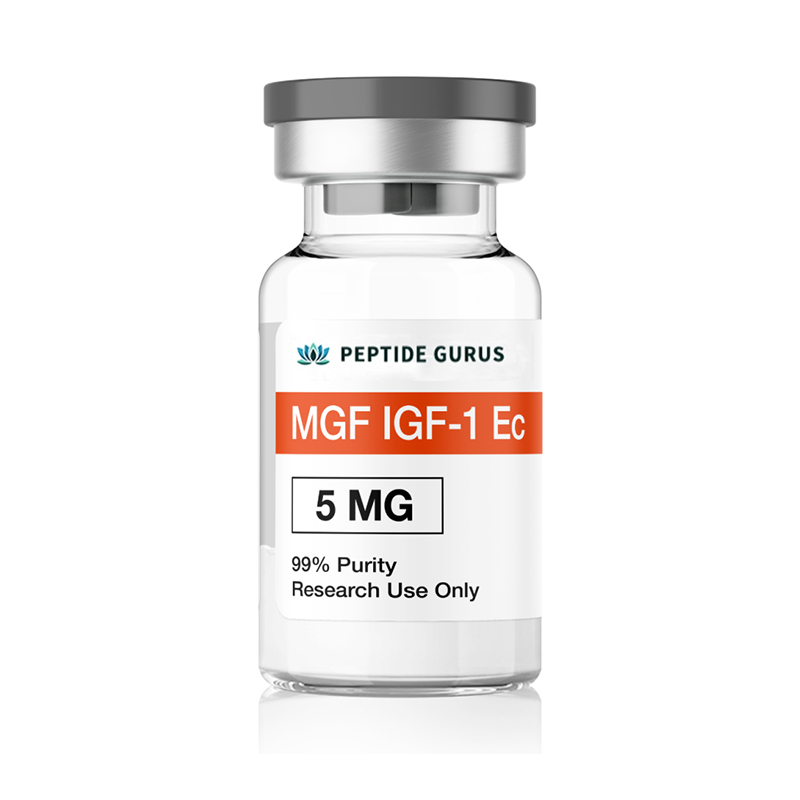

MGF(C末端)5mg
X
MGF(C末端)5mg

MGF(C末端)5mg

カテゴリ:,

注文するには連絡先
今すぐメールでご注文をし、1対1のサポートでご注文いたします。在庫が限られています!Zelle、CashApp、Venmo、銀行振込、暗号通貨もご利用いただけます。
細菌水

遊離(1)30 mlの細菌性水
資格のある注文があります500米ドル. (カプセル製品、化粧品ペプチド、プロモーションコード、出荷を除く)

MGFは、インスリン様成長因子-1(IGF-1)のスプライスバリアントです。研究により、組織の成長、創傷治癒、心臓修復、骨格筋の修復にプラスの効果があることが明らかになりました。 MGFが怪我後の筋肉修復を改善し、運動または怪我後の回復時間を増やすことを示す良い証拠があります。 MGFは、ランニング、ウェイトトレーニング、および反復運動中に発生する機械的ストレスに対する脆弱な組織(軟骨など)を保護することさえあります。
製品の使用:この製品は、研究化学物質としてのみ意図されています。この指定により、in vitroテストと実験室の実験のために、研究化学物質を厳密に使用することができます。このウェブサイトで利用可能なすべての製品情報は、教育目的のみを目的としています。あらゆる種類の人間や動物への身体導入は、法律によって厳密に禁じられています。この製品は、認可された資格のある専門家によってのみ処理される必要があります。この製品は薬物、食品、または化粧品ではなく、薬物、食品、化粧品として誤ってブランド化されたり、誤用されたり、誤ったりしたりすることはない場合があります。

MGF構造

Primary sequence of MGFPrimary sequence of MGF Source:ResearchGate順序:tyr-gln-pro-pro-ser-sthr-asn-lys-asn-lys-gln-gln-arg-arg-lys-gly-ser-glu-glu-glu-arg-lys-cys分子式:c124h204n42o41s1 分子量:2971.99 g/mol同義語:メカノグロース因子、IGF-1EB

IGF-1代替スプライシングはMGFを作成します

科学者は、しばらくの間、代替のスプライシングについて知っています。このプロセスとは、同じ基本的なDNA配列からさまざまなタンパク質を生成するために、さまざまな方法でmRNA鎖を作成する細胞の能力を指します。 IGF-1は、代替スプライシングの極端な端にあることが判明しました。 6つのエクソンと複数の転写部位を備えたIGF-1は、それぞれ3つの主要なアイソフォーム(IGF-1EA、IGF-1EB、IGF-1EC)で構成される2つのクラスにスプライドでき、少なくとも6つの異なるタンパク質を使用できます。これらのペプチドをさらに修正して、さらに多様な代替品を生成することができます[1]. IGF-1代替スプライシングはMGFを作成しますソース:PubMed

MGFとは何ですか?

Mechano-Growth因子は、のIGF-1EBアイソフォームの代替名ですIGF-1。筋肉のリモデリング、細胞増殖、細胞生存において重要な役割を果たすことが示されています。新しい研究は、この特定のアイソフォームが骨格筋の衛星細胞を活性化し、ニューロンを保護し、老化の筋肉を吸う効果を相殺できることを示唆しています[3]。MGFの主な役割は、特に運動または負傷後の筋肉の急性修復です。ラットの研究では、MGFの濃度が筋肉損傷後劇的に増加し、筋肉におけるその存在は骨格筋細胞の成長と分化と強く相関することが示されています。[3].

MGF研究

年齢の影響を受けるMGFレベル

結局のところ、生成されるIGF-1の特定のバージョンは、多くの要因に依存します。年齢、ステロイドホルモン、成長ホルモン、およびその他の発達の手がかりはすべて、IGF-1のスプライシングと生成される最終ペプチドに影響します。特に、年齢はIGF-1アイソフォームの発現に大きな影響を与えることがわかっています。若い男性は、クラス1とクラス2のアイソフォームの間で優先されるようになりましたが、年配の男性は統計的かつ生理学的に有意なシフトをクラス1EAに向けて示しています[2]。老化の明らかな兆候の観点からこの変化の全体的な重要性は明確ではありませんが、老化プロセスをよりよく理解するための実験的な出発点を提供します。この分野では、より多くの研究が必要ですが、MGFの補給は老化に関連する筋肉の拡散効果を相殺できる可能性があると考えられています。

機械成長因子と炎症

筋肉細胞の再生は、炎症細胞とそれらが放出する特定のシグナル伝達分子によって媒介されます。このプロセスではマクロファージは特に重要であり、筋肉細胞の炎症の環境におけるMGFの主要な生産者のようです。 IGF-1EA(MGF)は、抗炎症効果があることが示されていますが、マクロファージの寿命も延長されます。この効果の正確な重要性はまだ解明されていませんが、外因性のMGF投与がマクロファージに影響を与えることで筋肉細胞の治癒率を高める可能性があると推測されています[4].

MGFの研究、筋肉の成長、最適化された身体トレーニング

MGFは、筋肉幹細胞(衛星細胞と呼ばれる)を活性化することにより、肥大と筋肉の修復を強化することが示されています。マウスの研究では、筋肉内MGF注射のわずか3週間後の平均筋線維サイズが25%増加しています。研究者は、ペプチドが筋肉を消耗する病気の環境に有益である可能性があり、運動の影響を高めるのにも役立つかもしれないと推測しています[5]. While that latter may seem like an odd recommendation to come from stolid researchers, it underlies the importance of muscle mass in baseline metabolism. It has long been known that boosting muscle mass is a good way to improve basal rates of metabolism and aid in weight loss and fat burning. The ability to improve lean body mass after even moderate exercise could be one part of a multi-faceted approach to the obesity epidemic and the host of medical conditions associated with overweight status. In the setting of muscle-wasting disease, such as Duchenne muscular dystrophy (DMD), transplanting precursors of muscle cells (called myogenic precursor cells) has been shown to improve dystrophin expression and help offset the effects of some conditions. Unfortunately, survival rates after transplant are low and so the procedure has never been of much therapeutic value. New research in mouse models indicates that MGF can boost survival of myogenic precursor cells and may lead to enhanced transplant success[6]。 MGFの利点は、筋原性前駆細胞移植をDMD治療の主力にするのに役立つ可能性がありますが、かつて他のオプションが使い果たされたときのフリンジ、ラストディッチ手順と見なされていました。

機械成長因子と軟骨

Cartilage damage can occur as a result of injury, repetitive overuse of a joint (osteoarthritis), or inflammatory disease (e.g. rheumatoid arthritis). Unfortunately, cartilage does not heal well for a variety of reasons including inadequate blood supply and a dearth of stem cells necessary for substantial regeneration. Research on MGF, however, indicates that the peptide might be able to help overcome some of the inherent limitations of cartilage regeneration. It appears that MGF helps chondrocytes, the cells primarily responsible for cartilage health and regeneration, survive in response to mechanical stimuli. In other words, in the setting of physical stress on cartilage, MGF boosts survival of the very cells necessary to protect against that stress and repair any damage that it causes. These effects appear to be mediated through several pathways, including the YAP signaling pathway, which boosts chondrocyte migration into cartilage[7]. It is important to note that MGF is not just therapeutic following cartilage injury, but has been found to help prevent injury and long-term disability as well. Mechanical overload is one of the primary causes of disc degeneration in the human spine because overloading chondrocytes causes them to undergo apoptosis (programmed cell death). Research in rodents indicates that MGF can inhibit apoptosis in the cells and thus help to prevent disc degeneration from occurring in the first place[8]。研究者は、MGF補給の使用を積極的に調査して、機械的な過負荷によって引き起こされる脊髄変性を減らしています。

脳の発達とニューロンの健康におけるMGF

マウスの発達中の脳におけるMGFの存在は、ペプチドが神経保護効果を持つことを示した研究で2010年までさかのぼって実証されました。げっ歯類モデルでのその後の研究では、MGFは脳低酸素症の環境で高度に発現し、ニューロンの再生が行われている脳領域で過剰発現していることが示されています。ペプチドがニューロンの保護に利益をもたらすことは、ALS(Lou Gehrigの病気)のマウスモデルを使用した研究で最終的に明らかにされました。 MGFによる治療は、ALSで見られる全体的な進行性筋力低下を改善し、疾患の主な原因を遅くします。これは運動ニューロンの喪失です[9]。実際、MGFは他のIGF-1アイソフォームよりもALSの設定でニューロンを保護するのに非常に優れており、全体的な虚血後の成体脳の再生領域で発見されています。[10]。現在、MGFがALSの筋肉機能を改善し、運動源を死から保護する治療として使用できることを期待しています[11].

機械成長因子と心臓細胞

急性心筋梗塞(心臓発作)のヒツジモデルの研究は、MGFが虚血から心筋を保護することを示しています。実際、この研究では、MGFの注射と心臓発作後のかなりの利益に続いて、心筋細胞の妥協が35%減少していることがわかりました。[12]。これは、これまでに、心臓発作が起こっている間に心臓発作の影響を減らすことができる限られた数の介入があったため、かなりの発見です。ステントの配置または凝固薬物の投与(生命を脅かす出血を引き起こすリスクを伴う)を除いて、心臓発作の急性段階でできることはほとんどありません。ほとんどの治療は、代わりに、組織のフォローとイベントを保護し、可能な限り多くの機能を回復することに焦点を合わせています。 MGFは、最初のレスポンダーに心臓発作の影響を3分の1以上減らすことができる実際のツールを提供できる急性MIを治療するための新しい道を開いています。心血管疾患は、しかし、ほとんどの先進国で大人の最大の殺人者であることを考えると、この発見には大きな利益の可能性があります。

MGF研究方向

MGF is being explored via a number of different research avenues. Right now, the peptide shows a great deal of promise in protecting muscle tissue of all types from a wide variety of insults. This makes MGF a prime candidate for pharmaceutical development and the peptide may serve as the basis for a number of breakthrough treatments over the next decade. Additionally, new aspects of MGF are being uncovered regularly. The peptide is already known to protect neurons and boost cartilage health, so there is a wide area of application for current and future research. MGF exhibits minimal side effects, low oral and excellent subcutaneous bioavailability in mice. Per kg dosage in mice does not scale to humans. MGF for sale at
ペプチドグル人間の消費ではなく、教育的および科学的研究のみに限定されています。あなたが認可された研究者である場合にのみMGFを購入してください。

記事著者

上記の文献は、M.D。Logan博士によって研究、編集、および組織されました。ケースウエスタンリザーブ大学医学部とB.S.分子生物学で。

Scientific Journalの著者

Paul Goldspink博士is the Principal Investigator and Associate Professor at the Department of Physiology within the Medical College of Wisconsin. The research in Dr. Goldspink’s laboratory is focused on understanding the actions of IGF-1 isoforms in the heart and other tissues. We are investigating the role of IGF-1 isoforms in response to stresses such a mechanical overload, hypoxia, oxidative stress and age in the heart. We have focused on a particular isoform called Mechano-Growth Factor (MGF), which plays a protective role in preventing cell death, preserving contractility and preventing pathologic hypertrophy of the heart following myocardial infarction. We are currently investigating the underlying mechanisms utilizing peptide analogs derived from the E-domain region of MGF which serve as allosteric modulators of excitation-transcription pathways in muscle. Through collaborations we have been able to exploit our findings by developing a technology that combines a microscopic physical scaffold to deliver peptide therapeutics, with the goal of improving cardiac function during the progression of heart failure by using implantable cell-sized “biomimetic devices”. The development of these intelligent drug delivery platforms which we have recently employed in the heart, also have applicability of other tissues and disease states. Paul Goldspink, PhD is being referenced as one of the leading scientists involved in the research and development of MGF. In no way is this doctor/scientist endorsing or advocating the purchase, sale, or use of this product for any reason. There is no affiliation or relationship, implied or otherwise, between
ペプチドグルそしてこの医者。医師を引用する目的は、このペプチドを研究している科学者が実施した徹底的な研究開発努力を認め、認識し、称賛することです。 Paul Goldspink、PhDは、参照された引用の下に[5] [10]および[11]にリストされています。

参照された引用

    A. Philippou, M. Maridaki, S. Pneumaticos, and M. Koutsilieris, “The Complexity of the IGF1 Gene Splicing, Posttranslational Modification and Bioactivity,” Mol. Med., vol. 20, no. 1, pp. 202–214, May 2014. A. M. Oberbauer, “The Regulation of IGF-1 Gene Transcription and Splicing during Development and Aging,” Front. Endocrinol., vol. 4, Mar. 2013. R. W. Matheny, B. C. Nindl, and M. L. Adamo, “Minireview: Mechano-Growth Factor: A Putative Product of IGF-I Gene Expression Involved in Tissue Repair and Regeneration,” Endocrinology, vol. 151, no. 3, pp. 865–875, Mar. 2010. K.-T. Sun, K.-K. Cheung, S. W. N. Au, S. S. Yeung, and E. W. Yeung, “Overexpression of Mechano-Growth Factor Modulates Inflammatory Cytokine Expression and Macrophage Resolution in Skeletal Muscle Injury,” Front. Physiol., vol. 9, 2018. G. Goldspink, “Research on mechano growth factor: its potential for optimising physical training as well as misuse in doping,” Br. J. Sports Med., vol. 39, no. 11, pp. 787–788, Nov. 2005. P. Mills, J. C. Dominique, J. F. Lafrenière, M. Bouchentouf, and J. P. Tremblay, “A Synthetic Mechano Growth Factor E Peptide Enhances Myogenic Precursor Cell Transplantation Success,” Am. J. Transplant., vol. 7, no. 10, pp. 2247–2259, 2007. X. Jing et al., “Mechano-growth factor protects against mechanical overload induced damage and promotes migration of growth plate chondrocytes through RhoA/YAP pathway,” Exp. Cell Res., vol. 366, no. 2, pp. 81–91, May 2018. Q. Xu, H. Fang, L. Zhao, C. Zhang, L. Zhang, and B. Tian, “Mechano growth factor attenuates mechanical overload-induced nucleus pulposus cell apoptosis through inhibiting the p38 MAPK pathway,” Biosci. Rep., vol. 39, no. 3, Mar. 2019. J. Dluzniewska et al., “A strong neuroprotective effect of the autonomous C-terminal peptide of IGF-1 Ec (MGF) in brain ischemia,” FASEB J. Off. Publ. Fed. Am. Soc. Exp. Biol., vol. 19, no. 13, pp. 1896–1898, Nov. 2005. B. Zablocka, P. H. Goldspink, G. Goldspink, and D. C. Gorecki, “Mechano-Growth Factor: an important cog or a loose screw in the repair machinery?,” Front. Endocrinol., vol. 3, 2012. J. Riddoch-Contreras, S.-Y. Yang, J. R. T. Dick, G. Goldspink, R. W. Orrell, and L. Greensmith, “Mechano-growth factor, an IGF-I splice variant, rescues motoneurons and improves muscle function in SOD1(G93A) mice,” Exp. Neurol., vol. 215, no. 2, pp. 281–289, Feb. 2009. V. Carpenter et al., “Mechano-Growth Factor Reduces Loss of Cardiac Function in Acute Myocardial Infarction,” Heart Lung Circ., vol. 17, no. 1, pp. 33–39, Feb. 2008.
このウェブサイトで提供されるすべての記事と製品情報は、情報および教育目的のみを目的としています。このウェブサイトで提供される製品は、ビトロ内の研究のためにのみ提供されています。 in-vitro研究(ラテン語:ガラス)は体の外側で行われます。これらの製品は薬や薬ではなく、病状、病気、病気を予防、治療、治療するためにFDAによって承認されていません。あらゆる種類の人間や動物への身体導入は、法律によって厳密に禁じられています。

お問い合わせをリクエストしてください

私たちについて

Peptidegurusは、アメリカ製の研究ペプチドの大手サプライヤーであり、競争力のある価格で最高品質の製品を提供しています。卓越性と顧客サービスに重点を置いて、彼らはグローバルな配送で安全で便利な注文プロセスを保証します。

見積もりをリクエストしてください

  • ペプチドグル
  • info@peptidegurus.com
  • グレンデール、それは、アメリカ
  • 接触

    お問い合わせをリクエストしてください