


• ペプチド合成機器サプライヤー
  • レタトルチドペプチドのベストプライス
Q
X
Q

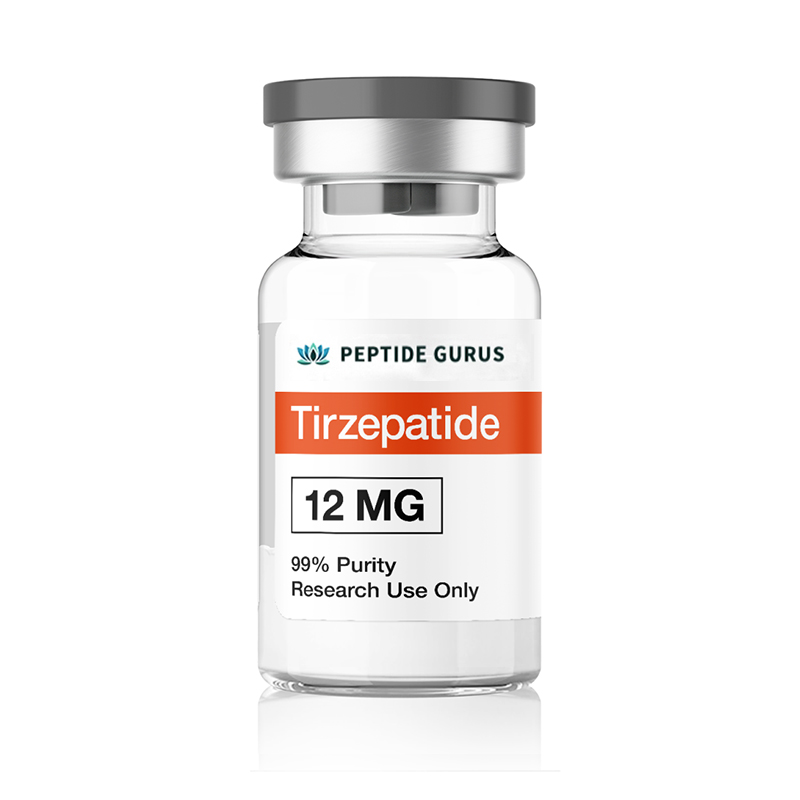
チルゼパチド12mg

カテゴリ:,

注文するには連絡先
今すぐメールでご注文をし、1対1のサポートでご注文いたします。在庫が限られています!Zelle、CashApp、Venmo、銀行振込、暗号通貨もご利用いただけます。
細菌水

遊離(1)30 mlの細菌性水
資格のある注文があります500米ドル. (カプセル製品、化粧品ペプチド、プロモーションコード、出荷を除く)

チルゼパチド同時にグルカゴン様ペプチド-1(GLP-1)機能を備えた胃阻害ポリペプチド(GIP)の合成誘導体です。この組み合わせにより、チルゼパチドは血糖値を下げ、インスリン感受性を高め、満腹感を高め、体重減少を促進することができます。チルゼパチドは2型糖尿病と戦うために開発されましたが、さらに心血管系を保護し、強力な減量剤として機能することが示されています。
製品の使用:この製品は、研究化学物質としてのみ意図されています。この指定により、in vitroテストと実験室の実験のために、研究化学物質を厳密に使用することができます。このウェブサイトで利用可能なすべての製品情報は、教育目的のみを目的としています。あらゆる種類の人間や動物への身体導入は、法律によって厳密に禁じられています。この製品は、認可された資格のある専門家によってのみ処理される必要があります。この製品は薬物、食品、または化粧品ではなく、薬物、食品、化粧品として誤ってブランド化されたり、誤用されたり、誤ったりしたりすることはない場合があります。

チルゼパチド

チルゼパチドは、インスリン放出を刺激し、2型糖尿病と非アルコール性脂肪肝疾患の両方に対処するために開発された胃阻害ポリペプチド(GIP)の合成類似体です。 39のアミノ酸で構成された比較的大きなチルゼパチドは、GIPとGLP-1(グルカゴン様ペプチド-1)受容体の両方に結合することにより、膵臓からのインスリンの放出を刺激します。より長い期間を引き継ぐチルゼパチドは、アディポネクチンのレベルを最大26%増加させます[1]。研究によると、チルゼパチドは空腹感を減らし、インスリンレベルを低下させ、インスリン感受性を高めることが示されています。総合すると、これらの効果は11 kg(25ポンド)の大幅な体重減少を引き起こし、グルコース耐性を改善し、脂肪(脂肪)組織を減少させ、心血管リスクを減らします。

チルゼパチド構造

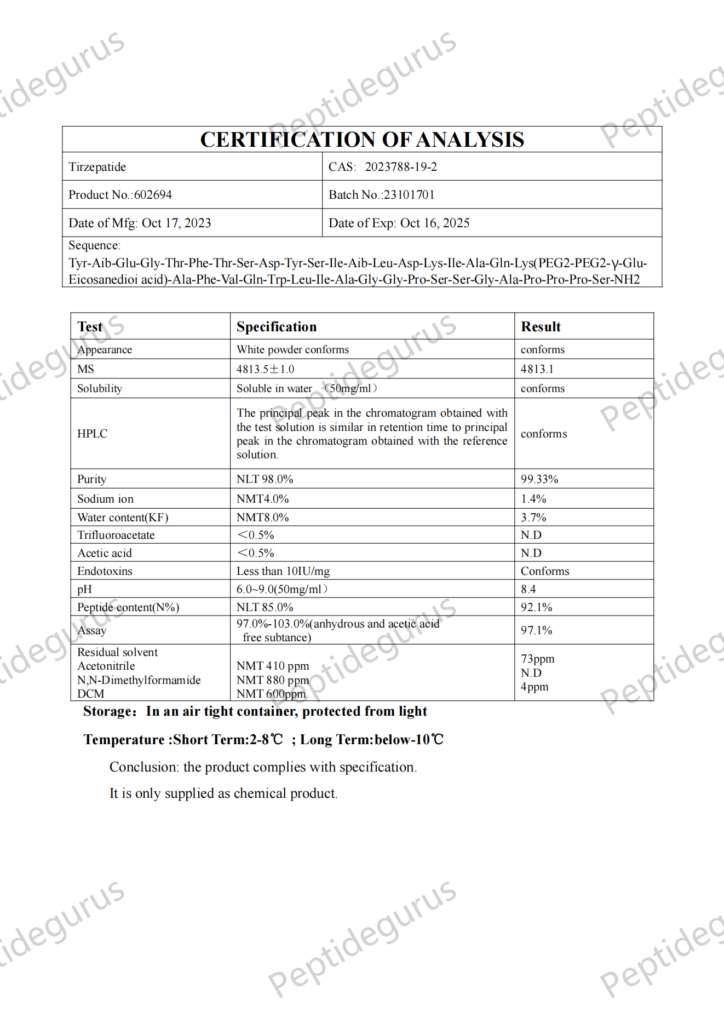
アミノ酸配列:ye-aib-gtftsdysi-aib-ldkiaq(C20脂肪酸)afvqwliaggpssgappps注記:AIBは、非コード化されていない(非タンパク質形成)アミノ酸です2H-C(ch3)2クー分子式:c225h348n48o68分子量:4813.527 g/molPubchem cid:156588324 CAS番号:2023788-19-2同義語:P1206、LY3298176Moleculeソース:パブ

ティルゼパチドは何をしますか?

Simply put, Tirzepatide increases the release of insulin from the pancreas resulting in improved glucose control. Research shows that, in individuals with Type 2 diabetes, Tirzepatide decreases hemoglobin A1c (HbA1c) levels by 2.4% after six months. The peptide also appears to aid in weight loss, showing a dose-dependent relationship and helping individuals lose as much as 11 kg (25 lbs) over six months[1], [2]. It isn’t just that Tirzepatide increases insulin release though. Research suggests that the peptide actually improves the function of pancreatic beta cells, the cells that make and release insulin. Studies suggest that Tirzepatide may actually make beta cells more effective at processing insulin, which leads not just to increases in insulin levels in the bloodstream, but decreased stress on the beta cells themselves. This may, in turn, help to slow the progressive nature of type 2 diabetes. Research shows that Tirzepatide doesn’t just increase insulin levels at random though. It appears to do so only in response to increased blood glucose levels. During fasting, Tirzepatide actually decreases insulin levels and thus helps to increase insulin sensitivity over time. It also decreases fasting levels of glucagon, which are thought to exacerbate hyperglycemia by interfering with hepatic glucose metabolism. Overall, these changes are a big part of the reason Tirzepatide has a profound effect on glucose and, ultimately, HbA1c levels[3].

ティルゼパチドはどのように機能しますか?

Tirzepatide is a dual agonist of the gastric inhibitory polypeptide receptor and the glucagon-like peptide-1 receptor. Action at these receptors appears to have synergistic effects that make Tirzepatide more effective than strict GLP-1 agonists that are already approved for the treatment of type 2 diabetes. The affinity of Tirzepatide for the GIP receptor is greater than its affinity for the GLP-1 receptor. Gastric inhibitory polypeptide, which is also referred to as the glucose-dependent insulinotropic polypeptide, is synthesized naturally in the small intestine. This polypeptide binds to the GIP receptor to inhibit gastric acid secretion and gastrin release while stimulating insulin release. The latter is the primary function of GIP-R and is the primary reason that insulin levels increase following a meal. Glucagon-like peptide-1 receptors are found on beta cells as well as in neurons in the brain. Like GIP-R, stimulation of GLP-1R stimulates the release of insulin. Natural agonists include glucagon and GLP1, but it has also been shown to bind nearly a dozen synthetic agonists including dulaglutide, lithium, and oxyntomodulin. Activation of GLP-1R increases both insulin synthesis and insulin release, factors that have made it a desirable target in drug development. In the brain, GLP-1R stimulation lowers appetite. Interestingly, stimulation of GLP-1R appears to increase beta cell density in the pancreas. GLP-1R stimulation increases expression of the anti-apoptotic bcl-2 gene while reducing expression of pro-apoptotic bax and caspase-3 genes. This leads to enhanced beta cell survival and, ultimately, to increased levels of insulin[4]. The combination of GIPR and GLP-1R activity is what gives Tirzepatide an edge over strict GLP-1R agonists. Research shows that Tirzepatide acts identically to GIP at the GIPR, but favors cAMP production over β-arrestin recruitment when acting at the GLP-1R. These details may seem esoteric to some extent, but this difference in activity from endogenous GLP-1 appears to cause GLP-1R activation without increasing physiological internalization of the receptor. The net result is enhanced GLP-1R activity with Tarazepide compared to both endogenous GLP-1 as well as other synthetic GLP-1R agonists[5]. These slight alterations mean that Tirzepatide drastically enhances insulin secretion, promotes feelings of satiety, and reduces inflammation in adipose tissue. These combined effects make it a highly efficacious anti-diabetes peptide. Finally, Tirzepatide appears to alter adiponectin levels, raising overall levels of the fat-burning peptide. Increased levels of adiponectin reduce fat cell differentiation and increase energy expenditure by making mitochondria more inefficient. A low level of this peptide hormone has been implicated in diseases such as type 2 diabetes, atherosclerosis, and non-alcoholic fatty liver disease[6]. It is worth noting that elevated adiponectin levels elevate insulin sensitivity, so it would appear that Tirzepatide modulates insulin sensitivity via several mechanisms.

ティルゼパチドと空腹

Research shows that Tirzepatide delays gastric emptying during the earliest phases of its administration but that the effect diminishes over time as a result of tachyphylaxis[7]. These effects are similar to those seen with pure GLP-1R agonists, indicating that this action of Tirzepatide is almost completely controlled by its GLP-1 activity and not at all by its GIP activity. It appears that the effects of Tirzepatide on gastric emptying can be prolonged if the peptide is taken at a low dose for four weeks and then the dose is escalated. This also helps to mitigate side effects caused by the peptide and creates a veritable win-win for patients. Delayed gastric emptying can help to increase feelings of satiety and reduce hunger as well as food cravings. Combined with the effects Tirzepatide has on glucose levels, this can actually help to alter eating patterns over the long term.

チルゼパチドと体重

As noted above, Tirzepatide use is associated with substantial weight loss over a six-month time interval. A comparison of Tirzepatide to other GLP-1 analogues, like degludoc, indicates a striking difference. Whereas Tirzepatide causes a dose-dependent decrease in weight over time, degludoc and other GLP-1R agonists cause weight gain[12]. It appears that the GIP agonism cause by Tirzepatide is what is responsible for the peptide’s long-term effects on weight. GIP appears to directly impact the insulin-sensitivity of adipocytes, which is likely the mechanism by which Tirzepatide impacts adiponectin levels. In short, Tirzepatide activates GIP receptors in fat cells, which then leads to an increase insulin sensitivity. This, in turn, leads to a reduction in adipose inflammation as well as an increase in adiponectin levels and the associated benefits. This isn’t the whole picture, however. Research shows that GIP signaling in the central nervous system regulates hypothalamic feeding centers leading to decreased food intake and improved glucose handling. This, in turn, leads to decreased body weight[13]. Thus, it appears that Tirzepatide impacts weight via adiponectin signaling directly in adipose tissue and via CNS alterations that reduce hunger levels via GIPR signaling in the brain.グルコース依存性のinsulinotropicポリペプチドは、胃阻害ポリペプチド(GIP)の別の用語ですソース:Sciencedirect

ティルゼパチドと心臓

As noted, Tirzepatide alters adiponectin levels. Low adiponectin has been associated with atherosclerosis, obesity, and heart disease while increased adiponectin levels have been associated with decrease risk of all of these things. Research in humans with type 2 diabetes has shown that Tirzepatide improves lipoprotein biomarkers, lowering levels of triglycerides, apoC-III, and a handful of other lipoproteins[8]. Combined, these effects mean reduced risk of heart disease as a likely result of decreased adiposity. Research shows that increased adiponectin levels increase HDL levels while decreasing triglyceride levels, both of which are associated with lower risk of heart disease. The peptide hormone appears to go further though, reducing scavenger receptors in macrophages and increasing the levels of cholesterol efflux to greatly protect against atherosclerosis. Increases in adiponectin levels have been associated with improved nutrition, exercise, and the use of certain lipid-lowering medications[9]. It appears that Tirzepatide has similar beneficial effects. Research shows that GLP-1 is important in both the direct regulation of cardiovascular risk factors such as hypertension, dyslipidemia, and obesity as well as in the indirect regulation of risk factors like inflammation and endothelial cell dysfunction[10]. The former effects are discussed above and below in relationship to adiponectin. The effects on inflammation and endothelial function, however, appear to be mediated more directly. In the case of endothelial function, GLP-1 signaling has been shown to induce relaxation of blood vessels leading to decreased blood pressure and enhanced end organ perfusion. This effect appears to result from increased expression of eNOS, the enzyme that generates nitric oxide and induces vascular relaxation. Interestingly, these effects appear to be enhanced in the setting of preexisting cardiovasulcar disease and diabetes[10]. Of course, it is well known that inflammation is directly correlated with atherosclerosis. The details are still being worked out, but GLP-1 signaling appears to decrease inflammation via a handful of mechanisms including reduced NF-κB signaling, decreased MMP-9 activity, inhibited inflammatory cytokine synthesis, and decreases in inflammatory macrophage activity. What is more, these effects appear to last as long as three months after a single dose of a GLP-1R agonist like Tirzepatide[10]. Tirzepatide is undergoing a clinical trial to further evaluate its medium-term effects on individuals with heart failure[11].

ティルゼパチドの概要

チルゼパチドは、胃阻害ポリペプチド(GIP)の合成誘導体であり、同時グルカゴン様ペプチド-1(GLP-1)機能を備えています。この組み合わせにより、チルゼパチドは血糖値を下げ、インスリン感受性を高め、満腹感を高め、体重減少を促進することができます。チルゼパチドは2型糖尿病と戦うために開発されましたが、さらに心血管系を保護し、強力な減量剤として機能することが示されています。

記事著者

上記の文献は、M.D。ケースウエスタンリザーブ大学医学部とB.S.分子生物学で。

Scientific Journalの著者

カイル・スループ博士is a Research Advisor in the Endocrine Discovery Division of Lilly Research Laboratories at Eli Lilly and Company in Indianapolis. He received a B.Sc. in biology from Indiana University, a M.Sc. in biotechnology from Northwestern University, and the Ph.D. in molecular biology and biochemistry from Purdue University. Dr. Sloop’s research investigates molecular mechanisms that control glucose homeostasis, including insulin secretion and action, with a focus on novel therapeutic targets for metabolic disease. He leads interdisciplinary teams on early drug discovery effort, has formed alliance partnerships with external companies specialized in enabling technologies, and currently has established basic research collaborations with international investigators to explore mechanism of action studies for high value targets, including the areas of GPCR allosterism, ligand bias signaling, and protein-protein interaction. He previously served on the Research Affairs Committee of the Endocrine Society and as faculty for the Society’s Early Investigators Workshop and Early Career Forum. Dr. Kyle Sloop is being referenced as one of the leading scientists involved in the research and development of Cardiogen. In no way is this doctor/scientist endorsing or advocating the purchase, sale, or use of this product for any reason. There is no affiliation or relationship, implied or otherwise, between
ペプチドグルそしてこの医者。医師を引用する目的は、このペプチドを研究している科学者が実施した徹底的な研究開発努力を認め、認識し、称賛することです。カイル・スループ博士がリストされています[5]そして[14]参照された引用の下。

参照された引用

  1. M. K. Thomaset al。、「デュアルGIPおよびGLP-1受容体アゴニストチルゼパチドは、2型糖尿病のベータ細胞機能とインスリン感受性を改善する」、J。クリン。エンドクリノール。 Metab。、vol。 106、いいえ。 2、pp。388–396、2020年11月、doi:10.1210/clinem/dgaa863。
  2. T. MinおよびS. C. Bain、「2型糖尿病の管理におけるチルゼパチド、デュアルGIPおよびGLP-1受容体アゴニストの役割:臨床試験を上回る」、糖尿病Ther。、vol。 12、いいえ。 1、pp。143–157、2021年1月、doi:10.1007/s13300-020-00981-0。
  3. Frias、Juan Pablo、et al。 「チルゼパチドの有効性と忍容性、2型糖尿病患者におけるデュアルグルコース依存性インスリノトロピックペプチドおよびグルカゴン様ペプチド-1受容体アゴニスト:異なる用ドーズエスカレートレジメンを評価するための12週間、無作為化、二重盲検プラセボ対照研究。」糖尿病、肥満、代謝、Vol。 22、いいえ。 6、11 2020年2月11日、938〜946ページ、10.1111/dom.13979。
  4. 「2型糖尿病のベータ細胞の復活」Medscape。 http://www.medscape.org/viewarticle/544820(2022年4月3日アクセス)。
  5. F. S. Willardet al。、「ティルゼパチドは不均衡で偏ったデュアルGIPおよびGLP-1受容体アゴニストです」、JCI Insight、vol。 5、いいえ。 17、p。 E140532、doi:10.1172/jci.insight.140532。
  6. M. L. Hartmanet al。、「2型糖尿病患者における非アルコール性脂肪性肝炎のバイオマーカーに対する新しいデュアルGIPおよびGLP-1受容体アゴニストチルゼパチドの効果」、糖尿病ケア、vol。 43、いいえ。 6、pp。1352–1355、2020年6月、doi:10.2337/dc19-1892。
  7. Urva、Shweta、et al。 「新規デュアルグルコース依存性インスリノトロピックポリペプチドとグルカゴン様ペプチド-1(GLP-1)受容体ティルゼパチドは、選択的な長期作用GLP-1受容体アゴニストと同様に胃空中を一時的に遅らせます。」糖尿病、肥満、代謝、Vol。 22、いいえ。 10、2020年7月13日、1886〜1891年、10.1111/dom.14110ページ。
  8. ウィルソン、ジョナサンM.、他「二重グルコース依存性インスリノトロピドペプチドとグルカゴン様ペプチド-1受容体アゴニストであるチルゼパチドは、2型糖尿病患者のインスリン抵抗性と心血管リスクに関連するリポタンパク質バイオマーカーを改善します。」糖尿病、肥満、代謝、Vol。 22、いいえ。 12、2020年9月15日、pp。2451–2459、10.1111/dom.14174。
  9. H. YanaiおよびH. Yoshida、「グルコースおよび脂質代謝およびアテローム性動脈硬化性進行に対するアディポネクチンの有益な効果:メカニズムと視点」、Int。 J.モル。 Sci。、vol。 20、いいえ。 5、p。 1190、2019年3月、doi:10.3390/ijms20051190。
  10. M.テイト、A。チョン、E。ロビンソン、B。D。グリーン、およびD. J.グリーブ、「糖尿病における心血管疾患の新しい治療アプローチとしてのグルカゴン様ペプチド-1シグナル伝達の選択的ターゲティング」、BR。 J. Pharmacol。、vol。 172、いいえ。 3、pp。721–736、2015年2月、doi:10.1111/bph.12943。
  11. UCSD、「UCSD肥満試験:排出率と肥満が保存された心不全の参加者におけるチルゼパチド(LY3298176)の研究(サミット)。」 https://clinicaltrials.ucsd.edu/trial/nct04847557(2022年4月3日アクセス)。
  12. B. Ludviket al。、「2型糖尿病患者のSGLT2阻害剤の有無にかかわらず、1回の週に1回のティルゼパチドと1日1回のインスリンデグルデックとしてのメトホルンへのアドオンとして(Surpass-3):ランデイズ、非盲検、平行グループ、第3相試験」。 Engl。、vol。 398、いいえ。 10300、pp。583–598、2021年8月、doi:10.1016/s0140-6736(21)01443-4。
  13. Q. Zhanget al。、「グルコース依存性インスリノトロピックポリペプチド(GIP)は、CNS-GIPRシグナル伝達を介して体重と食物摂取量を調節します」、Cell Metab。、vol。 33、いいえ。 4、pp。833-844.e5、2021年4月、doi:10.1016/j.cmet.2021.01.015。
このウェブサイトで提供されるすべての記事と製品情報は、情報および教育目的のみを目的としています。このウェブサイトで提供される製品は、ビトロ内の研究のためにのみ提供されています。 in-vitro研究(ラテン語:ガラス)は体の外側で行われます。これらの製品は薬や薬ではなく、病状、病気、病気を予防、治療、治療するためにFDAによって承認されていません。あらゆる種類の人間や動物への身体導入は、法律によって厳密に禁じられています。

お問い合わせをリクエストしてください

私たちについて

Peptidegurusは、アメリカ製の研究ペプチドの大手サプライヤーであり、競争力のある価格で最高品質の製品を提供しています。卓越性と顧客サービスに重点を置いて、彼らはグローバルな配送で安全で便利な注文プロセスを保証します。

見積もりをリクエストしてください

  • ペプチドグル
  • info@peptidegurus.com
  • グレンデール、それは、アメリカ
  • 接触

    お問い合わせをリクエストしてください