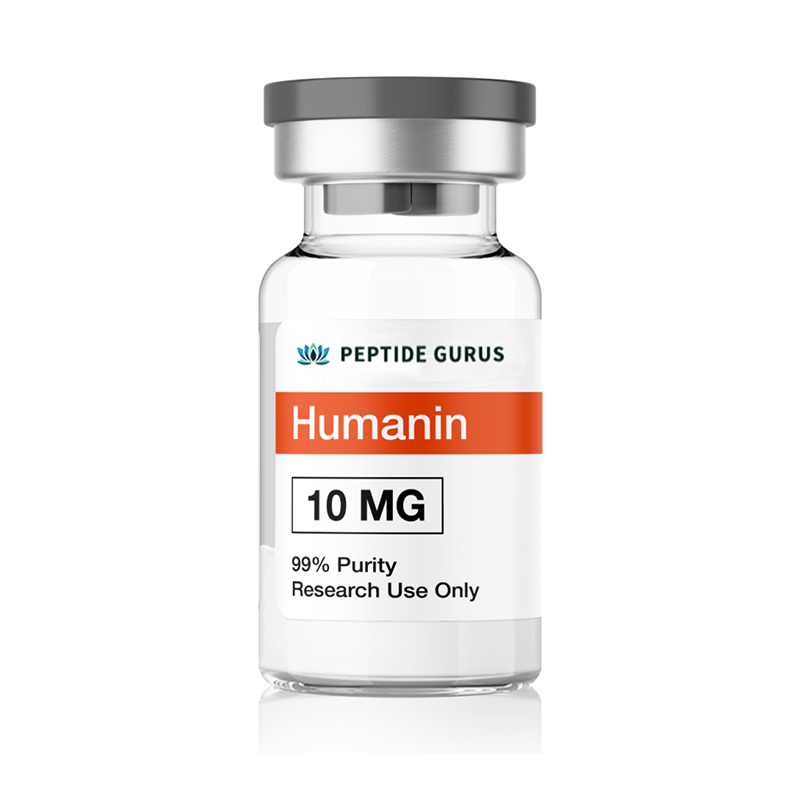
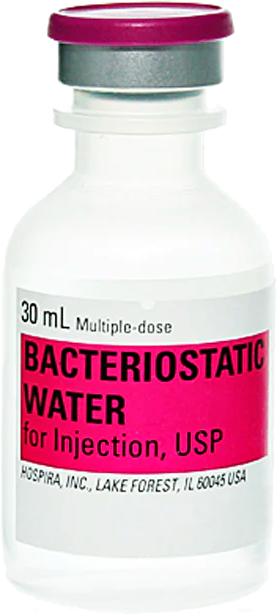
유리 (1) 30 ml 세균성 물 자격을 갖춘 주문이 있습니다$ 500 USD.
(캡슐 제품, 미용 펩티드, 프로모션 코드 및 배송 제외)
제품 사용 :이 제품은 연구 화학 물질로만 의도 된 것입니다.이 명칭은 시험 관내 시험 및 실험실 실험에만 연구 화학 물질을 엄격하게 사용할 수있게한다. 이 웹 사이트에서 제공되는 모든 제품 정보는 교육 목적으로 만 사용됩니다. 인간이나 동물에 어떤 종류의 신체적으로 소개되는 것은 법에 의해 엄격히 금지되어 있습니다. 이 제품은 라이센스가 부여 된 자격을 갖춘 전문가 만 처리해야합니다. 이 제품은 약물, 음식 또는 화장품이 아니며 약물, 음식 또는 화장품으로 잘못 브랜드화되거나 잘못 사용되거나 오해가되지 않을 수 있습니다.
휴먼 닌 개요
Humanin은 미토콘드리아 DNA에서 암호화된다는 사실에 대해 독특한 자연 발생 마이크로 펩티드입니다 (미토콘드리아는 그들에게만 독점적 인 소량의 DNA를 함유하고 있음). 그것은 세포 보호 단백질로서 기능하여 BCL2- 관련 X 단백질 (BAX)의 정상적인 작동과의 간섭을 통해 세포 자멸사 (프로그램 된 세포 사멸)로부터 세포를 보호한다. 인간의 변이는 인간에서 쥐에 이르기까지 다수의 포유 동물에서 발견되었으며 종에 걸쳐 고도로 보존되어있다 [1]. 연구에 따르면 인간은 뉴런, 심장 조직, 근육 세포, 눈의 망막 및 혈관의 안감을 보호하는 데 중요합니다.
휴먼 닌 구조
원천:Pubch순서: Met-ala-pro-arg-gly-ser-cys-leu-le-le-le-le-thu-thu-glu-glu-val-val-rys-arg-ala분자식 :C119H20NN34O32S2분자량 :2687.3 g/molpubchem sid : 16131438
CAS 번호 :330936-69-1동의어 :포르밀 인간 닌, HNGF6A 단백질
휴먼 닌 연구
마이크로 펩티드 란 무엇입니까?
Unlike standard peptides and proteins, which are produced through posttranslational modification of larger peptides, micro-peptides are produced by short, open reading frames (sORFs) and do not undergo modification once they are produced. Ranging in size from 100-150 amino acids in length, sORFs were originally overlooked by researchers convinced that all peptides were produced by the same process of DNA to RNA to protein to modified protein. No one considered that the last step, modification, could be disregarded entirely.
In humans, a number of sORFs have been identified. Their functions range from enhancing mRNA processing to helping to repair DNA damage and interacting with other proteins to create complex macro-proteins. Humanin, one of the smallest micro-peptides known to date, is just 24 amino acids in length. It interacts with the Bcl2-associated X protein (Bax) to regulate apoptosis, blocking the function of Bax when necessary to preserve cells that would otherwise be destroyed.
신경 보호
Research in rats indicates that humanin protects not just against apoptosis, but against programmed cell death in specific situations. In particular, the micro-peptide has been shown to protect neurons in the setting of Alzheimer’s disease, preventing the cell death that is induced by beta-amyloid plaque build-up[3]. Research shows that the peptide protects against excitotoxic neuron death in experiments using NMDA pulses[1].
Similar results to the above experiments were obtained when investigating neuron death occurring secondary to prion disease[4]. There is hope that this function of humanin can be exploited to slow or even halt neurodegenerative diseases like Alzheimer’s disease and other forms of dementia. Though it does not strike at the heart of the conditions (e.g. the formation of amyloid plaques in Alzheimer’s disease) humanin could be critical in tipping the delicate physiologic balance that plays out in these conditions, favoring the suspension of apoptosis[5].
Humanin appears to protect neurons through two different mechanisms, both of which have the ultimate function of preventing mitochondria from activating the apoptosis pathway. Under normal circumstances, the Bcl-2 family of proteins signal the release of proteins from the mitochondrial membrane, which in turn activate caspases that coordinate the orderly destruction and recycling of a cell[6]. This process is actually useful in many settings, such as during viral invasion, when the destruction of a handful of cells can prevent widespread tissue damage. Unfortunately, the process may become dysregulated in certain disease conditions with the result being unrestrained, widespread cell death. Humanin binds to Bcl-2 stimulating proteins Bid and tBid and blocks their function, thereby shutting down the apoptosis pathway at its origin[7].
Cutting edge research out of Argentina has found that humanin is actually released by astrocytes to protect synapses in hippocampal neurons[8]. As with many natural regulatory processes, there is some thought that humanin function may decline with age, thereby allowing for age-related memory loss and the increased prevalence of neurodegenerative disease. Some researchers speculate that there may be a role for humanin supplementation in older adults and a means of offsetting normal age-related declines in the production of this critical micro-peptide.Humanin levels in relation to age. A significant decline in humanin levels is seen in older individuals.
Source:PubMed
Humanin은 IGF-1과 인터페이스합니다
남부 캘리포니아 대학교 (University of Southern California)의 최근 연구에 따르면 휴먼 닌은 인슐린 유사 성장 인자 1 (IGF-1)과 상호 작용하는 것으로 나타났습니다. 실제로, 2 개의 펩티드는 서로 상호 작용하며, 인간 닌은 순환 수준의 IGF-1 및 IGF-1이 인간닌의 수준에 영향을 미친다. 이 상호 작용의 메커니즘은 아직 완전히 설명되지 않았지만 과학자들은 Humanin이 IGF-1 신호에서 새롭고 잠재적으로 중요한 플레이어라는 증거를 발견했습니다. 펩티드는 여러 가지 방법으로 상승 효과를 가지며 아 pop 토 시스를 억제하고, 인슐린 감수성을 높이고, 염증을 줄이며, 특정 형태의 심장 질환으로부터 보호하기 위해 함께 노력합니다. 다른 경우에, 펩티드는 길항제 역할을한다. IGF-1과 휴먼 닌이 서로 영향을 미치는 정확한 방법을 설명하기 위해서는 더 많은 연구가 필요하지만, 그들이하는 사실은 확립 된 사실이다 [9].심장 질환Research out of the Mayo Clinic, America’s premiere healthcare institution, reveals that humanin is expressed in the walls of human vasculature and helps to protect blood vessels from the effects of oxidized LDL (bad) cholesterol. In particular, humanin interferes with the production of reactive oxygen species (free radicals) in response to LDL oxidation. In so doing, it reduces reactive oxygen species in the vasculature by 50% and reduces apoptosis by 50% as well[10].
It has already been established that humanin levels decline with age, but new research suggests that the micro-peptide may also be affected by certain disease states. Researchers in cardiology have long sought to find blood markers that can be used to quantify how effectively mitochondria are functioning in the setting of cardiovascular disease. This is a critical measure of health in patients with heart disease because it gives a good estimate of how ischemic the tissue is and how advanced the disease is and may be useful in deciding when intervention is necessary. Research out of Russia shows that humanin levels may be a good marker in this setting as the decline in proportion to the severity of cardiovascular disease[11]. In this cause, humanin may serve as both a diagnostic marker and as a potential treatment for the same condition as supplementation with humanin is likely to protect the already stressed mitochondria.
인간 연구 및 망막 질환
망막 색소 상피 (RPE)는 망막의 층으로, 시력을 담당하는 세포에 영양을 공급합니다. 그것은 빛을 흡수하고 산란하는 데 역할을하며, 내부 망막에 도달하는 혈액 성분을 걸러 내고, 내면의 면역 특이한 특성을 무엇보다도 확립합니다. RPE의 손상은 당뇨병 성 망막 병증뿐만 아니라 연령 관련 황반 변성 및 눈의 다른 일반적인 심각한 질병에서 볼 수 있습니다. 연구에 따르면 Humanin은 RPE에서 중요한 구성 요소 이며이 조직에서 산화 스트레스를 감소시킵니다. 세포 배양에서 휴먼 닌을 보충하면 RPE 기능이 향상되고 조직의 아 pop 토 시스에 대한 내성이 증가한다 [12]. 이것이 과학자들이 황반 변성과 같은 망막 질환에 대한보다 효과적인 치료 및 예방 전략을 확립하는 데 도움이되기를 희망합니다.
뼈 건강
Bone loss is a serious condition that affects may people, particularly women, as they age. It is also a consequence of a number of disease states and is even caused by certain medical interventions. In the latter category, glucocorticoids used to treat severe inflammation (e.g. autoimmune inflammation) are the most notorious player and are known to cause extreme bone loss when used in high doses or for prolonged periods of time. Researchers in Sweden and Korea have discovered that humanin may be beneficial to bones in two different ways. First, the micro-peptide has been found to prevent the death of chondrocytes (the cells that produce the collagen matrix on which bone is built) without interfering with the anti-inflammatory effects of glucocorticoids like dexamethasone[13]. This effect helps to boost rates of bone and cartilage growth, offsetting some of the accelerated bone loss caused by glucocorticoids. At the same time that humanin promotes chondrocyte development, it appears to reduce osteoclast formation. Osteoclasts are the cells responsible for bone breakdown and remodeling. While useful and important in normal physiologic function, over-activation of these cells in pathologic states leads to severe bone loss. By preventing osteoclast formation, humanin helps to reduce excessive bone remodeling and loss[14].
Humanin exhibits minimal side effects, low oral and excellent subcutaneous bioavailability in mice. Per kilogram dosage in mice does not scale to humans. Humanin for sale at
펩티드 전문가인간 소비가 아닌 교육 및 과학 연구로만 제한됩니다. 면허가있는 연구원 인 경우에만 Humanin 만 구입하십시오.
기사 저자
위의 문헌은 Dr. Logan, M.D. Dr. Logan이 연구, 편집 및 조직했습니다.사례 서부 예비 대학교 의과 대학그리고 B.S. 분자 생물학에서.
과학 저널 저자
코헨 핀치, MD, USC Leonard Davis Gerontology 학장, Ethel Percy Andrus Gerontology Center의 전무 이사, William과 Sylvia Kugel Dean의 Gerontology의 의장입니다. 그는 미토콘드리아 펩티드 연구 및 당뇨병, 알츠하이머 및 노화와 관련된 기타 질병에 대한 치료 적 이점에 대한 전문가입니다. 이들 펩티드는 MT-16S-RRNA로부터 암호화 된 24- 아미노산 펩티드 인 Humanin을 포함한다. 그것은 당뇨병 및 관련 질병에서 새로운 치료 및 진단 표적을 나타내는 중앙에 작용하는 인슐린 감도 및 대사 보호 인자입니다. 관심있는 다른 미토콘드리아 펩티드는 MOTS-C, MOTS-C, MOTS-C, 제 2 펩티드가 미토콘드리아 염색체의 12S 영역에서 작은 ORF로부터 암호화 된 제 2 펩티드 및 항-관수 효과를 갖는 운동 미세한 효과 및 SHLP2로 작용하고, MT-16 영역으로부터의 광 스트랜드로부터 암호화 된 펩티드로 작용한다.Eyr 박사의 알폰소has received his MD in 2004 from the University of the Republic in Montevideo Uruguay. Currently, he is working as a senior research fellow in the Division of Nephrology and Hypertension at Mayo Clinic, Rochester, MN. Dr. Eirin’s research is focused on understanding the pathogenesis of renal and cardiac injury due to atherosclerotic renovascular disease (ARVD) and the developing of treatment strategies to improve blood pressure and renal outcomes after revascularization in these patients.
Dr. Pinchas Cohen and Dr. Alfonso Eirin are being referenced as leading scientists involved in the research and development of Humanin. In no way are these doctors/scientists endorsing or advocating the purchase, sale, or use of this product for any reason. There is no affiliation or relationship, implied or otherwise, between
펩티드 전문가그리고이 의사들. 의사를 인용하는 목적은이 펩티드를 연구하는 과학자들이 수행 한 철저한 연구 개발 노력을 인정, 인식 및 인정하는 것입니다. Pinchas Cohen 박사는 [9]에 상장되었으며 Alfonso Eirin 박사는 참조 인용 아래 [10]에 나열되어 있습니다.
참조 인용
A. Caricasole, V. Bruno, I. Cappuccio, D. Melchiorri, A. Copani 및 F. Nicoletti,“광범위한 신경 보호 활성으로 부여 된 인간형 유사 펩티드를 암호화하는 새로운 래트 유전자”Faseb J. Off. Publ. 먹이 오전. 사회 exp. Biol., Vol. 16, 아니오. 10, pp. 1331–1333, 2002 년 8 월.
Pubchem,“Humanin.” [온라인]. 사용 가능 : https://pubchem.ncbi.nlm.nih.gov/compound/16131438. [액세스 : 11- 월 -2019].
M. Matsuoka,“Humanin; Alzheimer 's Disease에 대한 수비수?”, 최근 특허 CNS Drug Discov., Vol. 4, 아니오. 1, pp. 37–42, 2009 년 1 월.
I. Sponne, A. Fifre, V. Koziel, B. Kiem, T. Oster 및 T. Pillot,“Humanin은 Prion-Peptide- 유도 된 아 pop 토 시스에서 피질 뉴런을 구출합니다.”Mol. 셀. Neurosci., Vol. 25, 아니오. 1, pp. 95–102, 2004 년 1 월.
A. R. White et al.,“프리온 펩티드 PRP106-126의 변수 농도 또는 알츠하이머 병의 아밀로이드 베타 펩티드는 1 차 피질 뉴런에서 프로 토포 시스 마커의 발현을 활성화시킨다”는 Neurobiol. 디스., vol. 8, 아니오. 2, pp. 299–316, 2001 년 4 월.
C. Wang과 R. J. Youle,“아 pop 토 시스에서 미토콘드리아의 역할”, Annu. Genet., Vol. 43, pp. 95–118, 2009.
D. Zhai, F. Luciano, X. Zhu, B. Guo, A.C. Satterthwait 및 J. C. Reed,“Humanin은 Bax 및 Bak의 활성화를 차단하여 입찰 활동을 바인딩하고 무효화합니다.”J. Biol. Chem., Vol. 280, 아니오. 16, pp. 15815–15824, 2005 년 4 월.
S.C. Zárate, M. E. Traetta, M. G. Codagnone, A. Seilicovich 및 A. G. Reinés,“성상 세포에 의해 방출되는 미토콘드리아 유래 펩티드 인 Humanin은 해마 뉴런에서의 신니 냅스 손실을 방지합니다. 노화 신경 로시., vol. 11, p. 123, 2019.
B. Celvin, F. Zaman, C. Aulin 및 L. Sävendahl,“Humanin은 콜라겐 유발 관절염에서 덱사메타손의 항 염증 효과를 방해하지 않고 연골 세포의 바람직하지 않은 아 pop 토 시스를 방지합니다.”Clin. exp. 2019 년 6 월 류마티스.
N. Kang, K. W. Kim 및 D. M. Shin,“Humanin은 AMP- 활성화 단백질 키나제 활성화를 통해 핵 인자 -κB 리간드-유도 된 파골 세포 분화의 수용체 활성화 제를 억제한다”고 Korean J. Physiol. 약사. 끄다. J. Korean Physiol. 사회 한국 사회. Pharmacol., Vol. 23, 아니오. 5, pp. 411–417, 2019 년 9 월.
이 웹 사이트에 제공된 모든 기사 및 제품 정보는 정보 및 교육 목적으로 만 사용됩니다.이 웹 사이트에서 제공되는 제품은 투명한 연구를 위해 제공됩니다. 내역 연구 (라틴어 : 유리)는 신체 외부에서 수행됩니다. 이 제품은 의약품이나 약물이 아니며 FDA에 의해 의학적 상태, 질병 또는 질병을 예방, 치료 또는 치료하기 위해 승인되지 않았습니다. 인간이나 동물에 어떤 종류의 신체적으로 소개되는 것은 법에 의해 엄격히 금지되어 있습니다.