



The landscape of metabolic research has experienced a profound shift with the continuous publication of literature exploring multi-receptor targeted peptides. At the center of this academic discourse is Retatrutide, widely recognized in scientific registries as a single-molecule triple hormone receptor agonist. Unlike earlier investigative compounds that focused solely on isolated signaling pathways, Retatrutide engages glucose-dependent insulinotropic polypeptide (GIP), glucagon-like peptide-1 (GLP-1), and glucagon receptors simultaneously. Recent peer-reviewed studies emphasize that this concurrent activation model provides laboratories with unprecedented tools for evaluating complex cellular signaling networks and energy expenditure modulation. Researchers tracking these developments rely heavily on registered trial data and peer-reviewed journals to map out how multi-pathway engagement influences endocrine feedback loops without relying on consumer assumptions.
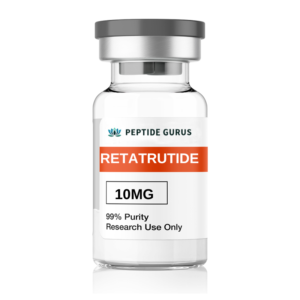
Maintaining absolute precision in laboratory assays requires rigorous analytical validation of every tested compound. In alignment with current regulatory expectations and experimental guidelines for investigative materials, high-purity thresholds exceeding 99% are standard for complex peptide sequences like Retatrutide. Analytical laboratories utilize advanced high-performance liquid chromatography (HPLC) and liquid chromatography-mass spectrometry (LC-MS) to verify molecular weight, confirm sequence integrity, and detect trace synthesis residues. These verification steps ensure that experimental models remain untainted by structural oxidation or truncation anomalies. Principal investigators emphasize that utilizing thoroughly documented and verified compounds is essential for achieving reproducible and statistically valid outcomes across academic studies.
The long-term viability and structural stability of synthetic peptides during laboratory storage directly impact the reliability of ongoing bioassays. Lyophilized Retatrutide demands precise environmental controls to prevent degradation or aggregation over extended testing periods. Best practices established in research protocols dictate that samples be maintained in moisture-free environments under strict sub-zero temperature thresholds, typically ranging from -20°C to -80°C. Furthermore, maintaining consistent lot-to-lot parameters across multiple shipments ensures that experimental baselines do not drift during multi-phase trials. Documenting cold-chain integrity during transport safeguards the biochemical properties of the peptide from initial delivery to final in vitro analysis.
Sourcing reliable, high-purity investigative compounds remains a critical operational priority for modern research facilities and university departments. PeptideGurus addresses these institutional challenges by integrating advanced synthesis capabilities with strict quality assurance protocols. By providing comprehensive analytical documentation, including detailed Certificate of Analysis (COA) reports for every batch, PeptideGurus empowers laboratories to verify compound specifications effortlessly. This robust commitment to supply chain transparency and logistical efficiency allows research teams to direct their full focus toward empirical discovery and advanced biochemical analysis, establishing PeptideGurus as a dependable partner for global scientific institutions.
What are the key takeaways from recent systematic reviews regarding the dose-dependent adverse event profile of Retatrutide?
Recent literature shows that gastrointestinal events (such as nausea and diarrhea) remain the most common side effects, and they are closely correlated with rapid titration schedules, highlighting the need for optimized escalation protocols.
How have recent pharmacokinetic (PK) and pharmacodynamic (PD) modeling papers refined our understanding of Retatrutide’s half-life?
Recent publications utilizing population PK modeling confirm a sustained half-life suitable for once-weekly subcutaneous administration, ensuring stable steady-state concentrations with minimal peak-to-trough fluctuation.
What gaps in the current literature have recent meta-analyses identified regarding Retatrutide use in diverse demographic populations?
Recent papers highlight a need for broader representation across diverse ethnic groups, age brackets, and baseline metabolic profiles to fully understand variability in therapeutic response.
PeptideGurus is a leading supplier of American-made research peptides, offering top-quality products at competitive prices. With a focus on excellence and customer service, they ensure a secure and convenient ordering process with global shipping.
© Copyright Peptide Gurus 2024. All rights reserved.Privacy Policy
All products on this site are for Research, Development use only. Products are Not for Human consumption of any kind. The statements made within this website have not been evaluated by the US Food and Drug Administration or HEALTH CANADA. The statements and the products of this company are not intended to diagnose, treat, cure or prevent any disease.
PeptideGurus is a chemical supplier. PeptideGurus is not a compounding pharmacy or chemical compounding facility as defined under 503A of the Federal Food, Drug, and Cosmetic act. Peptide Sciences is not an outsourcing facility as defined under 503B of the Federal Food, Drug, and Cosmetic act.
CONTACT