
• FOXO4-DRI peptide in aging research
FOX04-DRI 10MG (Proxofim)
X
FOX04-DRI 10MG (Proxofim)

FOX04-DRI 10MG (Proxofim)

Thể loại: ,

Liên hệ để đặt hàng
Gửi email cho chúng tôi ngay bây giờ để đặt hàng với hỗ trợ 1-1. Số lượng có hạn! Chúng tôi chấp nhận Zelle, CashApp, Venmo, chuyển khoản ngân hàng và tiền điện tử.

Miễn phí (1) 30 ml Nước kìm khuẩn
with qualified orders over $500 USD. (excludes capsule products, cosmetic peptides, promo codes and shipping)
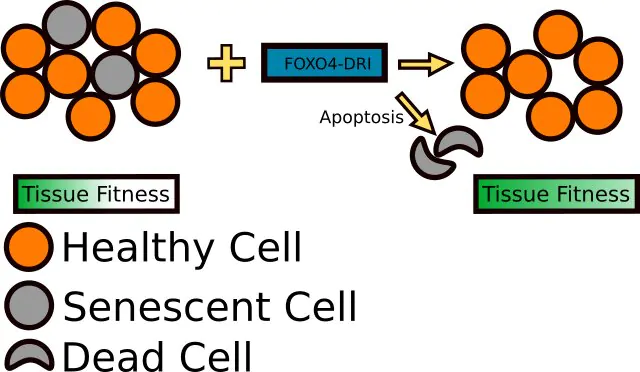
FOX04-DRI (Retro-Inverso) is a synthetic, slightly modified version of the standard FOXO4 protein. The modification prolongs half-life of the protein and allows it to interfere with normal FOXO4 function. FOXO4-DRI has been shown in research to prevent normal FOXO4 binding to p53, thereby allowing for elimination of senescent cells, improved organ function, and younger tissue “biological age.” FOXO4-DRI impacts insulin signaling, cell cycle regulation, and oxidative stress signaling pathways. FOXO4-DRI is a cell penetrating peptide shown to selectively induce apoptosis of senescent cells thereby reversing effects of aging in animal studies.
Product Usage: This PRODUCT IS INTENDED AS A RESEARCH CHEMICAL ONLY. This designation allows the use of research chemicals strictly for in vitro testing and laboratory experimentation only. All product information available on this website is for educational purposes only. Bodily introduction of any kind into humans or animals is strictly forbidden by law. This product should only be handled by licensed, qualified professionals. This product is not a drug, food, or cosmetic and may not be misbranded, misused or mislabled as a drug, food or cosmetic.

FOXO4-D-Retro-Inverso (DRI) là gì?

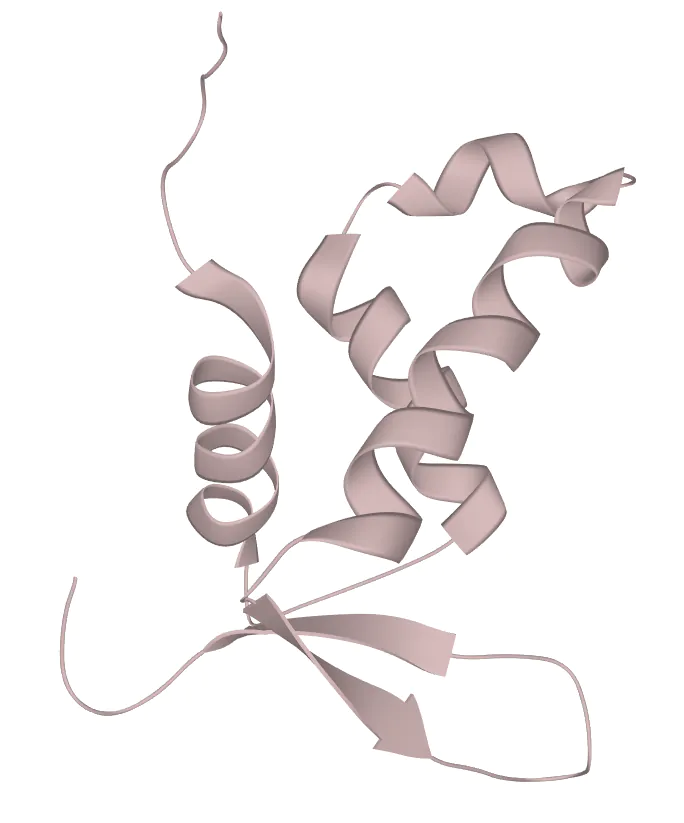
FOXO4 D-Retro-Inverso is identical to the protein product of the FOXO4 gene, but the normal L amino acids have been exchanged for D amino acids. The result is that FOXO4-DRI has reduced susceptibility to normal physiologic clearance mechanisms and thus remains in the body for longer periods of time. The modified protein is still capable, however, of affecting transcription and cellular pathways. In general, the FOXO4-DRI protein interferes with normal FOXO4 function. Of greatest interest in terms of aging and senescence is the ability of FOXO4-DRI to interfere with normal FOXO4 signaling in the cell cycle by preventing the binding of FOXO4 to p53. The p53 protein is an important regulator of progression through the cell cycle as well as programmed cell death (apoptosis). When FOXO4-DRI binds to p53, it prevents FOXO4 from binding and allows p53 to bind to DNA. This, in turn, allows the cell to continue through the process of apoptosis and die. Interestingly, FOXO4-DRI appears to only have this effect in senescent cells, cells that are no longer functional or are dysfunctional as a result of aging[2]. Bằng cách nhắm mục tiêu các tế bào rối loạn này, FOXO4-DRI giúp loại bỏ các mô của các tế bào không có gì ngoài trọng lượng chết. Điều này, đến lượt nó, cho phép hoạt động mô tốt hơn và giúp kích thích sự phát triển và biệt hóa của các tế bào trẻ hơn, khỏe mạnh hơn. Kết quả ròng là chức năng sinh học tốt hơn và do đó giảm tuổi sinh học.

Các peptide retro retro retro đã giải thích

DRI-Retro Inverso Peptides Explained Retro-inverso peptides are linear peptides whose amino acid sequence is reversed and the α-center chirality of the amino acid subunits is inverted as well. Usually, these types of peptides are designed by including D-amino acids in the reverse sequence to help maintain side chain topology similar to that of the original L-amino acid peptide and make them more resistant to proteolytic degradation. Other reported synonyms for these peptides in the scientific literature are: Retro-Inverso Peptides, All-D-Retro Peptides, Retro-Enantio Peptides, Retro-Inverso Analogs, Retro-Inverso Analogues, Retro-Inverso Derivatives, and Retro-Inverso Isomers. D-amino acids represent conformational mirror images of natural L-amino acids occurring in natural proteins present in biological systems. Peptides that contain D-amino acids have advantages over peptides that just contain L-amino acids. In general, these types of peptides are less susceptible to proteolytic degradation and have a longer effective time when used as pharmaceuticals. Furthermore, the insertion of D-amino acids in selected sequence regions as sequence blocks containing only D-amino acids or in-between L-amino acids allows the design of peptide-based drugs that are bioactive and possess increased bioavailability in addition to being resistant to proteolysis. Furthermore, if properly designed, retro-inverso peptides can have binding characteristics similar to L-peptides. Retro-inverso peptides are useful candidates for the study of protein-protein interactions by designing peptidomimetics that mimic the shape of peptide epitopes, protein-protein, or protein-peptide interfases. Retro-inverso-peptides are attractive alternatives to L-peptides used as pharmaceuticals. These of peptide have been reported to elicit lower immunogenic responses compared to L-peptides.
FOXO4-DRI phát hành p53 từ sự cô lập sinh lý. Protein p53 sau đó nhắm mục tiêu các tế bào sen cho apoptosis. Kết quả ròng là sự gia tăng thể lực của mô và do đó cải thiện chức năng ở cấp độ mô và cơ quan. Chức năng mô cải thiện được gọi là giảm tuổi sinh học.

Cấu trúc peptide FOXO4-DRI

Source: Uniprot Sequence: H-D-Leu-D-Thr-D-Leu-D-Arg-D-Lys-D-Glu-D-Pro-D-Ala-D-Ser-D-Glu-D-Ile-D-Ala-D-Gln-D-Ser-D-Ile-D-Leu-D-Glu-D-Ala-D-Tyr-D-Ser-D-Gln-D-Asn-D-Gly-D-Trp-D-Ala-D-Asn-D-Arg-D-Arg-D-Ser-D-Gly-D-Gly-D-Lys-D-Arg-D-Pro-D-Pro-D-Pro-D-Arg-D-Arg-D-Arg-D-Gln-D-Arg-D-Arg-D-Lys-D-Lys-D-Arg-D-Gly-OH Molecular Formula: C228H388N86O64 Molecular Weight: 5358.05 Synonyms: Forkhead box protein O4, Proxofim, FOXO4a, AFX, AFX1, MLLT7

FOXO4-DRI Lão hóa và lão hóa

The relationship between FOXO4 and aging is complex and still not fully understood. There is, however, good evidence that helps to elucidate the mechanisms by which the protein has its effects. Research in the well-studied nematode C. elegans shows that FOXO4 affects insulin-like growth factor receptor signaling and thus cellular lifespan control, stress resistance, and gene regulation[3]. It also appears that FOXO4 interacts with the p53 protein to regulate the cell cycle.

Natural FOXO4 actually protects senescent cells by keeping p53, a regulator of the cell cycle, sequestered and unable to induce apoptosis. FOXO4-DRI disrupts the normal FOXO4/p53 mechanism and allows the latter protein to induce apoptosis in senescent cells. The result is an amelioration of senescence-associated loss of tissue homeostasis[4][5]. Các nhà khoa học gọi điều này là trẻ hóa bằng cách loại bỏ điều trị tế bào sen. Quá trình này không phải là tất cả khác với việc cắt tỉa cây ăn quả. Bằng cách loại bỏ các nhánh chết và bị hư hỏng (tế bào bạch cầu), năng lượng được chuyển hướng đến các phần lành mạnh hơn của cây và do đó để sản xuất và tăng trưởng trái cây. Quá trình tương tự này xảy ra ở cấp độ cơ quan và mô khi các tế bào đang đóng góp vào chức năng không lành mạnh nói chung được loại bỏ, cho phép các tài nguyên tập trung vào các tế bào khỏe mạnh.
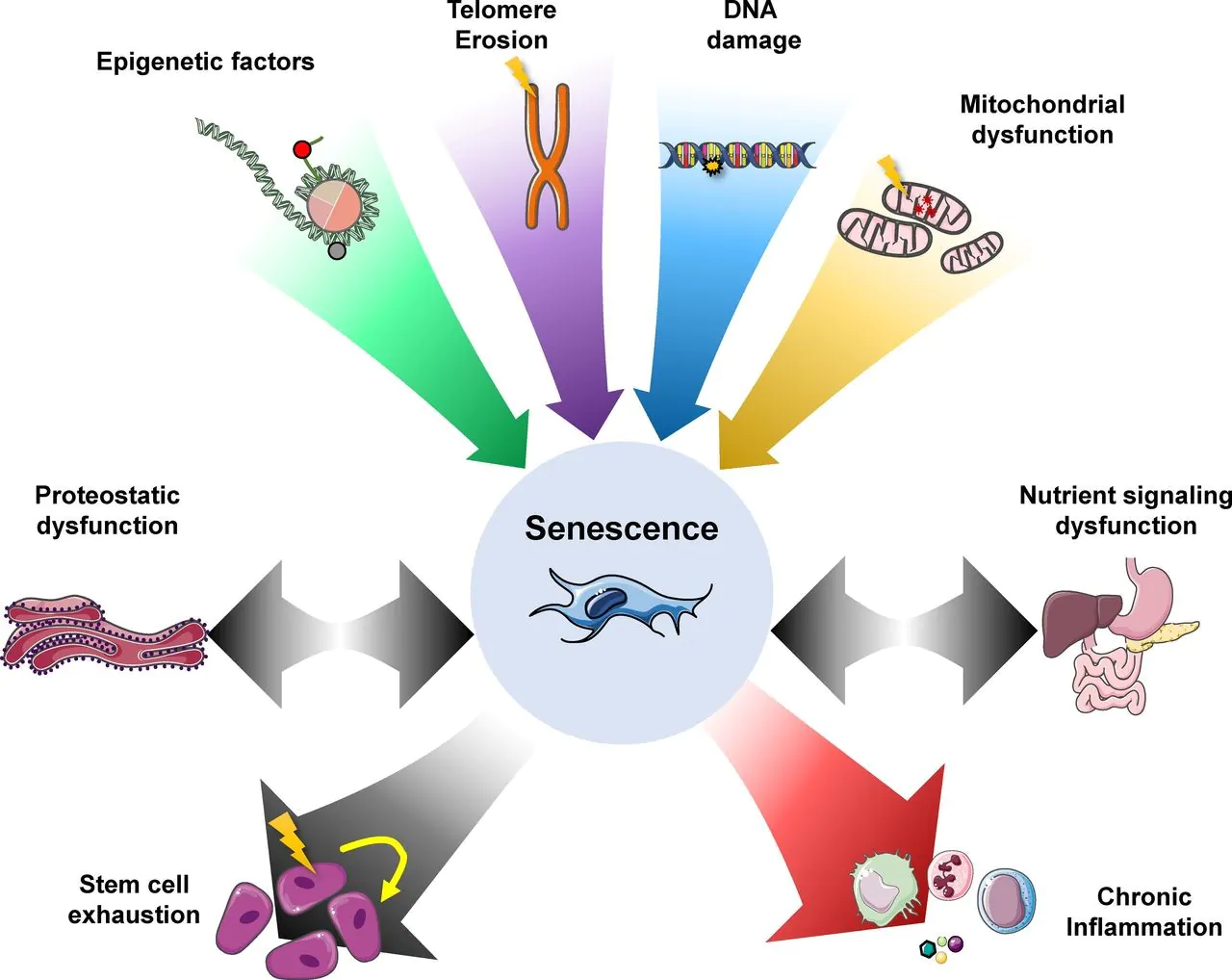
Source: Tạp chí Sinh học tế bào

Hình ảnh này hiển thị những yếu tố đóng góp cho sự lão hóa và kết quả là gì. Lưu ý rằng việc loại bỏ một tế bào lão hóa không làm giảm bớt sự cạn kiệt tế bào gốc, nhưng có thể làm chậm nó. Tuy nhiên, nó giúp giảm viêm mãn tính, một động lực được thiết lập tốt cho một số tình trạng như bệnh tim, đột quỵ, v.v.

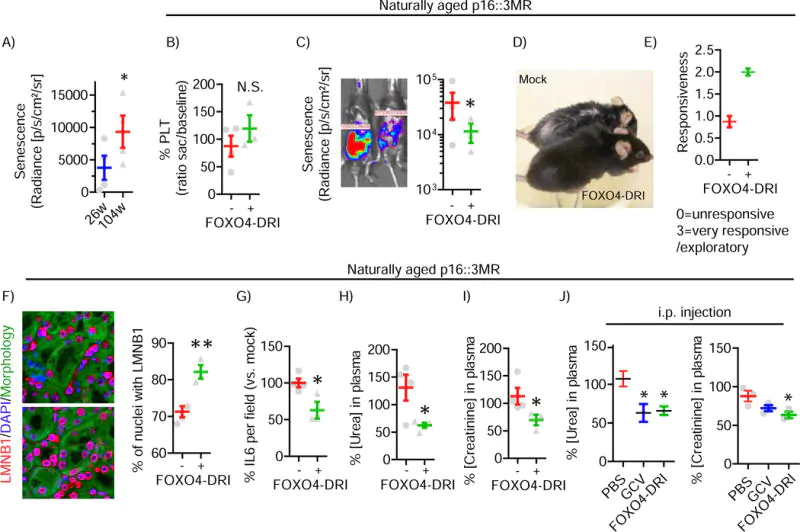
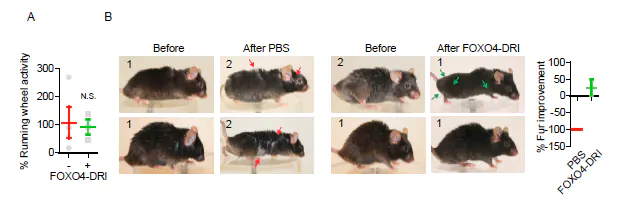
Thiệt hại không thể khắc phục, nghĩa là thiệt hại tế bào vượt quá khả năng sửa chữa của cơ thể, là một trong những hạn chế chính đối với khoảng thời gian sức khỏe. Khoảng thời gian sức khỏe, khoảng thời gian trong đó một sinh vật vẫn khỏe mạnh và hoạt động tối ưu, thường ngắn hơn tuổi thọ. Một sự suy giảm trong sức khỏe biểu hiện là lão hóa. Khả năng mở rộng khoảng thời gian sức khỏe có thể không dẫn đến nhiều năm sống hơn, nhưng nó có thể dẫn đến việc sống trong những năm được phân bổ cho chúng ta trong sức khỏe lớn hơn và hoạt động tốt hơn. Trong các mô hình chuột, FOXO4 đã được chứng minh là cải thiện nhịp sức khỏe ở chuột già, dẫn đến sự gia tăng thể lực, mật độ lông và chức năng thận. Chuột không nhất thiết phải sống lâu hơn, nhưng chúng có sức khỏe lớn hơn, thậm chí ở tuổi già, điều này chuyển thành ít khuyết tật hơn và ít tình trạng liên quan đến tuổi tác như bệnh tim, rối loạn chức năng cơ xương, v.v.[2].
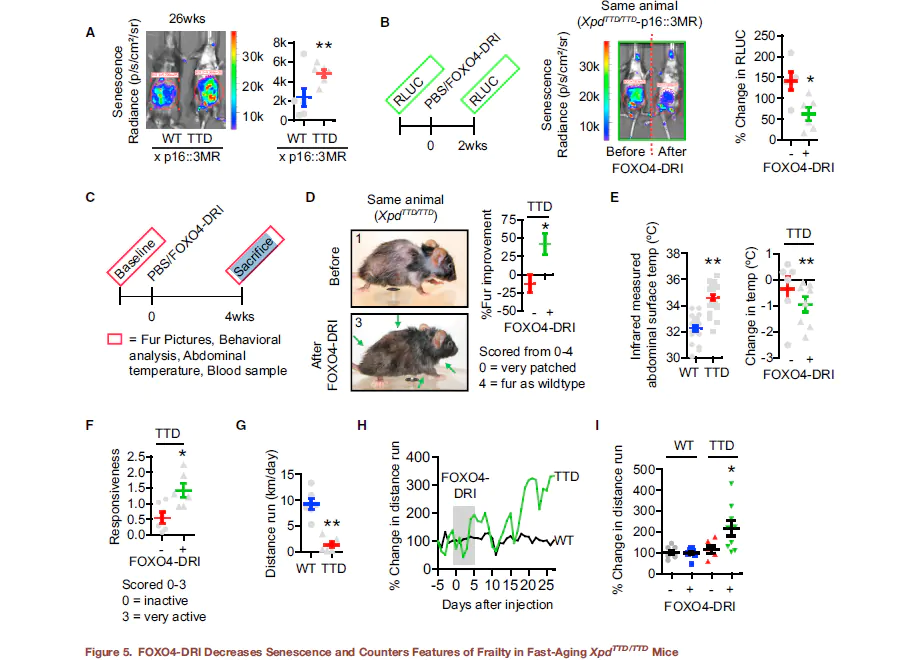
Hình ảnh cho thấy thể lực được cải thiện, như được biểu thị bằng mật độ lông thú, trong một con chuột được xử lý bằng FOXO4-DRI sau khi chịu các tác nhân hóa học được sử dụng để mô hình hóa lão hóa:
Source: Pubmed.

Nghiên cứu FOXO4-DRI

1. Tín hiệu insulin

Từ lâu, người ta đã hiểu rằng các protein FoxO là bộ điều chỉnh quan trọng của tín hiệu insulin, nhưng chúng hoạt động ở hạ lưu chính insulin cũng như các yếu tố tăng trưởng giống như insulin. Nghiên cứu trong các mô hình động vật chỉ ra rằng FOXO làm trung gian tác dụng ức chế của yếu tố tăng trưởng giống như insulin và insulin đối với chuyển hóa tế bào, tăng trưởng, biệt hóa, stress oxy hóa, v.v. Đột biến ở FOXO được kết nối với những thay đổi bệnh lý trong tín hiệu insulin và sự phát triển của bệnh trao đổi chất cũng như ung thư. Trong bệnh nhân tiểu đường, sự thay đổi tín hiệu FOXO dẫn đến tăng đường huyết nhịn ăn và tăng lipid máu[6]. Sau này là một trong những khía cạnh liên quan nhất của bệnh tiểu đường vì nó dẫn đến nhiều biến chứng của bệnh như tổn thương thận, đột quỵ, đau tim, chữa lành vết thương bị suy yếu, v.v. Khả năng điều chỉnh tín hiệu FOXO trong bệnh tiểu đường có thể cung cấp nhiều phương pháp nhắm mục tiêu hơn, hiệu quả hơn để ngăn ngừa một số biến chứng nghiêm trọng của bệnh. Không rõ làm thế nào FOXO4-DRI ảnh hưởng đến tín hiệu insulin, nhưng người ta cho rằng protein có thể cải thiện tác dụng hạ nguồn của insulin bằng cách giảm lượng đường trong máu lúc đói.

2. Bệnh tim

Tuổi là một yếu tố nguy cơ cho bệnh tim mạch. Nguy cơ này dường như được trung gian bởi sự suy giảm trong hoạt động proteasome trong tim. Proteasomes chịu trách nhiệm loại bỏ các protein bị oxy hóa và các protein khác mà tế bào đã đánh dấu là bị hư hại hoặc bị rối loạn chức năng. Nghiên cứu ở chuột cho thấy tuổi có mối tương quan nghịch với hoạt động của proteasome và do đó tăng mức độ protein bị tổn thương trong tim[7].

Protein FOXO làm trung gian hoạt động autophagy và proteasome. Sự gia tăng nồng độ FOXO4 dẫn đến tăng hoạt động proteasome và do đó giảm mức độ oxy hóa và tổn thương protein trong mô cụ thể. Có thể là FoxO4-DRI hoặc một biến thể của nó có thể được sử dụng để tăng cường các chức năng vệ sinh tự nhiên của trái tim và do đó làm giảm những thay đổi liên quan đến tuổi trong chức năng tim mạch[8].

3. Bệnh thoái hóa thần kinh

Age-related changes in cognitive function have a complex etiology. Even relatively common diseases, like Alzheimer’s disease, are not fully understood by the medical community. There is some evidence, however, to support the notion that changes in proteasome activity can lead to or exacerbate underlying neurodegenerative conditions. It isn’t clear if impaired proteasome activity is a primary cause or secondary contributor to diseases like Alzheimer’s disease, but impairment of the systems has been found in Parkinson’s, Alzheimer’s, Huntington’s, and Prion disease. There is also impairment of proteasome function in amyotrophic lateral sclerosis (ALS or Lou Gehrig’s disease) [9].

It appears that FOXO proteins are modified in the central nervous system, a finding that has led researchers to explore the idea that exogenous FOXO protein may be useful in treating or preventing neurodegenerative disorders. At the very least, there is hope that FOXO4-DRI and other modified FOXO proteins may be useful in slowing the relentless progression of neurodegenerative disorders [10].

Bản tóm tắt

FOXO4-DRI đã được chứng minh rõ ràng để tăng cường apoptosis trong các tế bào đã trở thành senescent, dẫn đến cải thiện chức năng mô và sức khỏe tổng thể tốt hơn trong các mô hình động vật. Vẫn còn phải xem các tác động của FOXO4-DRI rộng đến mức nào, nhưng có hy vọng rằng protein có thể mở khóa hiểu biết sâu sắc về các tình trạng liên quan đến tuổi như chứng mất trí nhớ, bệnh tim và mất chức năng chung do lão hóa tế bào.

FOXO4-DRI exhibits minimal side effects, low oral and excellent subcutaneous bioavailability in mice. Per kg dosage in mice does not scale to humans. FOXO4-DRI for sale at Peptide Gurus is limited to educational and scientific research only, not for human consumption. Only buy FOXO4-DRI if you are a licensed researcher.

Tác giả bài báo

The above literature was researched, edited and organized by Dr. Logan, M.D. Dr. Logan holds a doctorate degree from Case Western Reserve University School of Medicine and a B.S. in molecular biology.

Tạp chí khoa học tác giả

The aim of Dr. Peter de Keizer’s group is to unravel the molecular mechanisms that cause cells to become senescent and to identify how these cells drive aging and age-related diseases. The role of senescence in late-stage therapy-resistant cancer is a major component of this research. The research has a strong translational component and a spearpoint of the group is to develop methods to target the deleterious effects of senescent and senescent-like cancer cells, for instance by eliminating them altogether. In 2004, Peter obtained his MSc in Biomolecular Science form Utrecht University. The final part of his training was performed at Harvard Medical School / Massachusetts General Hospital in Boston, USA. Here, he focused on therapy-resistant Glioblastoma, the most lethal form of brain cancer, something which is now on of the focus areas of the group. In 2009, Peter obtained his PhD from UMC Utrecht on the regulation of FOXO proteins under conditions of stress and their role in tumor suppression. Dr. Peter de Keizer is being referenced as one of the leading scientists involved in the research and development of FOXO4-DRI. In no way is this doctor/scientist endorsing or advocating the purchase, sale, or use of this product for any reason. There is no affiliation or relationship, implied or otherwise, between Peptide Gurus and this doctor. The purpose of citing the doctor is to acknowledge, recognize, and credit the exhaustive research and development efforts conducted by the scientists studying this peptide. Dr. Peter de Keizer is listed in [2] under the referenced citations.

Trích dẫn được tham chiếu

  1.     W. Liu, Y. Song, J. Wang, H. Xiao, Y. Zhang, and B. Luo, “Dysregulation of FOXO transcription factors in Epstein-Barr virus-associated gastric carcinoma,” Virus Res., P. 1978808, tháng 11 năm 2019.
  2.     Baar, Marjolein P, et al. “Targeted Apoptosis of Senescent Cells Restores Tissue Homeostasis in Response to Chemotoxicity and Aging.” Cell, vol. 169, no. 1, 2017, pp. 132-147.e16, www.ncbi.nlm.nih.gov/pubmed/28340339, 10.1016/j.cell.2017.02.031. 
  3.     A. T.-Y. Chen et al., “Longevity Genes Revealed by Integrative Analysis of Isoform-Specific daf-16/FoxO Mutants of Caenorhabditis elegans,” Genetics, tập. 201, không. 2, trang 613 Từ629, tháng 10 năm 2015.
  4.     P. Krimpenfort and A. Berns, “Rejuvenation by Therapeutic Elimination of Senescent Cells,” Cell, tập. 169, không. 1, trang 3 trận5, 23 2017.
  5. Tuổi già và lão hóa: Nguyên nhân, hậu quả và con đường trị liệu | JCB. [Trực tuyến]. Có sẵn: http://jcb.rupress.org/content/217/1/65. [Truy cập: 17-tháng 11 năm 2019].
  6.     S. Lee and H. H. Dong, “FoxO integration of insulin signaling with glucose and lipid metabolism,” J. Endocrinol., tập. 233, không. 2, trang R67, R79, 2017.
  7.     A.-L. Bulteau, L. I. Szweda, and B. Friguet, “Age-dependent declines in proteasome activity in the heart,” Arch. Biochem. Biophys., tập. 397, không. 2, trang 298 Từ304, tháng 1 năm 2002.
  8.     G. Murtaza, A. K. Khan, R. Rashid, S. Muneer, S. M. F. Hasan, and J. Chen, “FOXO Transcriptional Factors and Long-Term Living,” Oxid. Med. Cell. Longev., tập. 2017, 2017.
  9.     A. Ciechanover and P. Brundin, “The ubiquitin proteasome system in neurodegenerative diseases: sometimes the chicken, sometimes the egg,” Neuron, tập. 40, không. 2, trang 427 Từ446, tháng 10 năm 2003.
  10.   W. Hu et al., “Roles of forkhead box O (FoxO) transcription factors in neurodegenerative diseases: A panoramic view,” Prog. Neurobiol., tập. 181, tr. 101645, tháng 10 năm 2019.
ALL ARTICLES AND PRODUCT INFORMATION PROVIDED ON THIS WEBSITE ARE FOR INFORMATIONAL AND EDUCATIONAL PURPOSES ONLY. Các sản phẩm được cung cấp trên trang web này chỉ được cung cấp cho các nghiên cứu trong ống nghiệm. Các nghiên cứu trong ống nghiệm (Latin: trong thủy tinh) được thực hiện bên ngoài cơ thể. Những sản phẩm này không phải là thuốc hoặc thuốc và chưa được FDA chấp thuận để ngăn ngừa, điều trị hoặc chữa khỏi mọi tình trạng y tế, bệnh tật hoặc bệnh tật. Việc giới thiệu cơ thể của bất kỳ loại nào vào người hoặc động vật đều bị cấm theo luật pháp.

Yêu cầu Hỏi

ABOUT US

Peptidegurus là nhà cung cấp hàng đầu các peptide nghiên cứu do Mỹ sản xuất, cung cấp các sản phẩm chất lượng hàng đầu với giá cả cạnh tranh. Tập trung vào sự xuất sắc và dịch vụ khách hàng, họ đảm bảo một quy trình đặt hàng an toàn và thuận tiện với vận chuyển toàn cầu.

Yêu cầu báo giá

  • Gurus peptide
  • info@peptidegurus.com
  • Glendale, đó là, Hoa Kỳ
  • LIÊN HỆ

    Yêu cầu Hỏi